

9 Afternoon Tea Etiquette Rules You Should Know
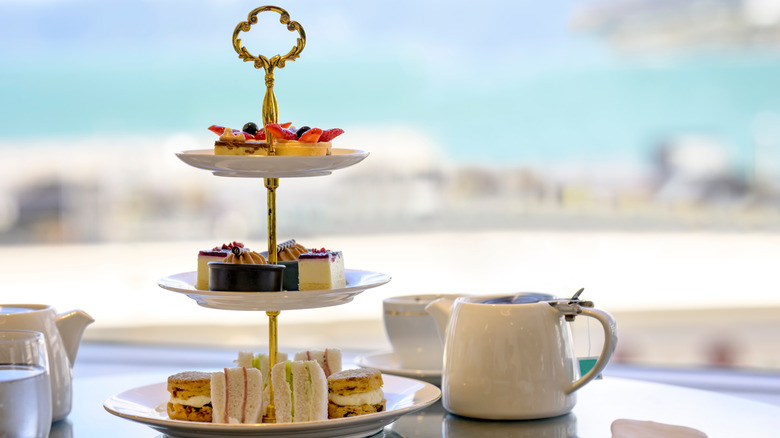
A beloved English tradition, afternoon tea is increasingly popular in the United States. Perhaps because it's a relaxing, photogenic experience, tea time has become a nationwide trend. Many high-end hotels in the U.S. now offer afternoon tea, and tea rooms have also opened in many cities. As we all know, many British traditions come with rules and etiquette. So what exactly can you expect when you go for afternoon tea? What rules should you know about to avoid any faux pas?
We interviewed Damon Gordon, the British-born Executive Chef at The Maybourne Beverly Hills Hotel, and Anthony Keene, Executive Chef of The London West Hollywood at Beverly Hills, to get their insights into the etiquette and rules of afternoon tea. Both hotels serve afternoon tea on the weekends. The Maybourne Beverly Hills serves tea with desserts inspired by iconic fashion moments of 2025, while The London West Hollywood at Beverly Hills' tea is inspired by the Hollywood award season.
Afternoon tea is not high tea
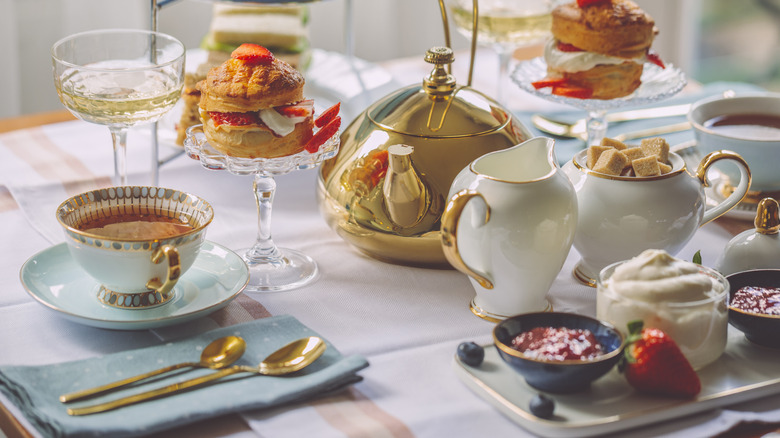
While many in the U.S. use the terms "afternoon tea" and "high tea" interchangeably these days, the terms are not interchangeable. Originally, they referred to different things. The tea time you're thinking of is likely afternoon tea, with its three-tiered tray of dainty treats and scones.
"Afternoon tea was always a very real kind of grandiose meal and event," says Damon Gordon. After all, afternoon tea was originally a tradition of the British aristocracy. It's said that the concept of afternoon tea was introduced in 1840 by the seventh Duchess of Bedford, who needed a snack between lunch and dinner (who doesn't, right?). These days, you can usually find it served at traditional tea rooms and luxury hotels.
On the other hand, high tea is a more casual meal for the working class, and it's typically enjoyed after work. Instead of scones and pastries, high tea may include heartier fare like shepherd's pie instead.
Afternoon tea should be served between lunch and dinner
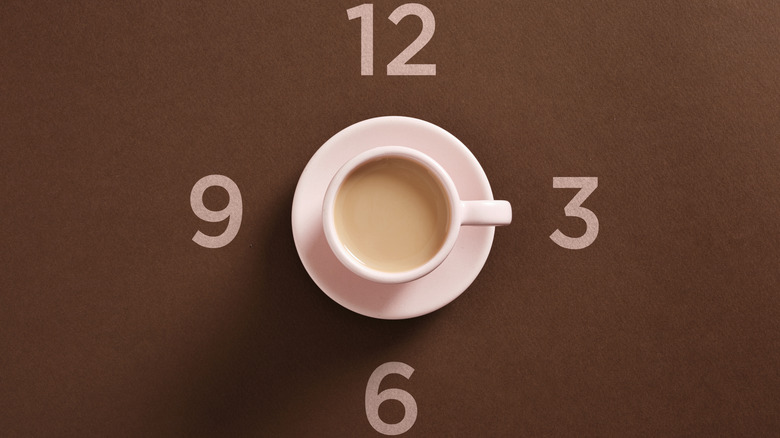
While clearly afternoon tea should be served sometime in the afternoon, our experts seem to differ on exactly which part of the afternoon it should be served. "Afternoon tea is definitely ... the early part of the afternoon," says Damon Gordon. "I think high tea can be interpreted to be a little later." Since high tea is an after-work affair, it's typically served around 5 p.m.
So, how early should afternoon tea be served? "1 to ... 2:30 (p.m.) — right in that sweet spot," says Gordon. On the other hand, Anthony Keene thinks afternoon tea should ideally be served between 3 p.m. and 5 p.m. However, Keene says that hotels usually offer them somewhere between 1 p.m. and 5 p.m. While the treats are small, there are quite a few bites involved in afternoon tea. Therefore, it should not be served too close to lunch time, so you won't be too full.
The food should be enjoyed in order
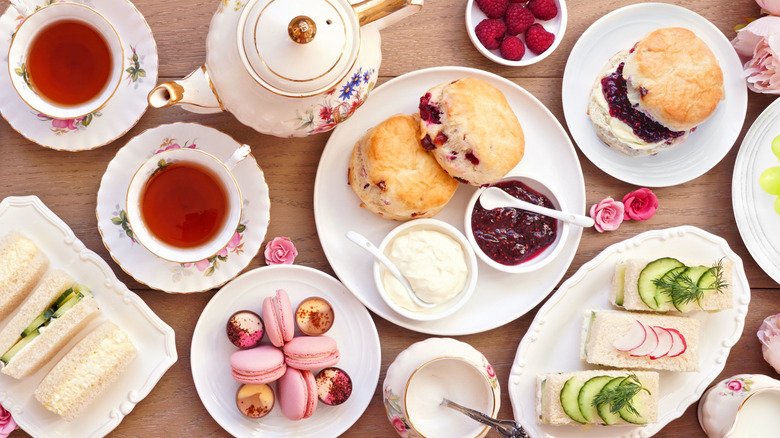
A proper afternoon tea should have three different types of treats: scones, finger sandwiches, and small desserts. But in which order should you enjoy these different foods?
According to Anthony Keene, the three treats are traditionally presented on a three-tiered tray with sandwiches at the bottom, scones with clotted cream and jam in the middle, and desserts on top. You should enjoy them from the bottom up. That is, enjoy the sandwiches first, followed by scones, and ending with desserts.
Damon Gordon agrees. "They may tell you to enjoy the scones while they're warm, but for me, I interpret that [to mean] I had to eat the sandwiches quick," Gordon says. "That's a big no-no to ... eat the scones before the savory." To prevent the scones from getting cold while you enjoy the sandwiches, Gordon doesn't serve the scones at the same time as the sandwiches. At The Maybourne Beverly Hills, the sandwiches are served first, followed by warm scones and desserts after you finish the savory items.
Expect finger foods
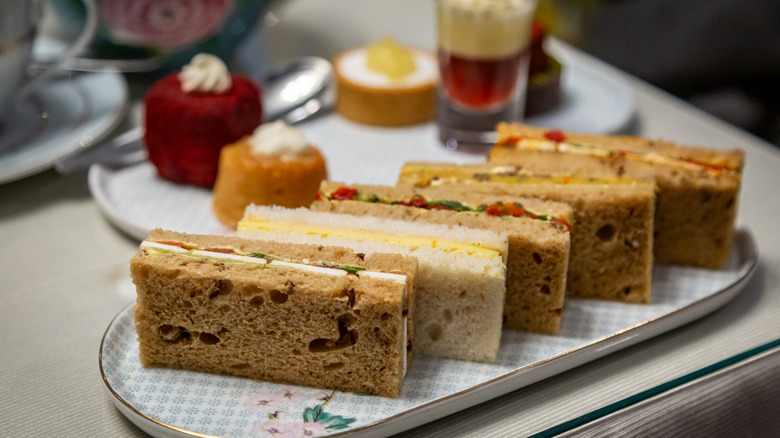
As we mentioned earlier, the food for afternoon tea should consist of savory sandwiches, scones, and desserts. However, there are also further expectations as far as those foods go.
For one thing, according to Damon Gordon, none of the food should be too big. Gordon also says that bread for the sandwiches should always be crustless. As far as sandwiches go, Anthony Keene says, "the bread being very fresh and thinly sliced" is very important. The chefs have some creative freedom, of course, but they both tend to serve at least some classics like a cucumber sandwich.
Some tea rooms these days may serve open-faced cucumber sandwiches, but these would not be traditionally served. According to Gordon, because originally, afternoon tea was served to ladies with gloves on, the sandwiches should be finger sandwiches that you can easily hold and take a bite of. For scones, he recommends serving two types: a plain scone and a scone with a fruit mix-in.
Enjoy the scones with cream and jam
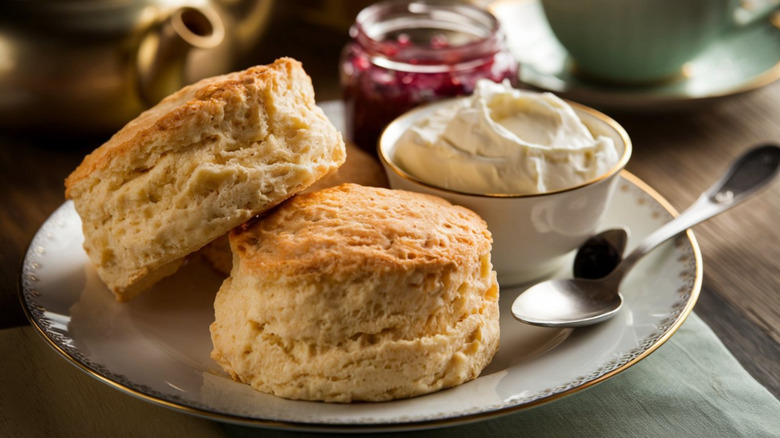
In a proper afternoon tea, scones are served alongside a small bowl of clotted cream, a fruit jam, and often lemon curd as well. So how should you enjoy these scones? First, you should cut the scone in half in order to spread the cream or jam on top.
"I always put the clotted cream first," says Damon Gordon, "It's always clotted cream and then whatever else on top. So the scone is warm, then the cream starts to melt into the scone as well." Anthony Keene, on the other hand, says that it's "always up for debate, jam or clotted cream first, I'll let you decide."
Gordon also combines all three components together and prefers it that way, but everyone should feel free to just add either the fruit jam or the lemon curd on top of the clotted cream. As for the scones themselves, Gordon says that a good scone should have "that nice little crust on the outside, and then when you cut through the crust, it's a little soft."
Should you add milk or sweetener to the tea?
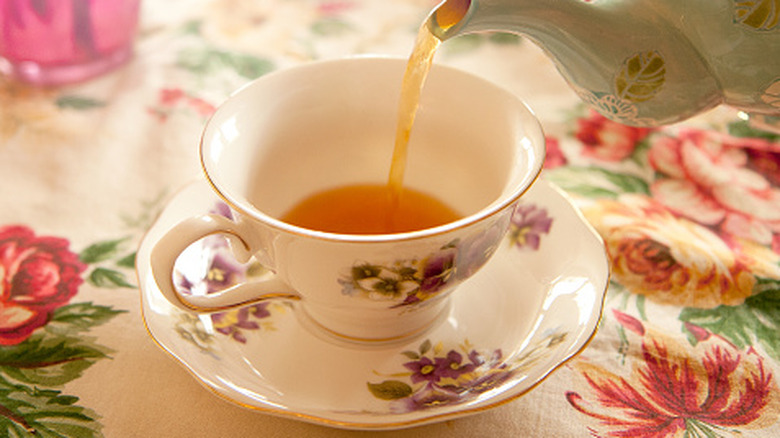
Tea is, of course, a very important part of afternoon tea. You might wonder whether there is a rule about whether you should add a sweetener, milk, or creamer to the tea. Thankfully, you have the freedom to do as you wish as far as the tea goes.
"That's more personal preference than anything else," says Damon Gordon, while further noting that, "I think a fine tea doesn't need anything." After all, the tea comes alongside plenty of sweet treats that would balance nicely with unsweetened tea.
"I know some [purists] frown on adding milk to tea, but as with many things, it is a personal preference," says Anthony Keene. "As for sugar and sweeteners, I reserve them for iced tea." Of course, if you have a sweet tooth or just prefer drinking your tea with cream and sugar, feel free to do so.
Hold the teacup properly
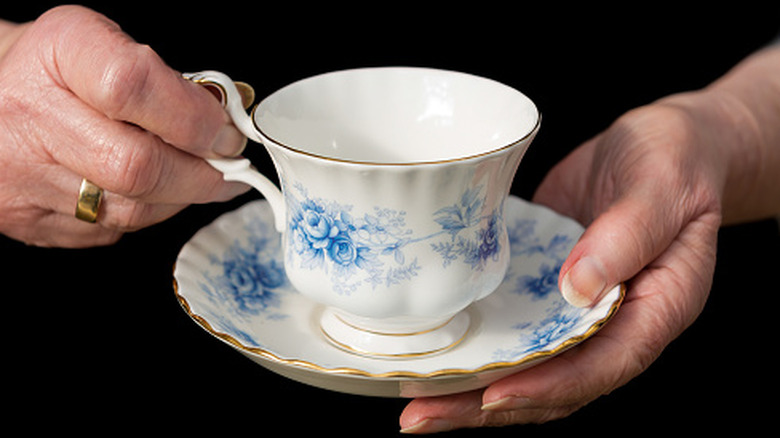
The age-old question about how to hold a teacup seems to be "pinkies up or pinkies down?" But Damon Gordon wants you to know that, more importantly, the saucer needs to stay down. Picking up the saucer to hold it under your cup (as shown in the photo above) is actually a big no-no in afternoon tea.
Since the tea cups served at afternoon tea tend to have smaller handles, you likely wouldn't be able to loop your finger around them like you would for a coffee mug. Instead, you would grip the handle with your thumb on one side and your index and middle fingers on the other. Personally, Gordon says that the pinkie should be curled instead of extended (so it's not pinkies up, after all). As you pick up the cup to sip some tea, the saucer should remain on the table. If you need to pick up the saucer to prevent the tea from spilling out of the cup, that means you have overfilled the cup.
Dress the part
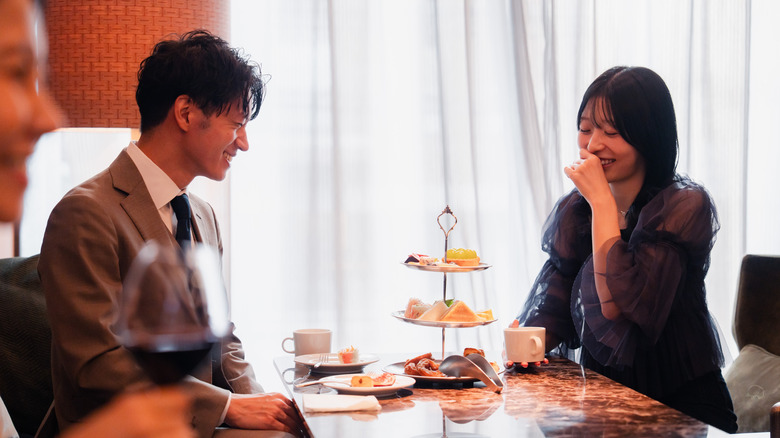
These days, afternoon tea is of course no longer reserved for the aristocracy, and things have certainly gotten more casual. Still, there are some things to keep in mind regarding how you should dress for afternoon tea. In the past, "ladies would wear nice hats, and men [would] wear nice suits," Damon Gordon says. "And you go in for this full experience of savory sandwiches ... a glass of champagne, and really savoring the dessert for it to be a real ... kind of intensive experience."
While hats and gloves are no longer a requirement, many people still make a point to dress up. "Afternoon tea was something that you would get dressed up for. It was like an event, right?" Gordon explains. In fact, in London, you'll still find ladies wearing hats to afternoon tea. Keep in mind the particular tea room or hotel you're going to might have its own dress code, so check accordingly.
Keep conversation topics in check
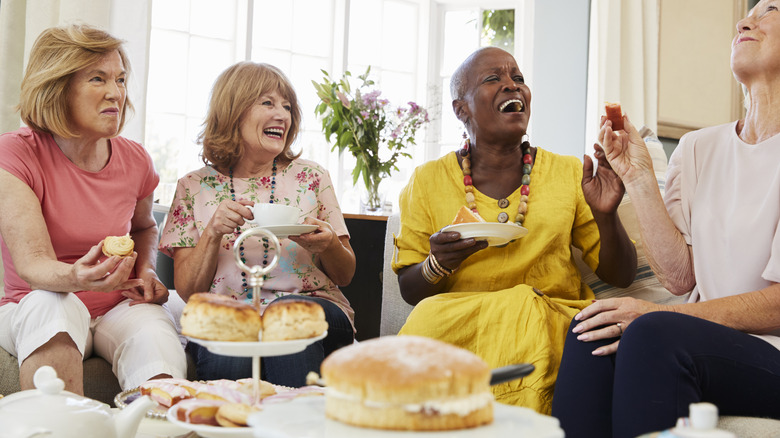
Afternoon tea time is meant to be a fun and relaxing event, so while there is no specific topic you need to talk about during tea time, there may be some topics you should avoid. Anthony Keene told us that "afternoon tea is meant to be a break, so keeping topics light and pleasant is always recommended."
Of course, the topics to be avoided would certainly vary depending on the group you're enjoying the tea with, how close you are to each other, and all that. You would know best what topics would make things too tense within your group of friends. There is no real or strict rule about your private conversations, of course.
For Damon Gordon, the topics to always avoid in these types of occasions include politics and "anything on the news." Since afternoon tea was originally for aristocratic ladies, gossiping is highly recommended. Spill the tea!