

Yes, You're Supposed To Clean Your Dishwasher Filter — Here's How
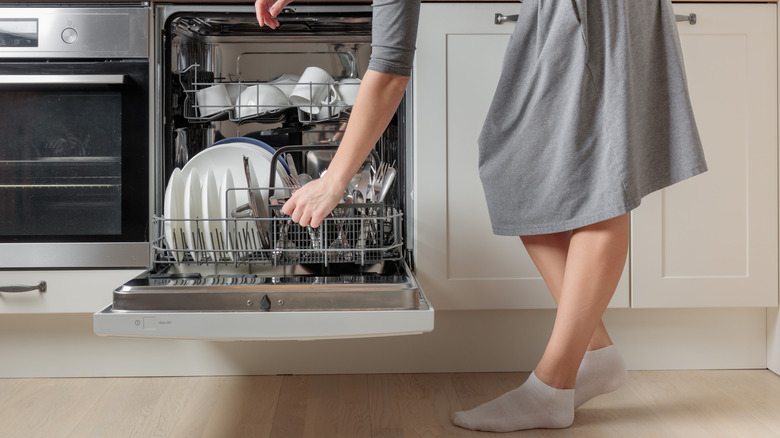
If your crockery and glassware are coming out dirty after running them through the dishwasher, you might have skipped an important step in caring for your appliance: cleaning the filter. This unassuming dishwasher part is pretty small, but it does a very big job and needs to be maintained in order to work effectively.
Dishwasher filters catch any food particles that come away from your dinnerware during each cycle. This prevents any debris or grease from clogging up the pipes or recirculating across crockery and utensils once they're clean. If your filter gets clogged, the congealed particles of food can cause a foul odor, prevent your dishwasher from draining correctly, and damage the motor too.
Luckily, it only takes a couple of minutes to locate and clean your removable dishwasher filter, which lies at the very bottom of your machine. Depending on your brand of dishwasher, you will either need to twist the filter out or lift it up after pulling out the bottom shelf for access. Next, turn the cylindrical filter over and tap out any food trapped inside before rinsing it clean under a running faucet. Make sure to clear off any gunky or slimy bits until the entire inner circumference of the filter is free from any obstruction.
Use a soft brush to remove any stubborn food particles
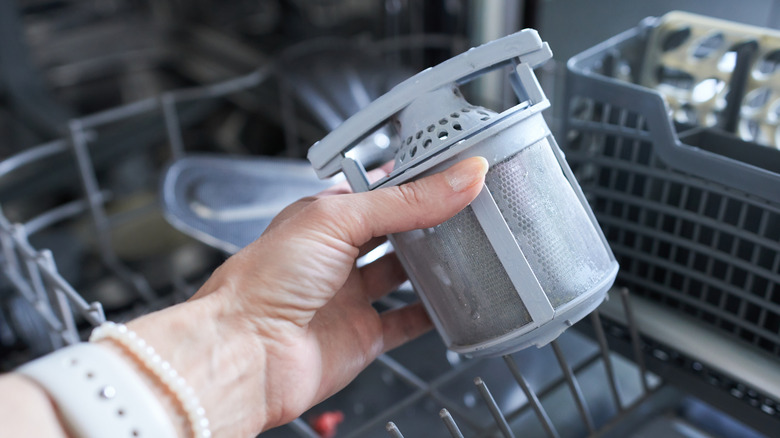
The mesh-like exterior of a dishwasher filter traps grease, which means you might need to scrub it clean with a soft brush and plenty of hot water. You can also use a dash of dish soap to break down any oily deposits clinging to the surface. Finally, inspect your filter to check for any signs of damage, such as cracks or holes (if needed, you can usually order a replacement part from the manufacturer). Once you've given the filter a good wash, you might like to clean your dishwasher gaskets too. These rubber seals that run around the perimeter of the door can harbor trapped food and detergent. Cleaning them regularly will reduce smells and produce cleaner dishes. Finally, replace the filter and run your machine as normal.
If your cutlery is still coming out with unsightly water spots after all this, you can add some rinse aid to your dishwasher to remove any mineral deposits. Another dishwasher trick to getting squeaky clean silverware is to alternate the direction of your knives and forks so the prongs and ridges don't clump together. To get the best out of your appliance, remember that larger items, such as dinner plates, pots, and pans, are the bits of kitchenware that should go at the bottom of the dishwasher. Just make sure that the sprayer can rotate freely above any tall items before you switch it on.