

Don't Stress: The Easiest Way To Make Fresh Pasta In A Small Kitchen
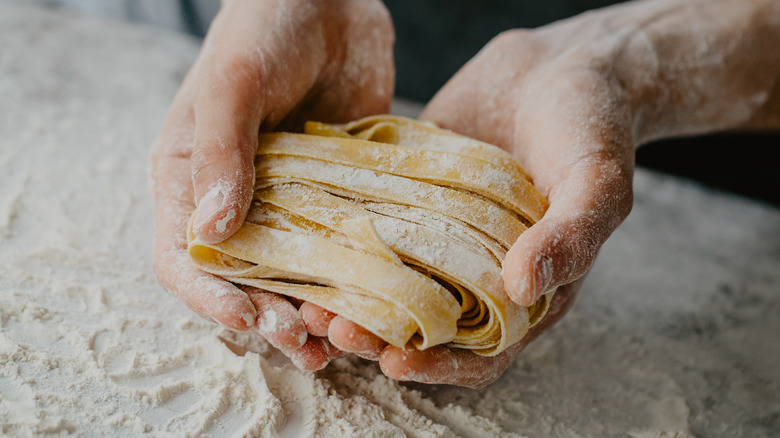
Dried pasta is an awesome pantry staple that lasts for years; however, making the fresh stuff comes with plenty of benefits. For starters, fresh pasta cooks more quickly, has a superior texture, and can be customized with different flours, herbs, and seasonings. Plus, if you make it yourself, you know exactly what's in it. While you might think you need oodles of room to prepare pasta from scratch, it's quite possible to get the job done in a small kitchen with limited countertop space. All you need to do is be wise with your equipment choices and clean as you go.
Traditionally, pasta dough is made by making a well in the center of a large measure of flour, cracking in some eggs, and gently incorporating the wet ingredients into the dry. The first rule of making pasta in a compact space, however, is to swap the counter for a bowl. This move helps to contain all the floury mess and means you can get the job done anywhere in your kitchen (or even at your dining table) until you're ready to knead the dough. Your dough will need some time to rest before rolling, which provides the perfect moment to wash up your bowl. Cleaning up as you go will free up worktop space and create a calmer environment that you feel in control of. As small kitchens can easily feel overwhelming, cleaning your dirty utensils and wiping down your counters regularly will make the task feel lighter.
Reasons to invest in a pasta board
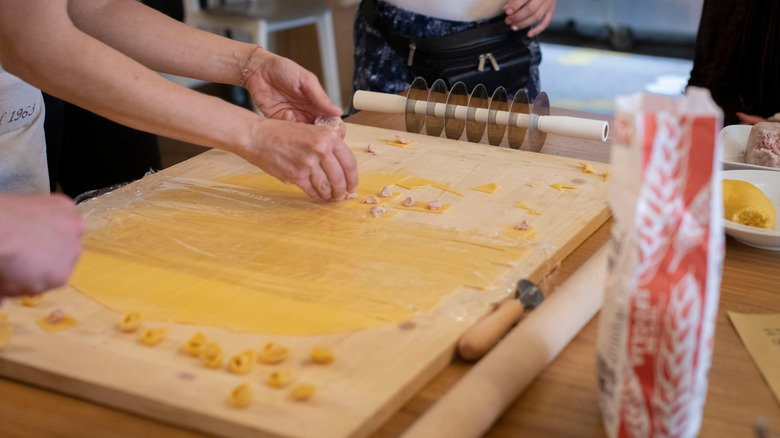
The pasta shape that's easiest to make for beginners is gnocchi because you don't need any special tools or extra countertop space to make it. All that's required is a fork to make the distinctive marks on the surface that act as little ridges for the sauce to gather in and cling to. However, if you want to make fresh pasta regularly, consider investing in a pasta board. These large rectangles of wood are bigger than cutting boards and can be placed over a sink to create more counter space if needed. You can simply set your pasta machine on top and run your dough through it to create silky sheets that are ready for pinching into lengths or molding into classic pasta shapes like farfalle. The porous nature of the board means it also absorbs extra liquids better, making it a useful tool for both kneading and shaping the dough.
No matter whether you're cooking with dried or fresh noodles, some of the best hacks for making pasta are to select a large pot (to prevent your fettuccini or linguini from sticking together) and always salt the water. Fresh pasta will cook far quicker than dried noodles and can easily go beyond that al dente sweet spot, so don't stray too far from the kitchen while it bubbles away.