

10 Tips For Making The Perfect Rum Cake, According To A Baker
We may receive a commission on purchases made from links.
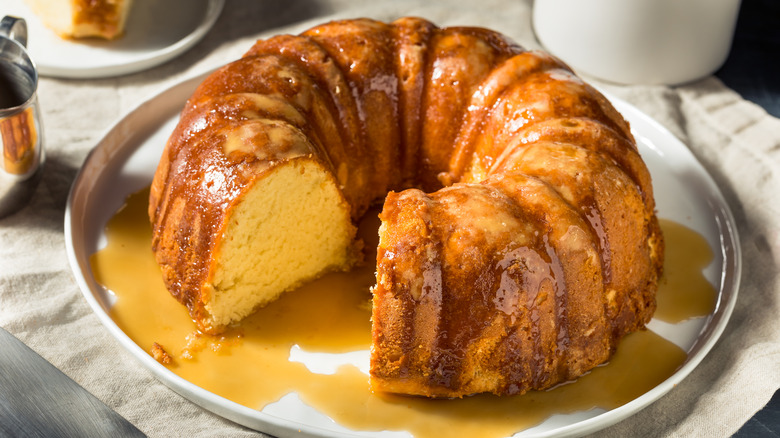
Rum cake is a fun and unique Caribbean treat Caribbean treat that's often made during the holidays and is also popular in parts of America. There are two distinct types of rum cake: a traditional one that is darker, richer, and denser and a popular Americanized version containing fruits or nuts that is lighter in texture, but has a heavier emphasis on the rum glaze. For the purposes of this article, we're going to primarily be talking about how to make a perfect Americanized rum cake, which is beloved in areas like coastal Florida.
Although relatively simple in theory, rum cake has many small nuances that can trip up novice bakers. Having grown up in Florida, I encountered this delicious dessert frequently from a young age. When I began my formal baking training, I was able to regularly practice the baked good's creation and hone my rum cake-making skills. I've further perfected these during the last 30 or so years of baking at home, since it's a treat I still enjoy. Today, I'm going to share some of the best tips and tricks that I've learned over the years so that you can also begin making perfect rum cakes. Let's get into it.
Use room temperature ingredients
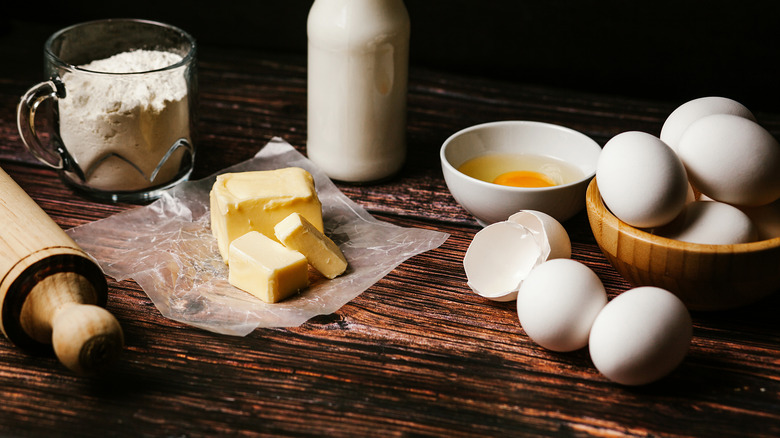
If you have a last minute craving for rum cake (or need to make a dessert on the fly), it can be tempting to grab your ingredients out of the refrigerator and use them as-is. The problem with this is that cold items, like butter or eggs, can be extremely challenging to work with and will not properly incorporate to create the chemical reactions necessary for a perfect rum cake. Plus, cold eggs can create an overly eggy taste in any gâteau — whether that be vanilla cake or a classic carrot cake with cream cheese frosting.
For professional results, make sure you allow eggs and butter to come up to room temperature. This will make them easier to work with, allow for better incorporation, and prevent any unwanted taste profiles. Remember, however, that we're talking about room temperature. You don't want to heat up your butter in the microwave to make it soft, as any hot ingredients can cause the eggs to cook. Once the eggs have cooked, they won't combine with the remaining ingredients, which can mean your cake won't rise, bake, or taste good.
I recommend taking the butter and eggs out of the refrigerator about an hour or so before using them. If you're feeling antsy to get working, consider giving your work area a good cleaning, preparing your mise en place, and preheating your oven during this time.
Choose buttermilk over regular milk
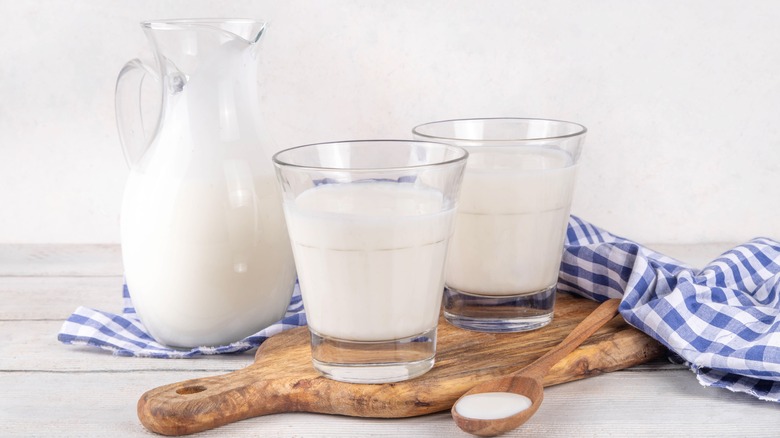
In my rum cake recipes, I always choose buttermilk over regular milk. Why? Buttermilk has a tangier taste that complements the rum flavor profile in the cake. This can create depth and complexity in your final product.
If you want to use buttermilk to create the perfect rum cake, but don't have it on hand or can't make time to run to the store, there are potential alternatives you can use in a pinch. The first and easiest method for making homemade buttermilk is to combine regular milk with 1 to 2 tablespoons of lemon juice or vinegar. Allow the mixture to sit at room temperature for five to 10 minutes. You'll see the mixture begin to curdle and slightly thicken. This will offer a tangy taste similar to commercially produced buttermilk.
The second option is a little less convenient and takes longer to do, but it might work well in some situations. If you have heavy whipping cream on hand, you can place it into a countertop mixer and let it go until the fat separates from the liquid. The fat turns into butter, which can be strained off. The liquid that remains is buttermilk.
Add extra egg yolks
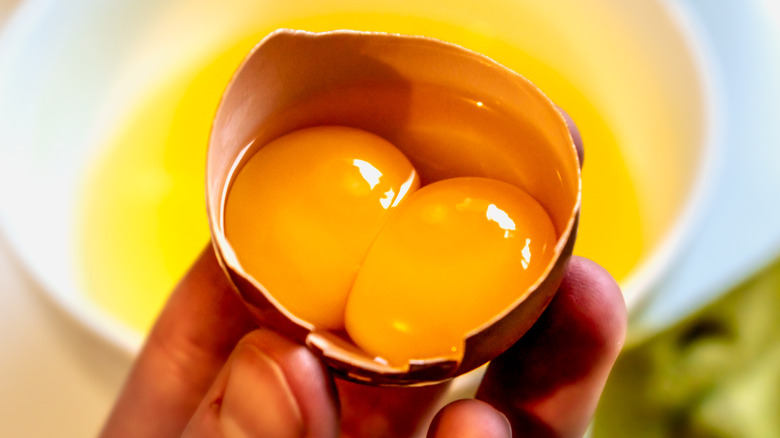
Egg yolks are rich in fats and contain emulsifying properties that are crucial to baking. Adding one or two extra egg yolks to your recipe can help produce a firmer rum cake with a better flake. Additionally, those extra fats will increase moisture and richness, while simultaneously creating a more aesthetically pleasing color. Determining whether to add one or two extra egg yolks means looking at how many full eggs the recipe already calls for. If the recipe calls for three or less eggs, I recommend adding just one extra egg yolk. But, if it calls for four or more eggs, I recommend adding two extra egg yolks.
To do this, you'll need to separate the egg whites from the yolks. You can always save the unused egg whites for healthy scrambled eggs or a classic French meringue. If you struggle with separating the whites from the yolk, I recommend investing in a simple, affordable tool. This LuoCoCo Vomiting Chicken Egg Yolk White Separator costs less than $10 on Amazon and works incredibly well. Just place the whole egg inside and tilt the chicken forward. The white will come out of the mouth. Plus, it's a really cute, whimsical design that can bring a bit of cheer anytime you use it.
Dump in vanilla pudding mix
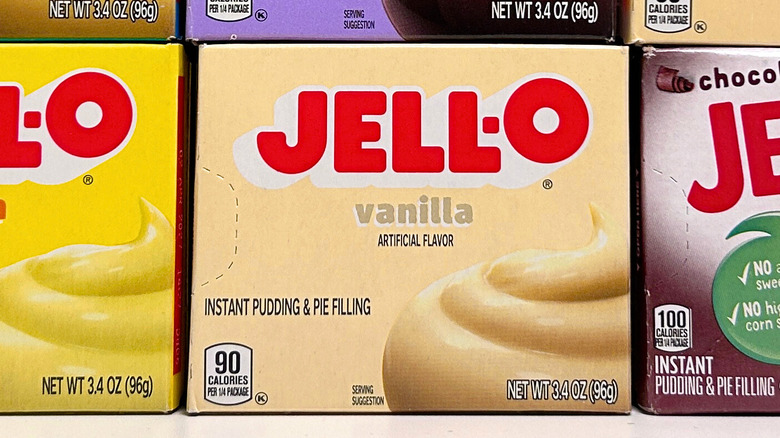
Another great tip for enhancing a rum cake recipe is to dump store-bought vanilla pudding mix into the batter. Doing so will produce a much moister rum cake with a more layered flavor profile. Plus, thanks to the extra starches, sugars, and fats, the pudding mix will also enhance your rum cake's richness and potentially lead to a darker, more appealing color. And, if you really like this specific hack, you'll be happy to know it works on a host of other types of cake, too. Definitely try it out on a classic pound cake or a buttermilk vanilla cake recipe, among others.
To successfully execute this technique, use the vanilla pudding mix as-is without preparing it according to the instructions listed on the box. Simply dump the powdered contents into your bowl of dry ingredients before adding these to the wet ones. Then bake as indicated by the recipe.
Use high-quality rum (or rum extract)
Rum is what gives this recipe its hallmark flavor profile, so choosing a high-quality option is essential if you want a rich, sweet, mildly smoky tasting cake. The best type of rum for the job depends on the flavor-profile and color you're hoping for. Jamaican rums, like Wray & Nephew, are an excellent choice if you're looking for the most authentic taste, while dark rums, like the Cruzan Black Strap, provide a deeply rich, molasses-type taste. If you'd prefer a warm rum cake with spicy vanilla tones, spiced rums, like Captain Morgan, work really well. Of course, if you're looking for a bright, but sweet, rum cake, light rums, like Bacardi Superior, will do just fine.
If you're concerned about alcohol content in the cake (or just don't want to use real rum) you can swap it out for a rum extract. These extracts will offer the distinct taste of rum, but without any of the alcohol. Again, it's crucial to choose a high-quality option for the best flavor. I recommend using Cook's Pure Rum Extract, which not only has thousands of positive reviews on Amazon, but is also free of allergens, sugar, gluten, and GMO ingredients.
Sift your dry ingredients thoroughly
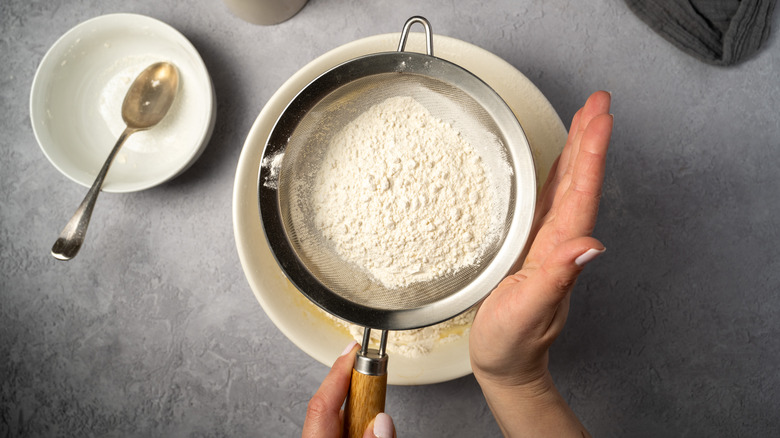
Sifting your dry ingredients thoroughly will help prevent clumps and make combining your ingredients easier. Dry ingredients in a rum cake recipe may include flour, baking powder, baking soda, salt, and (if you decide to use it) vanilla pudding mix. When all of these are sifted together, it provides assistance with proper incorporation, ensuring all of the necessary chemical reactions can take place. The chemical reactions between ingredients are what's responsible for a cake rising, developing a nice crumb, and browning.
If you don't already have a sifter, you can find an affordable, effective option on Amazon. Although there are various types available, I recommend this Vollum Stainless Steel Flour Sifter, which features a fine mesh on the bottom and high sides to prevent spillage. To use this type of flour sifter, gently move the container back and forth while tapping the sides with the palm of your hand. This movement will encourage the flour and other dry ingredients to sift through the holes in the bottom, falling into your mixing bowl.
Add your ingredients in the right order
Baking is a science, requiring not only very careful measuring of each ingredient to work, but also that each item be added in a specific order. Rum cake is no exception to this rule, and understanding the correct order to add your ingredients in can help easily elevate your results to those of a professional.
The first thing you should do is place butter and sugar into your mixing bowl. Cream these together before adding your eggs in one at a time. It's very important to put in the eggs individually instead of all at once, as this allows for the best (and easiest) incorporation.
Once the eggs are fully combined, toss in your vanilla extract and rum (or rum extract) before stirring. Depending on which ingredients are included in your recipe, you'll next throw in milk, buttermilk, water, or sour cream. Sift your dry ingredients together in a separate bowl and then add to the wet ingredients all at once. If you're using mix-ins, like raisins or nuts, fold these in carefully at the very end. If you follow these steps precisely, you'll be left with a sturdy, soft, moist, and absolutely delicious rum cake.
Don't over or under mix your batter
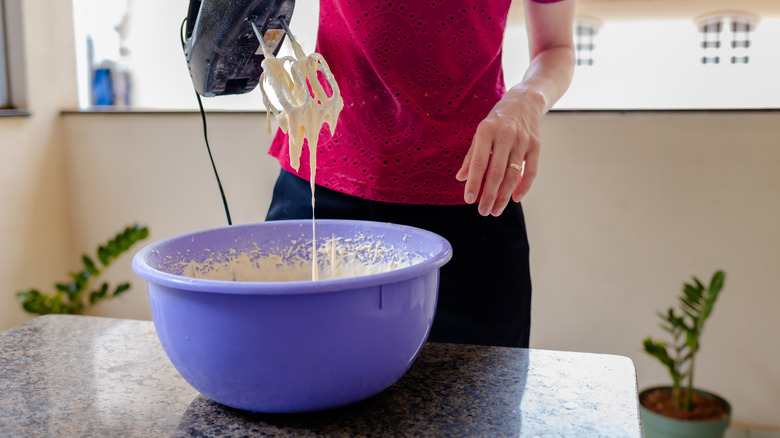
Over or under mixing your rum cake batter is one of the most common issues people face. After all, it's easy to accidentally err one way or another. Even I've struggled with this problem when I wasn't paying careful attention to what I was doing, and I have formal training. Unfortunately, this simple mistake can lead to big issues with your cake. If you mix it too much, you could end up with a rubbery rum cake that's practically inedible. If you don't mix it enough, your ingredients may never be fully combined and the final result could be chalky, gritty, or never rise properly.
To avoid textural or taste nightmares from mixing problems, you should learn how to strike a perfect balance. Like with most things, practice makes perfect, so don't be discouraged if you struggle to get this right away. But, essentially, what you're aiming for is to mix the cake batter just enough that all the ingredients are fully combined together and then stop. If there are a few lumps, that's totally okay and expected. If you're using mix-ins, always fold them in and never stir. Stirring at this final step can not only damage your mix-ins, but it can also easily tip you over the scale into mixing too much.
Poke many holes in the warm cake for the rum to soak into

The rum soak is something that makes this cake unique and flavorful. Usually made from some combination of rum, butter, white sugar, brown sugar, heavy cream, and vanilla extract, the rum soak is poured onto the cake after it's done baking. As the mixture soaks into the cake, it imbues it with a robust, sweet, rum taste. But, if you want the rum soak to be most effective (and therefore impart the most flavor), you need to poke holes in the warm cake. And, you shouldn't skimp on those holes, either.
For best results, poke as many holes in the top and sides of your rum cake as you can. Don't forget the interior of the cake if you're creating it in a classic Bundt shape. If you aren't, you can disregard this part. Although you want many holes, you don't want them to be noticeable or affect the structural soundness of your cake. For this reason, I suggest using a toothpick or a tool like this Ateco Stainless Steel Cake Tester, which is a bit longer and almost as thin.
Since you'll be pouring your rum soak into the cake while it's still in the pan, it's important to give it enough time to really absorb the juices before flipping it. Plus, if you don't wait, you might end up with a big wet mess from excess liquid.
Reserve a small amount of rum soak for later use
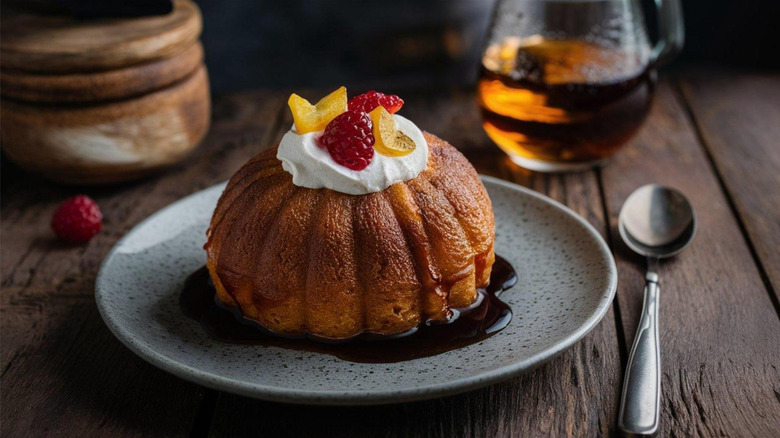
The rum soak is also sometimes called the rum glaze, and you'll want to reserve a small amount of it during the initial pour to use after plating. You won't need to save a lot of it, just about a quarter or less of the total soak is fine. You'll use this to drizzle over the cake once you've plated it for the best results, both taste-wise and aesthetically.
You can take this one step further and use the leftover glaze you created as a base for a rum buttercream. This is ideal if you want a heavier, slightly sweeter topping whose visual appeal you may prefer. An easy way to do this is to create a traditional American buttercream frosting with butter and powdered sugar. Then, add your rum soak reserves in slowly while continuing to beat, using extra powdered sugar to thicken the mix to taste. Ice your rum cake with this frosting once it has cooled completely.