

10 Mistakes Everyone Makes With Butter Cake, According To A Baker
We may receive a commission on purchases made from links.
If you're looking for a simple recipe to add to your baking arsenal, butter cake fits the bill. It's a delicious cake that can be dressed up in countless ways to create something new each time. For example, you can top it with traditional buttercream frosting or sour cream chocolate frosting. You can add baking chips, nuts, or fruits before mixing. You can even layer sweet jams or indulgent creams between your cake layers.
Of course, despite being incredibly simple, there are many people who struggle with perfecting their butter cake recipes. When I first started my bakery training decades ago, I struggled with perfecting butter cake, too — and with perfecting most things, in fact. But after my extensive training and more than a decade working professionally, I learned what mistakes I was making and how to fix them. Now, I'm going to share that with you so you can learn from my mistakes without having to figure it out for yourself the way I did. By the time we're done here today, you'll know exactly what you've been doing wrong and be well on the path to making delicious, professional-level butter cake!
Mistake: Using cold ingredients instead of room temperature
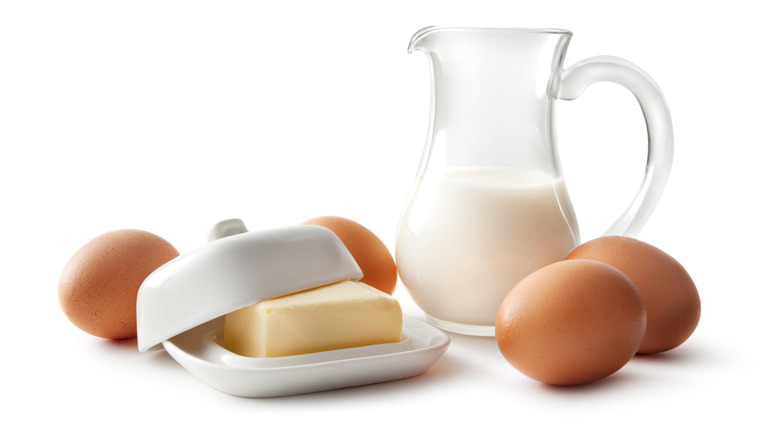
If you're trying to whip something up real quick, it's tempting to grab your refrigerated ingredients (like eggs or butter) and use them exactly as-is. Trust me when I say, it pays off to be a little patient and allow those ingredients to come to room temperature. See, cold ingredients are extra firm, which makes them challenging to work with and also leads to poor incorporation. In turn, this can lead to issues like pockets of unmixed eggs, crusty bits of flour, or gritty bites of sugar in your finished product.
You want your ingredients to be left out on the counter to slowly come to room temperature. It's worth mentioning that anything hot, that's been warmed in the microwave or on the stove, will also cause its own problems with incorporation. Plus, warm ingredients can cause your eggs to start cooking and your batter to become too runny. The solution is to plan ahead as much as possible. Pull your eggs and butter out of the refrigerator and leave them on the counter for at least an hour for the best results. The only exception to this rule is the milk, which shouldn't be left out, to avoid any risk of foodborne illnesses.
Mistake: Not sifting your dry ingredients
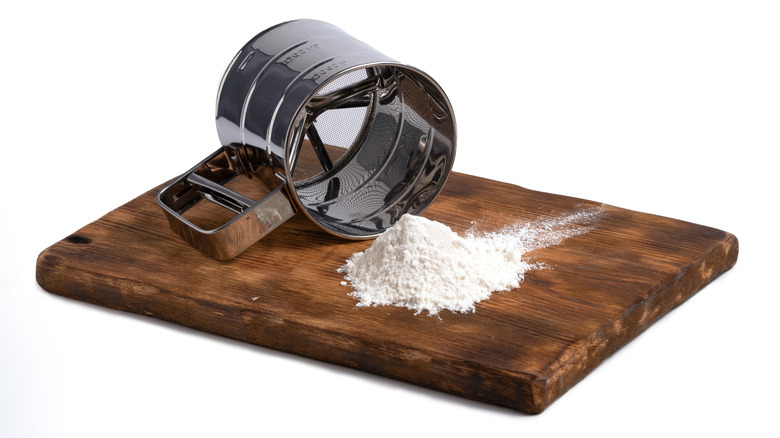
This mistake can be true whether you're creating butter cake from a boxed cake mix or crafting it from scratch — if you're not sifting your dry ingredients together, you'll never receive the best results. When you don't sift your dry ingredients like flour, salt, and baking powder, it can lead to lumps and poor incorporation. The simple solution is to spend five extra minutes sifting, so your batter is easier to mix, smoother, and the components are all thoroughly combined.
Dry ingredients should be sifted together before they're combined with the wet ingredients. The best way to do this is to sift them into a separate bowl, which you can then combine with your butter cake's other ingredients at the appropriate time. If you don't already have a sifter, don't fret. I suggest grabbing a Stainless Steel Flour Sifter, with a durable mesh and high sides, which is what I use in my own kitchen. For this type of sifter, gently tap the sides while moving the tool slightly back and forth to encourage the dry ingredients to transfer through.
Mistake: Failing to carefully measure out the ingredients
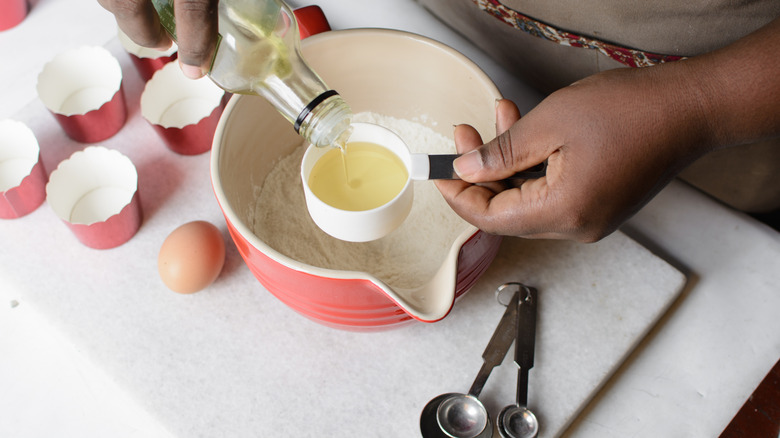
Baking is a science, not an art. This is something my mentor repeated to me so many times, during both my training and my early career, that I wouldn't be surprised if I still recite it in my sleep. It's helpful if you remember this simple fact, too, since it's very true. While you can take a lot of liberties with cooking, everything in a baking recipe is measured out exactly, to produce the right chemical reactions for the perfect taste and texture. Unlike other types of cooking, you can't just add or subtract ingredients because you don't like them or don't have them on hand.
If you've been eyeballing your butter cake ingredients and hoping for the best, that's probably what's to blame for any poor results you've seen. Instead, it's crucial that you carefully measure out the ingredients exactly. For this reason, every good chef should have a set of measuring spoons and at least one good measuring cup in their home kitchen.
If you don't already have a set, I suggest using these Spring Chef Stainless Steel Magnetic Measuring Spoons. I love that they easily stack together for tight storage spaces and that they're dual-sided for dry or wet ingredients. I also recommend this three-pack of Pyrex Essentials Glass Measuring Cups. With three distinct cups, you'll always have a clean one on hand when you need it, each measuring out a unique number of cups from one to four.
Mistake: Adding all of the eggs at once
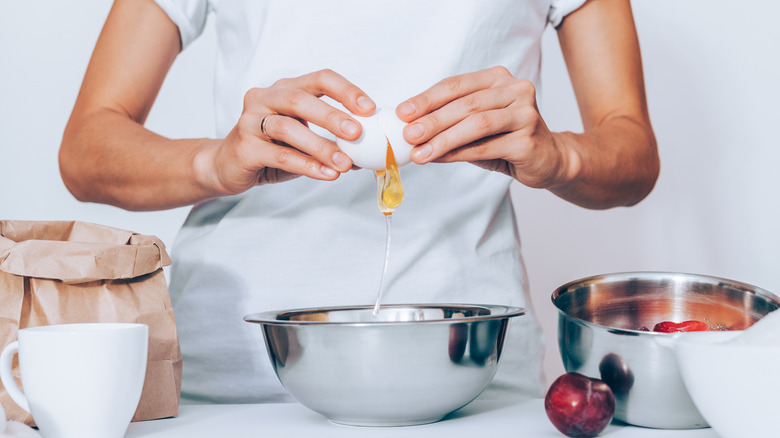
Making butter cake isn't a process you should rush if you want to create a soft, moist, buttery cake that has everyone begging for the recipe. All too often, taking just a few extra minutes (or even seconds) can lead to significantly better results. For example, while I have a few variations I rotate through, the most common butter cake recipe I use calls for six large eggs. If you're adding all of these eggs at once and then furiously trying to combine them, you might run into some issues. Most notably, you may see some separation in the batter or find that the eggs don't combine fully, no matter how hard you stir.
The simple solution here is to add those eggs into your mixing bowl one at a time. This works not only for butter cake, but also for chocolate cake, cinnamon rolls, and any other baked good that uses eggs. Stir each until fully incorporated before adding your next. There are so many benefits to this simple technique that it's beyond worth the few extra minutes you'll spend on it. For starters, doing this will prevent separation and ensure the eggs are thoroughly combined. It also ensures a more uniform texture that bakes better, and stops your butter cake from tasting eggy.
Mistake: Forgetting to cream the butter and sugar together
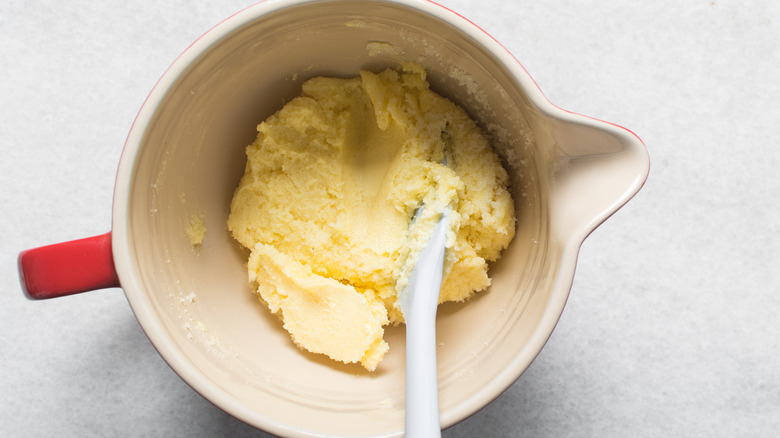
Did you know that the very first step in combining your ingredients into your mixing bowl should be creaming your recipe's butter and sugar together? If you said no, then this is probably a simple mistake that you've been making, and fixing it can quickly improve your final butter cake results. Most notably, proper creaming of these ingredients will lead to a lighter, fluffier cake batter free of any grittiness from the sugar.
To do this, I suggest a hand mixer like the Kitchen Aid 5-Speed Ultra Power Hand Mixer. Bonus points here, because you can match this hand mixer to your kitchen decor. That said, if you don't have a hand mixer or can't afford one right now, you can definitely use a standard whisk. It's just going to take a bit longer and may not get quite as fluffy, but that's okay.
Regardless of the tool you're using, you'll want to drop your room temperature butter into the bottom of the bowl. I prefer to add the sugar in halves for easier incorporation, but you can add it all at once. Cream these together until the mixture is light and fluffy, but sturdy enough to form peaks and still fairly thick — you don't want it to be runny. With a hand mixer, this process should take about two to four minutes on average. With a standard whisk, expect it to take anywhere from four to eight minutes.
Mistake: Using low-quality vanilla extract
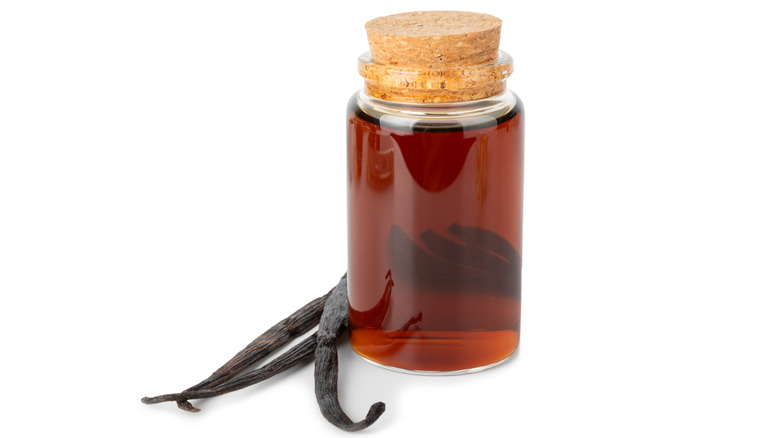
From carrot cake to four-ingredient fudge and beyond, nearly every cake, pastry, and baked good out there uses a flavor extract, with vanilla extract being the most common. Butter cake is no exception, where vanilla extract helps provide a base flavor depth for the butter to build on. Using low-quality vanilla extract can lead to an overall poor taste, and it could even be made with ingredients that actually harm your recipe, like unnecessary oils or additives that interact poorly with the rest of your butter cake's ingredients.
You can avoid any issues by choosing a high-quality vanilla extract. If you're familiar with any other articles I've written, you'll know that I always strongly recommend using Watkins Pure Vanilla Extract. It's made with ingredients I feel good about and has proven to give quality results with good flavor depth throughout my career.
You should add your high-quality vanilla extract right after the oil (if you're using it in your recipe) or eggs, but before the milk. Carefully measure your recipe's amount out and combine thoroughly before moving on to the next step. It's easy to overdo the amounts of your extracts, but doing so can turn a good thing into a flavor nightmare.
Mistake: Choosing the wrong kind of butter
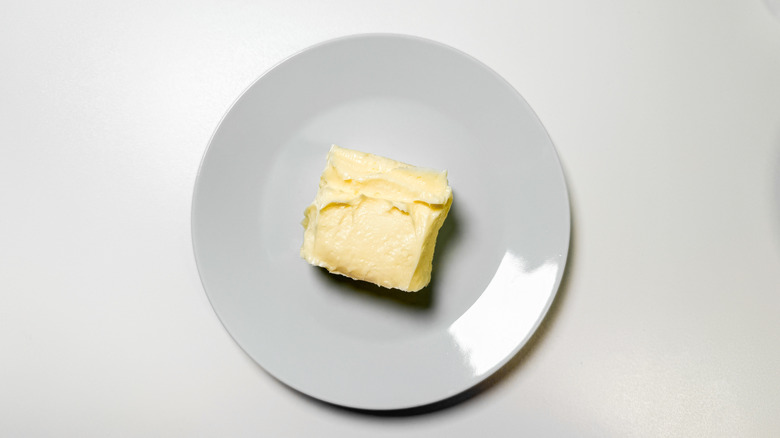
As the name suggests, butter is one of the most important ingredients in butter cake. Not only does it give richness and moisture, as it does for all baked goods, but it also creates the cake's hallmark flavor profile. Keeping that in mind, using the wrong kind of butter can throw off everything about your cake — the taste, the texture, and even how well it bakes.
Don't use butter spreads that you'll find in tubs at your local grocery store, since these are mostly just vegetable oil. Truthfully, this could work fine in a pinch, for certain baked goods, but butter cake isn't one of them. You should also avoid the salted butter you most likely use when cooking. Either of these types can lead to poor results.
Your best option is to use European-style unsalted butter, if you have it or can get it. This has a slightly higher fat content that can produce even richer, better-tasting results. However, if you can't get this, then standard American unsalted butter will work just fine. This ensures you don't have excess salt in your cake that can ruin its taste or texture.
Mistake: Including ingredients in the wrong order
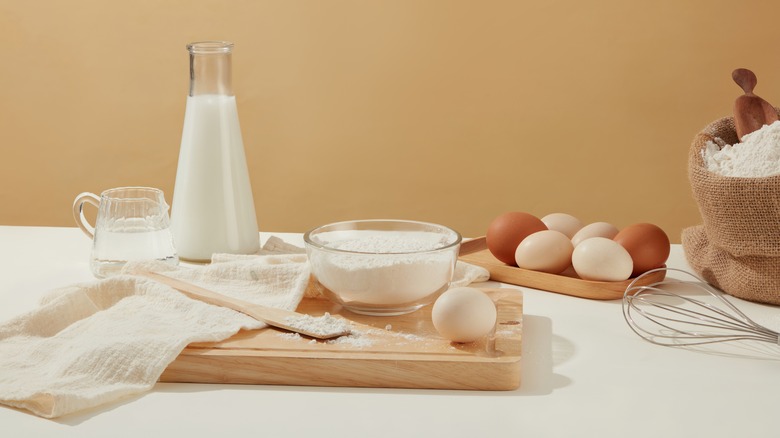
Remember how I talked about baking being a science? Well, any good science experiment or chemical reaction will have a set series of events that need to take place — an order in which things must be done. Baking your butter cake requires this same process. You need to add the ingredients in the right order (and with the correct method) if you want to ensure the right taste and texture, as well as even baking. If you've been throwing things together in the mixing bowl without thought, and experiencing problems, following the right order of ingredients could solve those issues.
The first thing you'll want to add to your mixing bowl is your butter and sugar. Once you've creamed those two together, add the eggs in one at a time, fully combining after each addition. Then, add oil if your recipe calls for it, followed by vanilla extract. Depending on what your recipe calls for, you'll add milk, buttermilk, or water next, followed by your sifted dry ingredients. Finally, add any mix-ins you plan to use, like baking chips, nuts, or fruits. Gently fold these into the batter instead of vigorously stirring them for best results. If you follow this order, your butter cake will turn out nicely every time.
Mistake: Overmixing or undermixing your butter cake batter
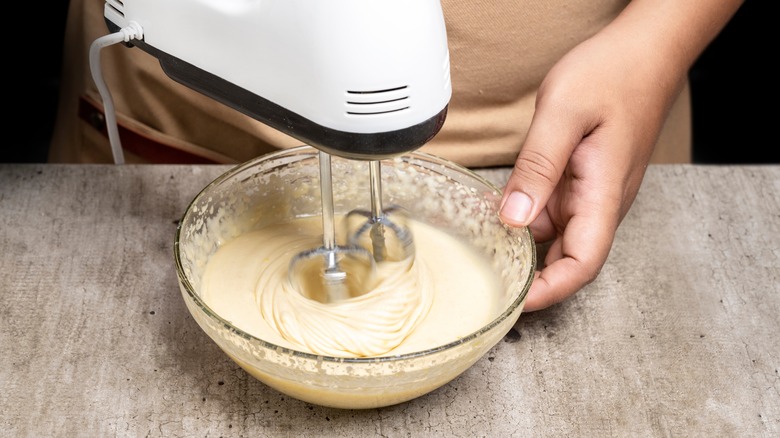
Overmixing or undermixing the butter cake batter are the most common mistakes I see people making, and that's probably because it's so easy to do. Learning to strike that balance between too much and too little is your gateway to baking the best butter cake possible. But why are these issues in the first place? Well, overmixing leads to excess air in the cake batter, while undermixing leads to poor incorporation. Both these mistakes can lead to textural issues, taste problems, and baking challenges. For example, overmixing can lead to a rubbery texture, while undermixing can lead to a cake that doesn't rise properly.
Finding the perfect balance takes some practice, but you'll get it in time. Ideally, you'll combine the ingredients only until fully incorporated, and then stop. The butter cake batter may be very slightly lumpy, but that's okay. If you're going to include mix-ins, remember to gently fold them in rather than mixing them, as this last step can also teeter you over the edge into overmixing.
Mistake: Placing the cake in an oven that hasn't been preheated
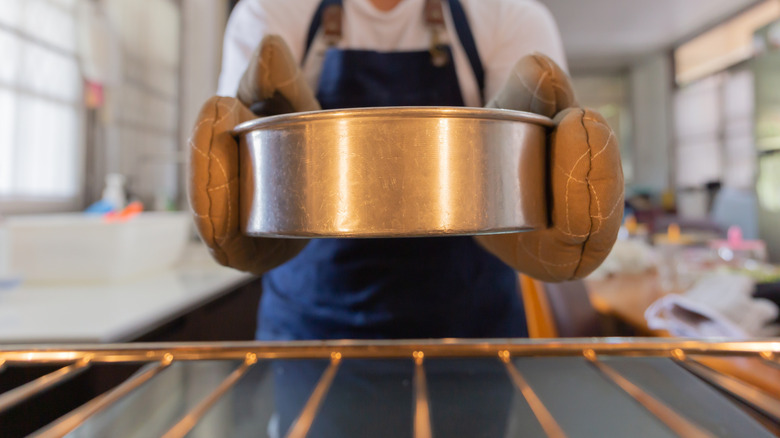
It can be tempting to pop your cake into the oven whenever it's ready, without paying attention to whether the oven has reached the correct temperature or not. After all, as long as it gets hot enough, the cake will cook, right? If you're thinking that, I get it, but unfortunately, baking your perfect butter cake isn't quite so simple.
When a cake is placed into an oven that hasn't been preheated, it's placed into an unstable environment. That oven will initially have pockets of hot or cold air, which can lead to uneven baking or even cause a cake to fail to rise. Proper preheating allows the oven's internal environment to become more stable and uniform in temperature. In turn, this allows for the most even baking, ensures a good texture, and allows the cake to rise properly.
The best way to make sure your oven is preheated is to turn it on before you begin mixing your batter. I find that this works well because the oven can do its thing while you do yours, and your flow never has to be interrupted. If you do forget to turn it on ahead of time, though, have patience and wait it out before placing your cake inside, no matter how troublesome it feels to wait for the preheating to finish.