

The 9 Best Liqueurs That Mix With Hot Chocolate
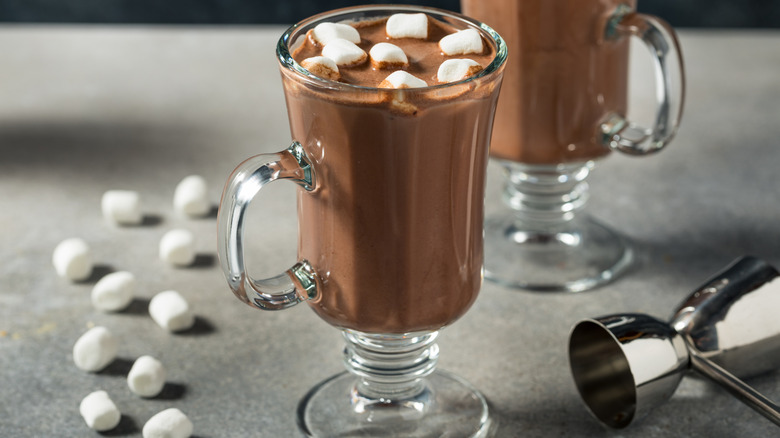
There's not much to improve when it comes to a steaming hot mug of rich, velvety hot chocolate. A dollop of sweet whipped cream (the best topping, according to our survey), some mini marshmallows, and maybe some chocolate shavings can give the drink a bit of an upgrade, but if you want to make the comforting beverage warm you up even more, why not adult-ify it with a generous glug of liqueur?
Now, you don't want to compromise cocoa's perfection by throwing in a shot of something that clashes or dilutes the chocolate flavor — rather, you want to find a liqueur that enhances and boosts what's already there. There are so many liqueurs on the market now that it can be something of a labyrinthine task to find the right one for this purpose. Luckily, there's not just one perfect hot chocolate liqueur companion, but many possible options. Here are the best ones to use to spike your next cup of cocoa.
1. Amaro
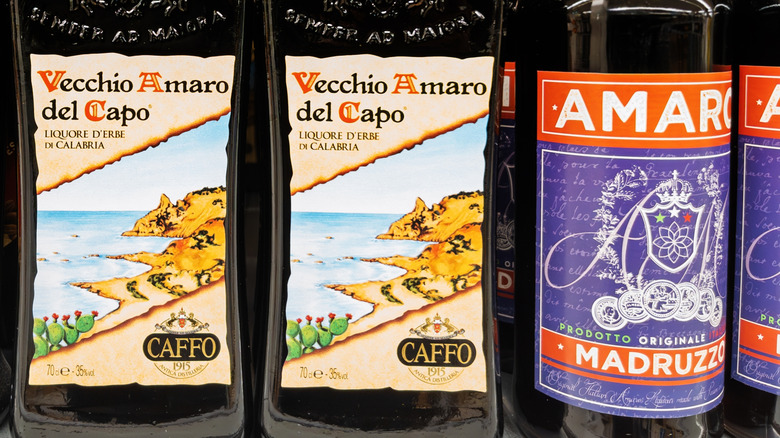
Amaro is such a vast category, there are literally books written on the subject. In Italian, amaro means bitter, but don't let that term put you off. Most amari have a balance of bitter and sweet, and are made with a unique blend of botanical ingredients that typically include medicinal roots, herbs, citrus, and flowers. Across Italy, and in many other European countries, these liqueurs were originally made as health tonics, with the botanical ingredients preserved in a base of neutral alcohol. Because each was made using local plants, these liqueurs come in a wide variety of flavor profiles.
It may take some trial and error to find the perfect amaro for hot chocolate, depending on your personal preference, but it'll certainly be a pleasant journey to undertake. Some classics to start with will get you on the right track. Vecchio Amaro del Capo has a rich, syrupy texture and bright minty notes balanced with citrus. Amaro Montenegro is one of the easiest to find, with its signature orange peel and vanilla flavors making the perfect complement to chocolate. Averna, from Sicily, is dark and spicy. If you want to lean into a truly traditional example, look for Amaro dell'Erborista, an unfiltered amaro sweetened only with local honey. It'll add a rustic, bitter, woodsy kick to your cocoa.
2. Grand Marnier
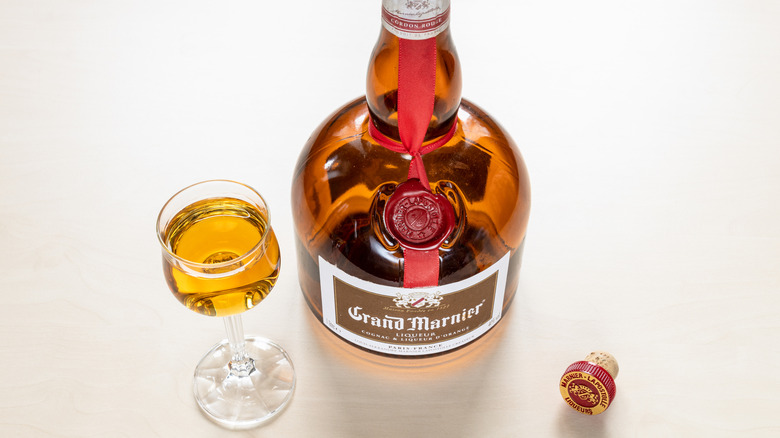
Chocolate and orange make a flavor duo that's hard to beat, so orange liqueurs are some of the first types you may want to look for to mix with hot cocoa. While you can use any orange liqueur, like triple sec, curacao, or even orangecello, the elegance and richness of Grand Marnier adds the most depth and dimension. A shot of this French concoction in hot chocolate will elevate the beverage like nothing else.
Cognac and orange liqueur are meticulously blended to make Grand Marnier. Using such a complex base spirit imbues this liqueur with more intensity and intricacy of flavor than others that are made with neutral alcohol. The addition of Grand Marnier will complement any type of hot chocolate, but works particularly well with rich dark chocolate that has a robust flavor and isn't too sweet. Keep in mind that Grand Marnier packs quite a punch for a liqueur, boasting 40% alcohol by volume, which is comparable to many straight spirits.
3. Irish Cream
While whiskey and dairy products have been produced in Ireland for ages, it wasn't until the 1970s that they were combined to create the now incredibly popular beverage, Irish cream. Baileys was the trailblazing brand and continues to be the leader in the category, but plenty of others like Carolans, Five Farms, and Coole Swan now grace store shelves. Many offer multiple flavors these days, but the classic profile is rich, sweet, and subtly boozy with touches of cocoa and vanilla. As you can imagine, it's a beautiful enhancement to hot chocolate.
Irish cream is fairly sweet, so keep that in mind when adding it to your cocoa. It doesn't have as much bitterness or spiritous intensity as some of the other options. Depending on your palate, this could be a detriment or a benefit. The whiskey flavor does come through to add balance to the sweetness, but expect Irish cream hot chocolate to be a very decadent, dessert-like treat.
4. Chocolate Liqueur
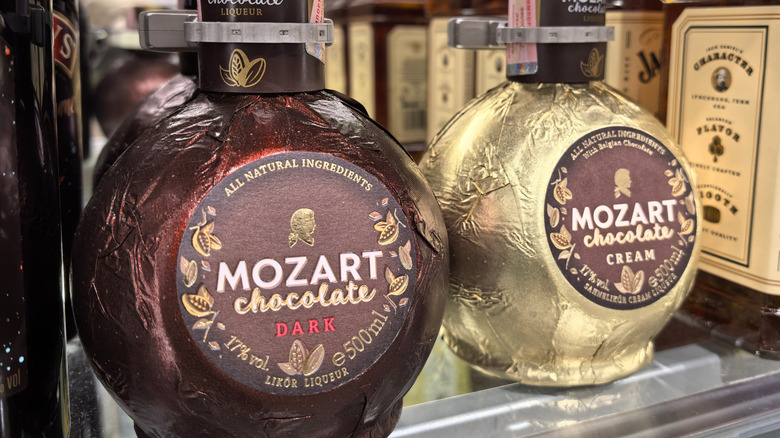
It may seem like putting a hat on a hat, but adding chocolate liqueur to hot cocoa takes the drink to a whole new level. There are a multitude of brands and styles available, so you can personalize your double chocolate drink in all kinds of ways. Take Mozart, for example, one of the more popular chocolate liqueur brands — the original product is made with Belgian milk chocolate, and you can also find dark and white chocolate variations, as well as unique flavors like coconut chocolate. And that's just one brand. Shop around, and you can find a nearly endless selection.
Tempus Fugit makes a fabulously pure-tasting crème de cacao made from raw cocoa and vanilla beans. You can go tropical with KoHana's Kokoleka, a chocolate and honey liqueur made from all Hawaiian ingredients. OM (Organic Mixology) makes a liqueur with bittersweet chocolate and a subtle note of sea salt. Italian producer Bottega's Gianduia chocolate liqueur includes hazelnut, so you can turn your hot chocolate into a mug of liquid Nutella. Most chocolate liqueurs hover around 17% alcohol by volume, so you won't need to worry too much about over-spiking your drink — though you may need to worry about chocolate overkill.
5. Tuaca
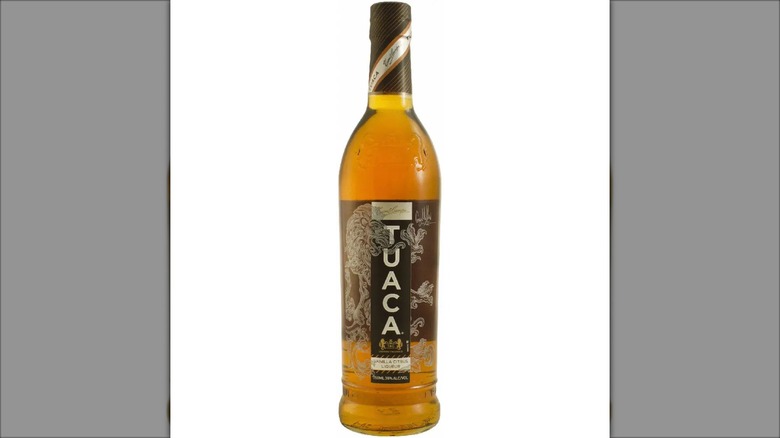
Tuaca is one of those bottles you've probably seen behind the bar a million times, but may have never tasted it. Its flavor profile is rather unique and hard to pin down, so a lot of people are unsure what to do with it. As a cocktail creator, I considered it one of my secret weapons, using it as a sweetening agent in many drinks. Its flavors of vanilla, Mediterranean citrus, and spices work well with so many spirits and ingredients, and while it's sweet, it's also fairly strong at 70 proof, with a brandy base that balances that sweetness.
The flavor profile of Tuaca might just shine brightest when paired with chocolate. A glug of this in a mug of hot cocoa adds a ton of dimension with just one ingredient. You get the elegance of vanilla, the warmth of baking spices, and the brightness of citrus. Give someone a Tuaca hot chocolate, and they'll probably think you're a gourmet cocoa genius.
6. Coffee Liqueur
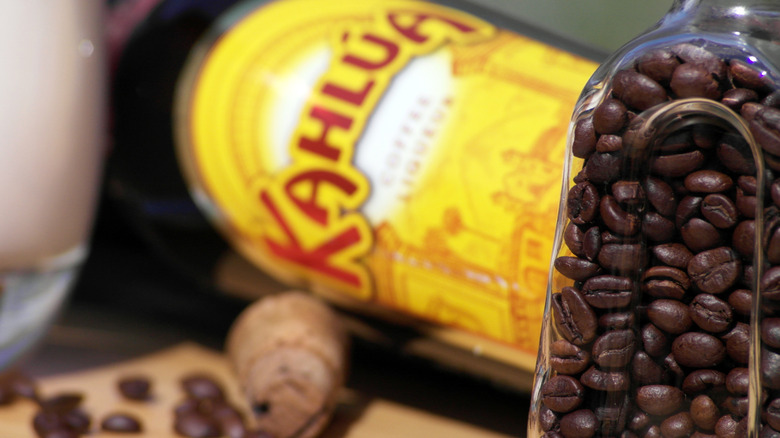
Kahlúa's the big dog when it comes to coffee liqueurs, and has been since it came on the scene in Mexico in 1936. It's far from the only coffee liqueur out there, though — if there's any category that's exploded in recent years, it's this one. Partially driven by renewed love of the espresso martini, coffee and espresso liqueurs have essentially flooded the market. That's great news for those of us who love a little bit of booze and coffee in our drinks, especially in hot chocolate.
Kahlúa and Tia Maria offer similar experiences, as both are rum-based and made with 100% Arabica coffee, and both are excellent at turning your hot chocolate into a mocha-like cocktail. For something a little different, look for St. George's NOLA, a liqueur inspired by the New Orleans tradition of adding chicory to coffee. Mr. Black, a liqueur from Australia, is a bartender's darling, thanks to its strong natural coffee flavor and light sweetness that lets bitterness take the stage. Espresso liqueurs are a popular Italian category, with brands like Borghetti, Galliano, and Luxardo each offering their own version with intense, concentrated coffee flavor. Any of these is a welcome addition to hot chocolate, adding flavor as well as a little pick-me-up.
7. Chile Liqueur

Chile pepper liqueur is a somewhat under-the-radar category for now, with not nearly the variety on the market of most others on this list. The dominant label is Ancho Reyes, which produces two main varieties: The bright, zippy poblano and the deep, smoky ancho. Both are somewhat sweet to balance out the chile pepper bite, and both can turn your hot chocolate into a spicy-sweet delight.
The combination of chile and chocolate is nothing new, with cocoa being an integral ingredient in many Mexican moles and chilis, and long before today, Mayans and Aztecs enjoyed chocolate and chile drinks. The flavor elements play off one another well, creating an invigorating drinking experience. Aside from Ancho Reyes, you can find some other intriguing chile liqueurs. Grove Street makes one from New Mexico's flavorful hatch chiles, Boyd & Blair has crafted its own ancho chile liqueur, and even two lauded French liqueur producers, Giffard and Massenez, have thrown their hats in the ring: Giffard using piment d'espelette, and Massanez using piment oiseau, or bird's eye chile. If you're a heat-seeker, these are the perfect liqueurs to add to your hot chocolate, with emphasis on hot.
8. Allspice Dram
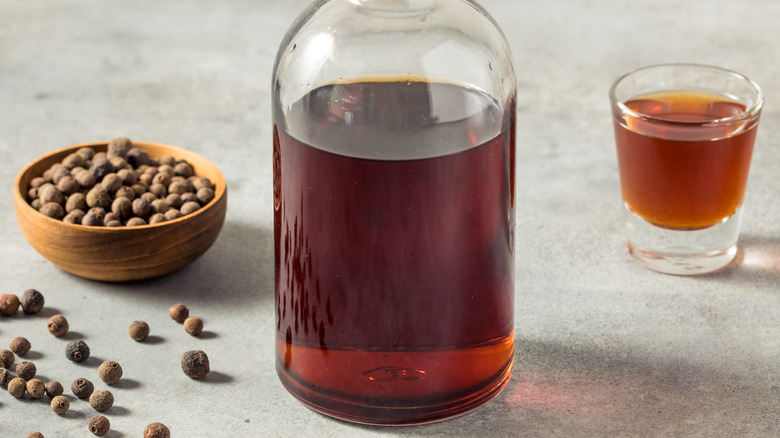
A staple of tiki drinks, allspice dram — sometimes also known as pimento dram — is another one of those secret ingredients that you've likely had in a cocktail, but didn't realize was there. Allspice comes from a berry tree that grows in the Caribbean, and the liqueur made from its dried fruits originated in Jamaica. Contrary to its name, allspice is a single spice, but it holds so much flavor that it comes across as a blend, with notes of peppercorn, baking spices, and licorice. Allspice dram tends to be quite sharp and intense, so bartenders often use it in tiny amounts, sometimes with an eyedropper, so as not to overwhelm their cocktails. Keep that in mind when adding it to your hot chocolate, as a little goes a long, long way.
That quality makes allspice dram a great ingredient to have in your home bar. Depending on how often you make cocktails like boozy hot chocolate, one bottle can last months or even years. St. Elizabeth is the best-known brand, made with Jamaican rum and sporting a complex spicy and smoky profile. Other brands to check out are The Bitter Truth and Hamilton. It's also a fairly simple liqueur to make yourself — just infuse rum with crushed allspice berries, strain, and add simple syrup to taste.
9. Nocino
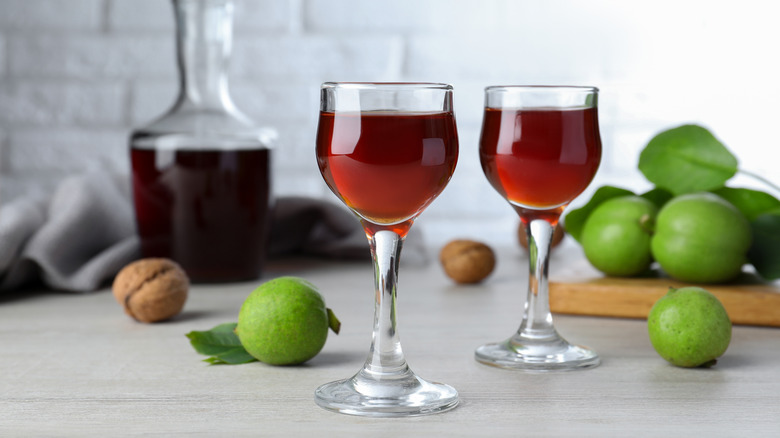
Similar to amaro, nocino is an Italian liqueur that dates back centuries. While not as varied in style as amaro, there are nevertheless many subtle variations, and it's now produced all over the world. What they all have in common is one base botanical: Unripe walnuts. Some producers add spices, citrus, or other ingredients like vanilla, while others leave it pure, to showcase the walnuts' natural flavor, adding only sweetness. Whatever the recipe, the resulting nocino liqueur is nutty and woodsy, and makes a rustic but sophisticated addition to hot chocolate.
If you can get your hands on unripe walnuts, you can make your own nocino, although it's quite a time-consuming process. Thankfully, there are plenty of options available to purchase. Faccio Brutto's nocino includes allspice, citrus, vanilla, and cocoa, all flavors that play beautifully with chocolate. Il Mallo is another excellent brand, made with carefully sourced walnuts from specific areas around Italy. Nocino tends to be fairly strong, generally around 30-40% alcohol by volume, so be aware that it'll give your hot chocolate quite a kick.