

The 2 Styles Of Kitchen Knives That Ree Drummond Swears By

When it comes to essential kitchen tools, knives sit near the top of the list. With all the slicing, dicing, mincing, crushing, and cutting that takes place during the course of making a meal, a good knife can make or break your success. The Pioneer Woman couldn't agree more. Whether Ree Drummond is using her method to perfectly cut pineapple every time or cutting up some okra to fry, a knife that can do the job is key. In an exclusive interview with our sister publication Mashed, Drummond said, "I like Santoku or Nakiri style knives."
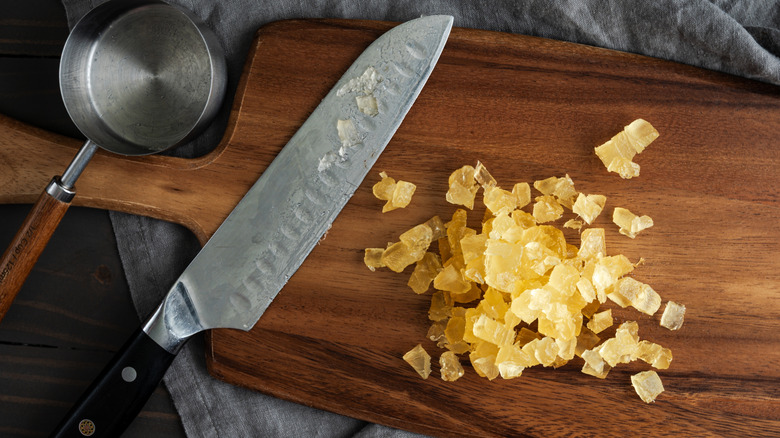
What makes these special? Santoku is a Japanese knife whose name means "three virtues." The name could be a nod to the three ways to use this knife, or to the three food groups it can easily tackle: meat, vegetables, and fish. Either way, users of the Santoku praise it for its ease of use and its speed. Its wider blade, commonly called a sheep's foot, is smaller and lighter than a traditional chef's knife. One of the features Drummond appreciates about the Santoku is the oval dimples that line the edge of the blade, which help to prevent food from sticking to it. This knife is all about precision, so if you are mincing garlic or julienning some cucumbers, the Santoku is for you.
Keep them sharp
Additionally, Ree Drummond likes the Nakiri knife. It is also Japanese-crafted and resembles a meat cleaver; however, it is anything but. The Nakiri is made for heavy-duty chopping. If you are making buttery mashed potatoes for a crowd and need to chop up potatoes, or lots of onions and carrots for a roast or stew, this is the knife you want to reach for. It's substantial in weight without being too heavy. When using a Nakiri knife, use a sliding motion rather than the rocking technique used with a chef's knife. It basically does the work for you.
That said, whatever knives you decide to use in your kitchen, you have to make sure that you keep them in good condition. This means cleaning them properly and honing the blade. Drummond strongly recommends sharpening with a honing knife between uses and keeping them out of the dishwasher. This appliance can dull a knife. Instead, do it the old-fashioned way with soap and water. Just be sure to dry it thoroughly.