

Add Charm To Any Kitchen With This Patterned Flooring
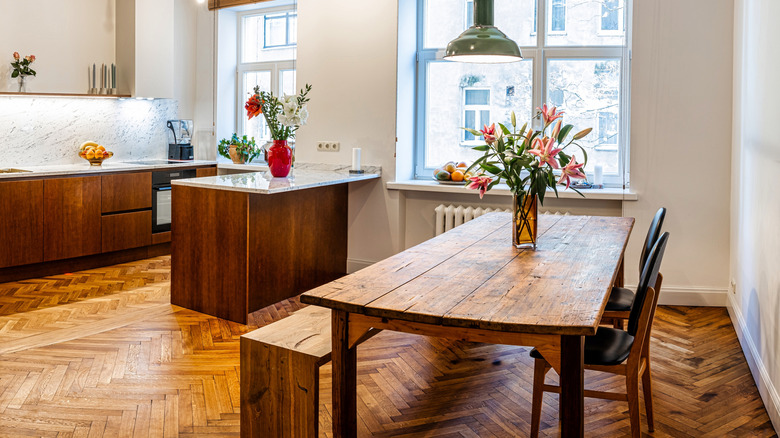
Renovating an entire kitchen is a huge investment, which is why many of us end up giving the cabinets a lick of paint as a low-cost alternative. However, if you have a little capital to spare (or are planning that dream renovation project), consider adding some charm to your kitchen with herringbone flooring. Synonymous with sophistication, herringbone flooring is a firm fixture in English stately homes and many historic sites, such as the Palace of Versailles. Its distinctive V-shaped design is refined and timeless, which is why installing it in your kitchen will instantly lend your space an elegant charm and create a space that has an enduring aesthetic.
Commonly fitted using rectangular panels of wood, each piece is connected to another at a 90-degree angle to make a V-shape, which eventually creates a zigzag design across the entire floor that looks like the skeleton of a herringbone fish. The wood lends a kitchen a grounded, neutral, and natural feel, which matches well with almost any cabinetry color or design. However, you can also purchase ceramic or laminate floor tiles that look like wood, which are easier to maintain and keep clean in a busy area of the home. The length and width of your planks, whether they be made of wood or tiles, will also affect the final look of your flooring, so there's plenty of room for experimentation. For instance, use skinnier tiles to showcase the beauty of the geometric pattern or stick to chunkier widths for fewer grout lines.
Riffs on a traditional herringbone flooring pattern
While a classic herringbone pattern is easiest to lay, you can be a little more creative if you have the space. For instance, you could go for a double-herringbone design, where two planks are paired together, or place a square insert at the point where two corners meet to make a slightly more intricate look. However, venture too far from the traditional staggered formation, and it won't count as a true herringbone design. Having said that, busier patterns and variations, like basket-weave and dot-and-dash, also have an eye-catching appeal and can be useful for demarcating the zones of an open-plan living space. For instance, you could lay a no-nonsense herringbone design in the kitchen but switch to a basket weave in the lounge, mudroom, or utility area. Just be aware that the more intricate and detailed a pattern, the more it will cost to lay.
If you're looking for cheaper ways to lend charm to your kitchen, you could create a set of French cafe-style curtains with cute dishtowels that feature a herringbone weave or reuse decorative candles by turning them into storage containers. These small changes can have a significant impact in petite kitchens and create a pretty and cozy focal point.