

The Cookies Are A Lie - Here's What Cookie Monster Has Really Been Chowing Down On

The googly-eyed, furry, bright blue Cookie Monster appears friendly. All he wants is cookies, which makes us want them, too. Unfortunately, behind that simple, amicable exterior is a long-standing lie. The deception runs so deep it seems as if his notable grammar error of using "me" instead of "I" is because he's focusing so much on hiding the truth. The monster who supposedly loves cookies so much it's in his name doesn't actually eat the classic American baked goods. If he were honest, his name would be Rice Cake Monster.
That's right, in order to preserve the monster's fur from becoming a greasy mess because of the oils and chocolate in a gooey chocolate chip cookie, Sesame Street feeds the monster painted rice cakes. This bombshell comes to us from David Borgenicht's "Sesame Street Unpaved" (via The Great American Chocolate Chip Cookie Book). The book also claims there is a person wearing a Cookie Monster costume who is better off having rice cakes instead of cookies fall on them. It's up to you whether or not you want to pass this information on to your children. If they already know the truth about Santa and the Tooth Fairy, this devastating news might be easier for them to handle.
The Cookie Monster is not alone -- the lies run deeper
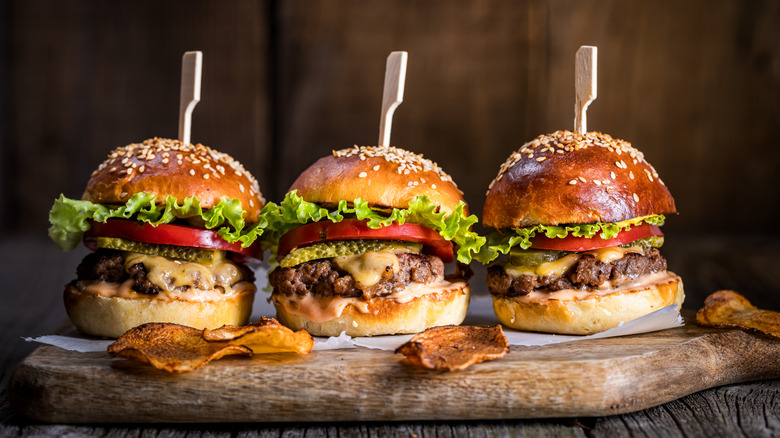
The Cookie Monster isn't the only one in Hollywood using trickery when it comes to edibles. Food stylists have been making dishes in film and photography look better for decades. While the techniques of replacing foods with something completely different, like mashed potatoes for ice cream, have largely gone away, they still have some everyday tricks. Water droplets that make fruit look freshly washed are actually glycerin, and the buns on burgers are pristine versions of actual buns that haven't been wrapped or handled.
Many actors in movies don't actually eat what they appear to on screen. Because most scenes require multiple takes, actors will often spit out the food off camera. There are exceptions, such as Julia Roberts in "Eat, Pray, Love," who committed to actually eating for the sake of realism in the movie. Continuity also becomes difficult when food is consumed, so dishes are often faked when they need to sit untouched between takes. This keeps them looking visually appetizing after sitting under hot lights for long periods.
It's not just in movies, either. People have passed off imitations as more expensive foods for ages. For instance, Parmesan cheese has long been a target for scammers looking to sell cheaper substitutes for a profit.