

How Bakeries Keep Their Treats Fresh, Straight From A Pro
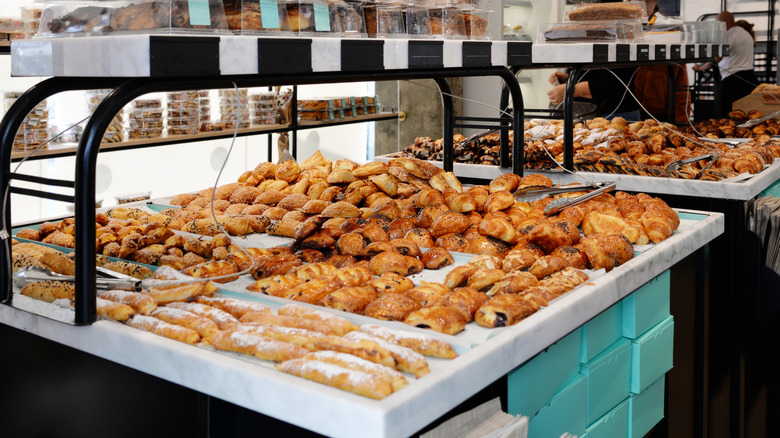
Whenever you walk past a bakery, I bet the aroma is so enticing that you can't help but go in and grab a few goodies. The best part about most bakeries is that they offer fresh products, regardless of when you visit. That said, if you're an avid baker yourself, there's one thing you might have often wondered — how do bakeries keep their baked goods fresh for so long?
When you make something at home, it's quite likely that the baked good tastes stale in half a day. But when you get something from a bakery, whether it's a crusty baguette, a slice of baked cheesecake, or even some simple vanilla cupcakes with American buttercream, all of these stay at their peak quality for days. So, are bakeries doing any sort of sorcery with these products? Honestly, there's no rocket science here. It all comes down to a few very basic rules that bakeries follow.
I have worked as a pastry chef and also attended culinary school, so I know exactly what bakeries do to keep their baked goods fresh for an extended period. And today, I'm here to share those secrets (if you can call them that). So, if you're planning to open a bakery at some point, are wondering how you can ensure your homemade baked goods stay at their best quality for longer, or are just curious about what bakeries do to keep their products fresh, you've landed at the right place.
Using display cases with proper temperature control
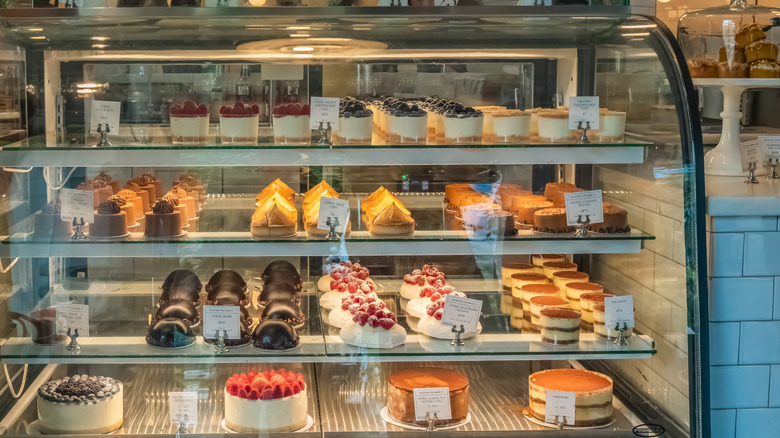
You must have seen desserts and pastries perfectly lined up inside a display case at most bakeries. Besides letting you see and select what you'd like to buy, these display cases also play a very important role in keeping baked goods fresh. Most bakeries (at least decent ones) invest in good-quality cases that are basically like refrigerators. These cases have panels that allow temperature control, which helps baked goods stay at their best quality for a long time. In addition, many of these display cases also allow you to control the humidity within them, which prevents desserts and pastries from becoming stale or spoiling too quickly. Besides these advanced functions, display cases also help with simple things like keeping dust and dirt in the air away from the baked goods and preventing them from drying out.
It might be too much to buy one of these if you bake at home for fun. However, if you plan to set up a bakery of your own at some point, it's surely worth investing in a high-quality display case so that you can keep your baked goods fresh for days.
Storing all the baked goods properly

Of course, not all baked goods need to be kept inside the display case, as some of them don't require refrigeration. Nonetheless, even products that are left outside at room temperature in bakeries are always fresh. That's because they are stored in the best possible way to prevent them from going stale. Let's understand how bakeries properly store these products through a few examples.
When it comes to bread, depending on whether it is crusty or needs to be soft, it is left either uncovered or packed individually. Breads that are packed are usually allowed to cool down completely so that they don't release steam within the package and get moldy. Items like oatmeal cookies, sugar cookies, and chocolate chip cookies are stored in airtight containers once they cool down, so they can retain their texture for a long time. Most bakeries also store each type of cookie in a different container to prevent all of them from tasting or smelling like each other. Sometimes, cookies are also packed individually after they cool down to maintain freshness. Lastly, you may have noticed that certain cakes and desserts are stored at room temperature. That's the usual method for cakes and desserts that are covered with fondant, as refrigeration can turn the fondant moist and sticky.
These are just some examples of how bakeries usually store their products. It's worth noting that these practices can vary from one place to another, but the gist of it is that all products are stored optimally.
Brushing baked goodies with glazes
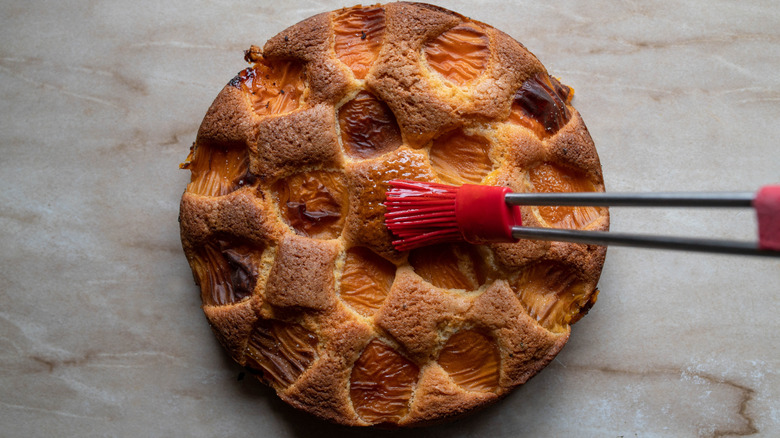
Have you ever wondered why the pastries and other baked goods at a bakery always have a glossy finish? Well, it's because bakeries brush these baked goods with either neutral or apricot glaze. Besides adding a glossy layer, these glazes also help keep these products fresh.
Neutral and apricot glazes are the most commonly used glazes by bakeries and patisseries as they both have a very subdued flavor. Neutral glaze is made with some combination of water, sugar, and glucose syrup, which gives it a thick, almost sticky consistency. Apricot glaze, on the other hand, is made mostly with apricot jam or puree and water. These ingredients are cooked down until they form a glaze, which is then mixed with some water before it is brushed over the baked goods. Since these glazes are sticky and thick, they create a layer on the baked items that keeps the moisture in and prevents air exposure.
While these are the most commonly used glazes, some bakeries may also go for alcohol-based options, like a rum glaze, especially for tea cakes and buttery pound cakes. These glazes work the same way as the other two varieties while also helping a little more with preservation, thanks to the alcohol.
Freezing when needed
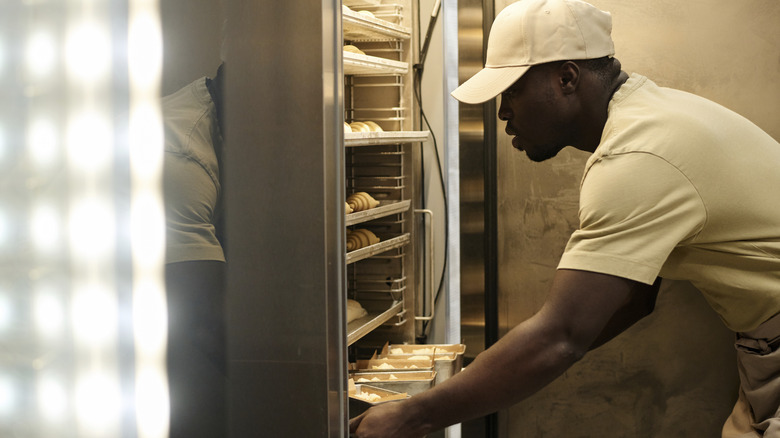
Though freezing baked goods may sound counterintuitive here, it actually helps a lot with preserving them. Since most bakeries cater to a high volume of orders daily, it's difficult for them to make every single item from scratch all the time. And so, they freeze certain items to preserve their quality and use them later. The important thing here is that they freeze the items in the right way and at the right time, which is why these frozen products end up tasting like they are freshly made.
Let me explain what freezing baked goods properly and at the right time means. In many cases, bakeries freeze sponge cakes, doughs, and cold desserts. Sponge cakes are either frozen as-is once they cool down or layered with frosting and then frozen, so that bakers only need to finish assembling them when they get orders. Since these cakes are frozen once they are already cold, the chances of them releasing steam and forming ice crystals become minimal. They are also wrapped properly with plastic film to prevent freezer burn and drying out.
Similarly, bakeries sometimes freeze bread dough after proofing, so bakers can bake it directly as required. Lastly, cold-set desserts like mousses are often frozen directly in silicone molds, as there isn't enough time to let them set before orders start piling up. These products are wrapped thoroughly to prevent freezer burn, too. Bakers also thaw these products with utmost care, which is why whenever you buy them, it's hard to tell that they were once frozen.
Brushing cakes with simple syrup
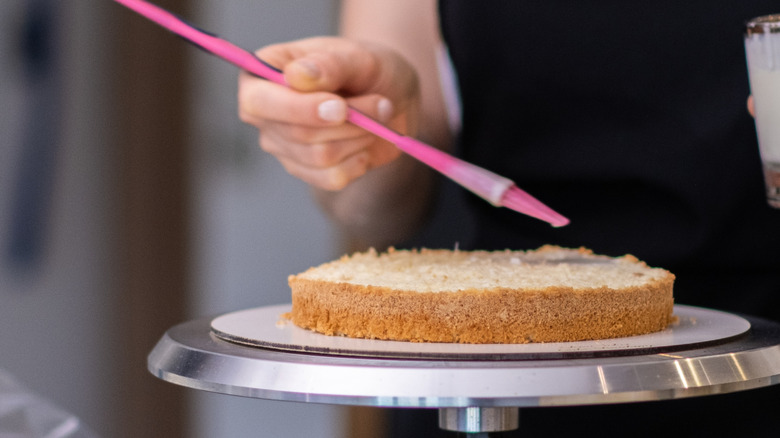
There are many reasons why cakes always taste better from a bakery compared to what you make at home. One of them is that bakeries often brush their cakes with simple syrup or another liquid (like coffee or orange blossom water) before frosting them. A simple syrup makes cakes moist and infuses flavor, which improves the way they taste while also preventing them from drying out.
If you aren't much of a baker, you might be wondering at this point what a simple syrup is. Well, it's a syrup made by heating up equal parts water and sugar until the sugar dissolves. Similar to a neutral glaze, simple syrup locks in moisture in the sponge before it is frosted, eventually delaying staling. It also prevents layers from drying out while they are kept in the fridge before assembly. Considering these factors, the next time you want your cake to taste fresh and moist for days, make sure you brush it with one of these options.
Using wire racks for cooling
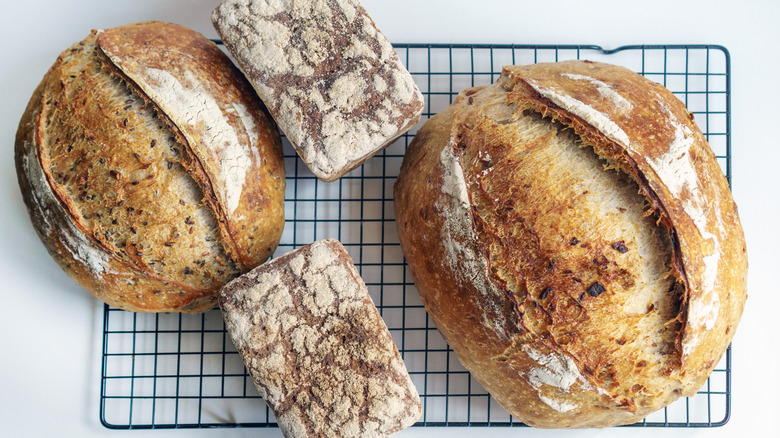
It's easy to wonder how this could be a way bakeries keep their products fresh. The thing is, wire racks help with effective cooling of baked products, which in turn preserves their quality for longer.
Wire racks are designed to ensure proper airflow from all sides. This helps with preserving a baked good's texture well. For instance, the air circulation from all sides helps with keeping cookies and tarts crispy and prevents sponges and cakes from becoming gummy. It's also a godsend for breads with crispy crusts, as it helps maintain that texture. Moreover, wire racks allow steam to escape more effectively as compared to cooling something on a tray or a plate, as that would lead to condensation at the base. This effective cooling ultimately also helps reduce the chances of steam buildup inside packaging once the baked products are packed, which is essentially how they stay fresh for an extended period.
Assembling or baking fresh products every day
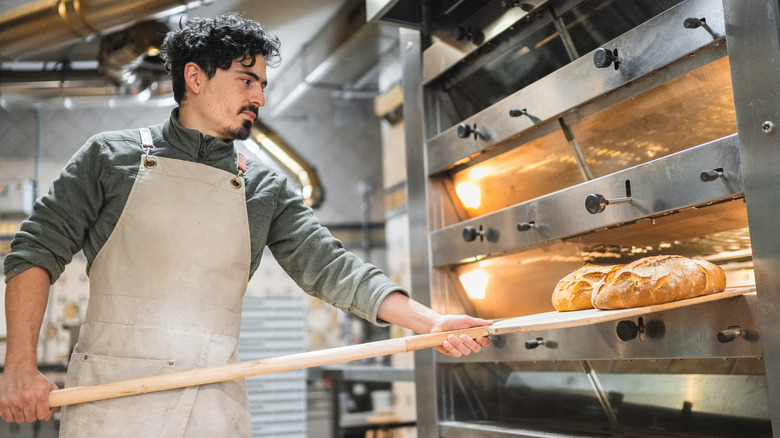
Not all baked goods are frozen. Many baked goods are made fresh every day or every other day. Items like cakes and cold desserts may not be made from scratch daily, but they are iced and garnished daily, which is why you're likely to get a freshly assembled cake every time you buy one.
The real question is, which items are usually baked every day? Well, it's often products like breads, cookies, muffins, and tarts. When it comes to cookies, breads, and tarts, it's possible that their doughs are pre-frozen, but the actual baking process happens daily. The reason behind this is simply that these products are prone to tasting stale sooner than some others. Tarts can become soggy due to their filling, and cookies can become soft and crumbly, especially if stored in airtight containers rather than individual packaging, as they are exposed to some amount of air every time the container is opened.
Bakeries also know that certain types of bread can smell and taste stale within a day, and that's not something their customers would appreciate. This is why they bake fresh loaves daily, even though the dough could be frozen. The products baked daily can vary from one bakery to another, depending on demand and shelf life, but the gist of it is that most bakeries are very particular about this aspect.
Replacing old baked goods with new ones
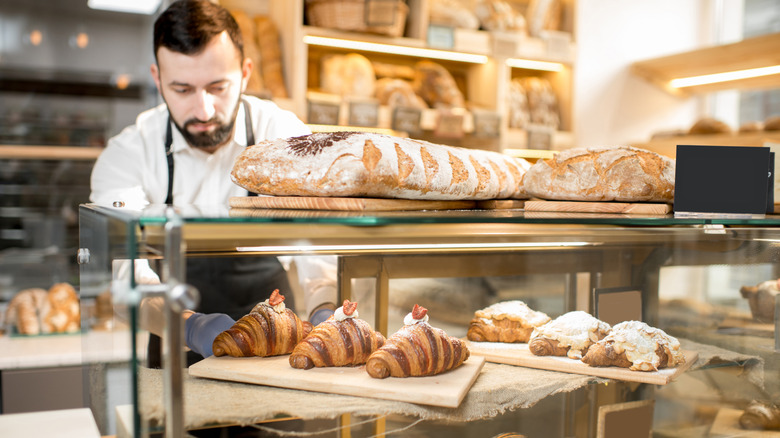
One of the reasons you always get fresh products at bakeries is that they replace old baked goods with new ones regularly. Generally, how often products are replaced depends on their shelf life.
Most bakeries also have a roster where it's clearly mentioned when a certain product needs to be replaced with a new one. The roster is just a guideline, though, and it isn't always strictly followed — but that's a good thing in this case. For instance, some products are supposed to be replaced once every day; however, if it seems like any of them isn't at its peak freshness, that item will likely be replaced with a new one more than once in a single day. Fortunately, this can be done easily as bakery staff are trained to inspect products properly to check for dryness, discoloration, and overall quality.
Besides that, bakeries are also very particular about using fresh frostings, ganaches, fillings, etc. They usually keep track of how long these items can be used with date labels. And similar to fully assembled products on display, these items are also discarded if something seems even slightly off, even if they are technically within the use-by date range, so their customers can get fresh, good-quality products no matter what.