

The Store-Bought Tuna Salad Red Flag You Should Never Ignore
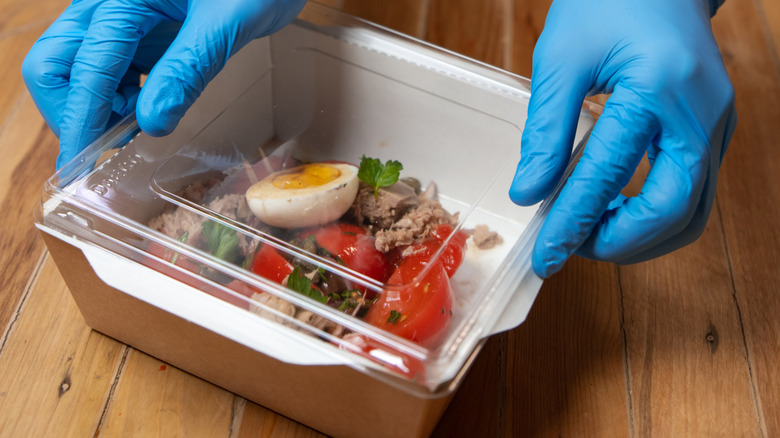
Tuna salad's rich, delicious taste means there's always a solid market for tuna salad items, including take-home versions sold at grocery stores and grab-and-gos. There are practically limitless recipes for tuna salad out there, but one potential red flag hangs over them all — and over all of seafood.
If the tuna in your store-bought salad isn't sustainably caught, that's a red flag you can't ignore. It's not necessarily a food-safety concern, but rather one about the food industry's survivability. Estimates and sustainability standards vary, but according to the Monterey Bay Aquarium's Seafood Watch, around 40% of commercially available tuna is not sustainably caught.
Check the label on your tuna salad to see if the fish inside was caught with sustainability in mind. Terms like "pole and line caught" or "trolling" indicate the most sustainable industry practices, but these account for a fraction of tuna available. More common is the Marine Stewardship Council logo, which has high standards for MSC-certified products, including sustainability. If the tuna salad is store-made and doesn't have any information on the label, ask an employee where the fish came from.
Why sustainability is crucial for tuna salad
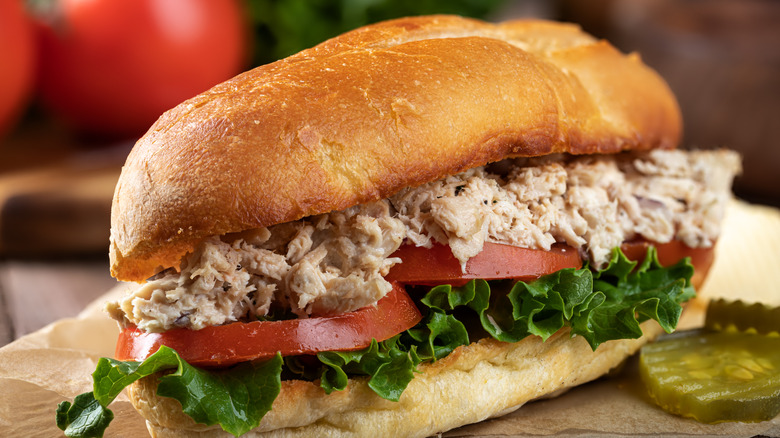
It goes without saying that a fishing industry needs fish to survive, but the perils of overfishing are worth repeating. When sushi exploded in popularity during the 2010s, it nearly drove bluefin tuna to extinction. Wasteful and ecologically destructive fishing fed rising demand, but many years of more sustainable practices led to a dramatic rebound in Mediterranean bluefin tuna stocks. The same is true of albacore and yellowfin tuna, which faced similar threats until sustainability helped save them.
Sustainable fishing is not only important to keep these resurgent species thriving, but to save more from the brink. Though Atlantic bluefin tuna have generally recovered, the health of western Atlantic bluefin is less clear. Similarly, Indian Ocean yellowfin are still too overfished to support long-term viability.
There's a lot more to consider before buying. The unhealthiest store-bought tuna salads are overloaded with sodium, saturated fat, and/or added sugars. Other red flags for store-bought tuna salad include low protein and long ingredients lists, which can indicate fillers and ultra-processing. But unsustainability is the first among many red flags to watch out for — if we incentivize destructive fishing practices, someday there might not be any fish left.