

10 Simple Ways To Upgrade Gingerbread Cookies

There's nothing quite like the smell of freshly baked gingerbread cookies! It's extremely inviting, and perfect for putting you right into the Christmas spirit. No wonder everyone makes them during the holiday season, be it in the form of gingerbread men or a massive gingerbread house. Although these cookies are amazing in their original form, if you've been having them year after year, it's likely that at some point you might have wondered if there's a way to give them a new look while still preserving their flavor. Well, guess what? There are actually not just one, but many, ways to upgrade gingerbread cookies and give them that little oomph factor that you've been looking for.
During my time in culinary school and while working as a pastry chef, I've made gingerbread cookies countless times. In fact, I haven't just made regular gingerbread cookies, but I've also tried plenty of variations to amp them up. Some of these experiments ended up being so amazing that I feel everyone should give them a shot at least once to make their holiday celebrations extra special. And so, I am really excited to share 10 of my favorite ways to upgrade basic gingerbread cookies to give them a fresh, new spin. These upgrades are all pretty simple, and you'll definitely be able to give them a go even if you're an absolute beginner at baking. So, without further ado, let's get right into it.
1. Use brown butter instead of regular unsalted butter
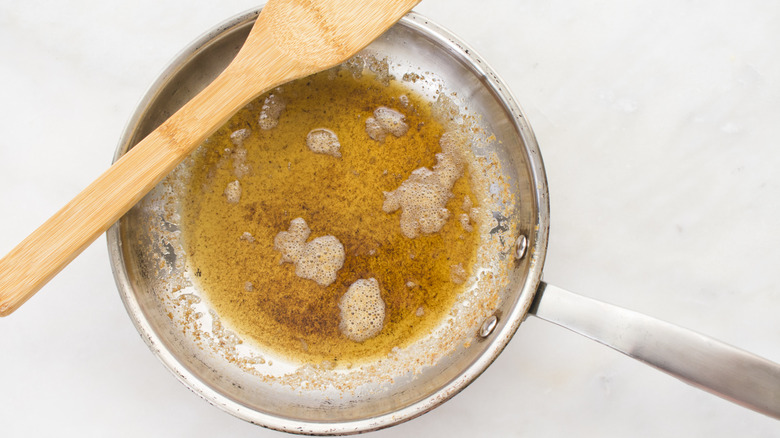
Brown butter is an ingredient that bakers and pastry chefs love because, with barely any effort, you can give your baked goodies (including gingerbread cookies) a deliciously nutty and toasty flavor. This is definitely one of my favorite ways to upgrade these cookies too, so I'd highly recommend giving it a go. The only thing worth keeping in mind here is that if you're an absolute beginner at browning butter, you need to be careful while doing so as it's easy to misjudge the process and burn it. To create brown butter, add butter to a pan and let it melt slowly, on low heat. After a point, the butter will start getting darker and foamy — at the same time, it will also start crackling. This is one of the main tell-tale signs that your brown butter is ready. Once it's done, strain it through a fine mesh strainer, then let it cool until it solidifies. The key is to watch your melting butter carefully and take it off the heat as soon as it shows signs of being done, as it will begin to burn almost immediately after it reaches peak consistency.
In case you feel the butter smells or tastes burnt after you've strained it, you'll need to start over. Burnt brown butter will compromise the flavor of your cookies. If the butter is good to go, you can use it as usual in your gingerbread cookie recipe. There's also an unexpected way to take your brown butter to the next level by adding in a bit of milk powder during the process, but do this only if you're feeling confident enough.
2. Add a few mix-ins
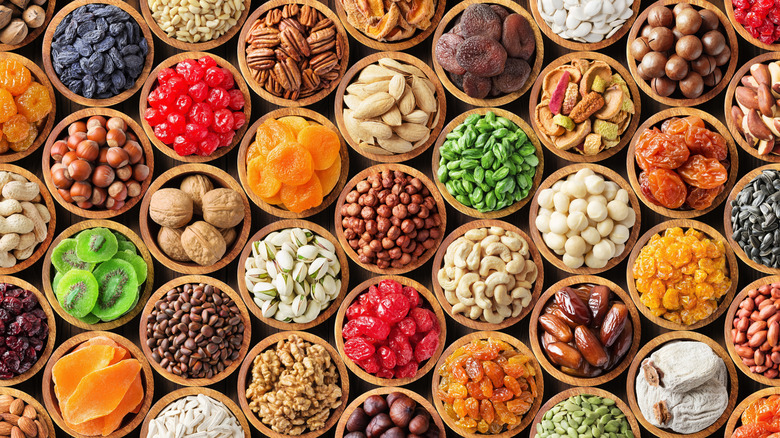
Adding some mix-ins to your gingerbread cookie dough will complement the base flavor while also helping to elevate it. Some of my favorites include chocolate, toasted or candied nuts, and candied fruits or peels.
If you're using candied or toasted nuts, you should keep in mind that they will make the surface of your cookies a little bumpy, meaning you might not be able to ice them later. But if you're okay with that, you can chop them up and then fold them in with the dry ingredients. To elevate candied nuts even further before adding them to the dough, you can soak them in bourbon beforehand to get them nice and boozy. Pecans, walnuts, hazelnuts, almonds, and pistachios are all great options.
Speaking of the rest of the mentioned options, they luckily won't alter the surface of your cookies much so you can go for them if you want to ice the cookies later on. When it comes to candied fruits and peels, I'd suggest going for citrus peels or tart fruits as they will help balance out the sweetness of the cookies. Lastly, stick to white or blonde varieties if you're planning to use chocolate as a mix-in, as dark and milk chocolate could overpower the gingerbread flavor. Also, chop up baking chocolate and mix that in with the dry ingredients rather than using chocolate chips, as baking chocolate will melt in the oven and create delicious gooey pockets in your cookies.
3. Play around with the sweeteners

In most cases, gingerbread cookies are made with two sweeteners — molasses and brown sugar. But if you'd like to amp them up with minimal effort you can definitely use other sweeteners as well. Coconut sugar, turbinado sugar, date powder, and dark molasses are all options worth considering. You can choose one based on the sort of flavor and texture you eventually want your cookies to have.
Starting with the sugars, coconut sugar will give your cookies a slightly nutty flavor. But since it doesn't pack as much moisture as regular brown sugar, it's ideal to replace only half the quantity of brown sugar with it. This way, the coconut flavor won't overpower your cookies either. Similarly, date powder and turbinado sugar are also slightly dry and so to keep your cookies moist, you will still need at least half the amount of brown sugar that's originally required in the recipe. Date powder will give your cookies a mild earthy flavor whereas turbinado sugar will add a slightly crunchy texture, thanks to the large crystals that stay put while baking.
When it comes to molasses, it's once again best to replace only one quarter of the light molasses with the dark variety in a recipe, as otherwise your cookies might end up with a slightly bitter aftertaste. Just don't use blackstrap molasses as that can throw the flavor balance off due to its sharp bitterness.
4. Bloom the spices in butter

The usual process when making gingerbread cookies involves mixing all the spices with the dry ingredients. But if you're looking for a simple upgrade, I'd suggest blooming the spices in butter rather than mixing them right into the dough. This process will improve their aroma and also make their flavor a lot stronger.
The process of blooming spices involves steeping the spices in hot fat (butter in this case) so they can heat up and release their natural oils and flavors, which eventually makes them taste more potent. You'll first need to collect all your spices together in a bowl. To take it up a notch, I'd also suggest tossing in a few unusual spices in the mix, like black pepper powder, a little cayenne pepper, or coriander powder. All these spices work well with ginger so they will surely add a subtly nuanced flavor to your cookies. Just be careful not to use too much, so the balance doesn't go haywire. Once you've decided on your spices, go ahead and heat up your butter in a saucepan just until it melts and pour that into the spices and mix it all up. Let the spices sit in the butter until it cools down to room temperature, and then use that butter as usual in your gingerbread cookie recipe.
5. Use flavored extracts
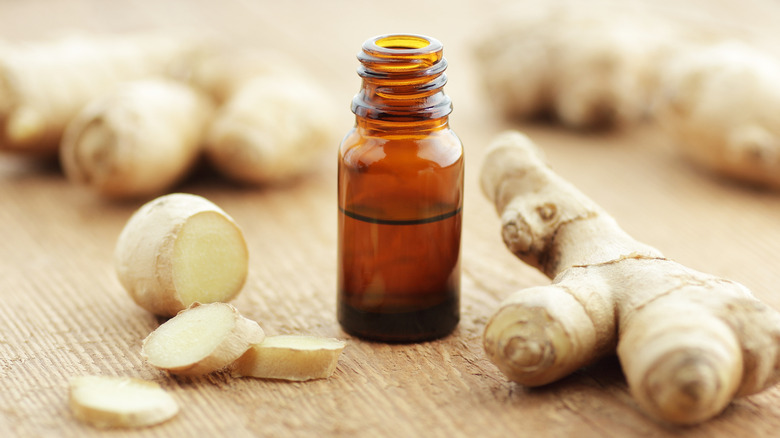
Do you have a bunch of flavored extracts in your pantry that are just calling out to you? Fortunately, now is your chance to use them as adding flavored extracts to gingerbread cookies is a great way to amp them up. While every single type of extract may not be a perfect fit for these cookies, many are and are worth using to give them a boost.
The flavored extracts that I'd usually go for are almond, maple, or any citrus extract like orange or lemon. If you're planning to use almond extract, it's best to use only half the amount compared to vanilla extract, as the former has a very potent flavor. So if you use too much, it can give your cookies a lingering bitterness. You can use just as much maple extract as you would vanilla, as it'll bring out earthy notes in the cookies. Be careful when using citrus extracts as well, not because their flavor is off, but due to the fact that too much can overpower the ginger flavor in your cookies.
You can also give rum extract a go if you'd like your cookies to have a slight boozy flavor kick, but again, use it sparingly. Last but not least, if you want to go all out with the ginger flavor, you can also add in a few drops of ginger extract. But if you're doing that, remember to cut down on the fresh ginger you'll be adding to the recipe to prevent going overboard with that one flavor.
6. Replace some of the ginger with galangal
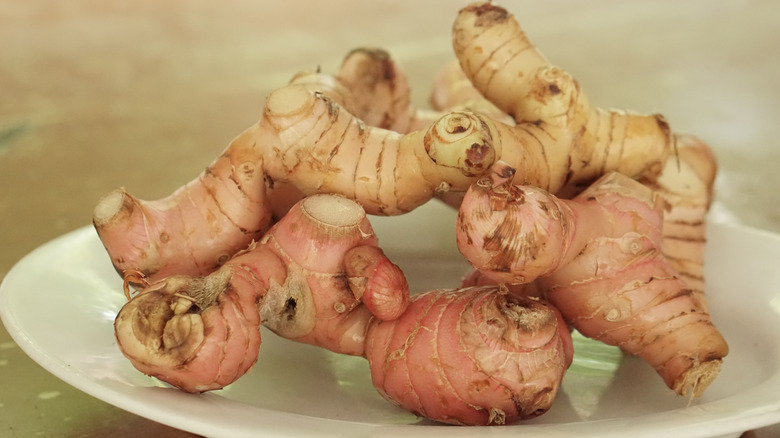
There's no rule that you can only use regular ginger in a gingerbread cookie recipe! If you're looking to switch up the base ginger flavor slightly, you should definitely replace a part of it with galangal, also often known as Thai ginger. Ideally, you should replace one quarter of the grated ginger required for your recipe with grated galangal.
The reason why it's best not to replace all of it is because galangal has a slightly different flavor. Galangal leans towards a tart, almost citrusy flavor along with those subtle spicy ginger notes. Adding a little galangal will give the flavor of your gingerbread cookies a fun, unique twist, but using too much can easily throw the flavor balance off, and have your holiday treats tasting totally unfamiliar.
If by chance you've never used galangal before, the good news is that it can be used the same way as ginger. You start with peeling it, and you can even do that with a spoon, which is actually also a quick trick for peeling ginger in a jiffy. After you've peeled it, grate it as you would grate ginger, and then go ahead and use it in the recipe as usual, and get ready for your cookies to taste slightly different and amazing at the same time.
7. Mix in some cocoa powder

I bet your first thought here is, "Cocoa powder in gingerbread cookies? Does that really work?" I'm here to tell you that it surely does, and if you haven't tried adding cocoa powder to your gingerbread cookie dough earlier, now is the best chance to do so as the results are absolutely phenomenal.
If you use the right amount, cocoa powder will give your cookies a slightly bitter, decadent, and chocolatey flavor that balances pretty well with the rest of the ingredients. I have to emphasize using the right type and the right amount, as otherwise, the ginger and spices can easily get overshadowed. When it comes to using the right type, try going for unsweetened cocoa powder as the sweetened variant usually has heaps of sugar added to it. That will not only mask the cocoa flavor, but it could also make your cookies sickly sweet. Just a tablespoon in a single recipe is usually good enough for the cocoa to shine without undermining the rest of the ingredients.
The process of adding cocoa powder to your cookie dough is as simple as it gets: You'll just have to toss it into the dry ingredients. Be sure to sift the cocoa powder before that so that you aren't left with clumps, as they will be really difficult to break once you fold the dry ingredients with the wet ones.
8. Use flavored royal icing

Decorating gingerbread cookies with royal icing can make them look really pretty. However, many home bakers never take the opportunity to experiment with the icing itself, especially when it comes to flavor. While it is great for icing gingerbread cookies, royal icing in its original form does have a highly sweet, one-note taste that can benefit from a little added flavor. You can take your gingerbread cookies to an entirely new level just by using flavored royal icing to decorate them.
Making flavored royal icing essentially only involves adding flavoring to the base. If you want to spruce things up a bit but mostly keep the flavor of the icing true to its original taste, add in a few drops of vanilla extract. But if you want the flavor to be a little more pronounced, consider other extracts or emulsions like orange, lemon, almond, or even coffee. Adding in a teaspoon or so of cocoa powder is also a good option if you want to ice your cookies with chocolate royal icing. These are just a few variants — there's a lot more room to experiment when it comes to royal icing. Just try not to go too overboard with the extracts or emulsions, as they can be quite potent. Also, always use water or alcohol-based extracts, as oil-based ones can ruin the structure of your icing.
9. Switch up the icing
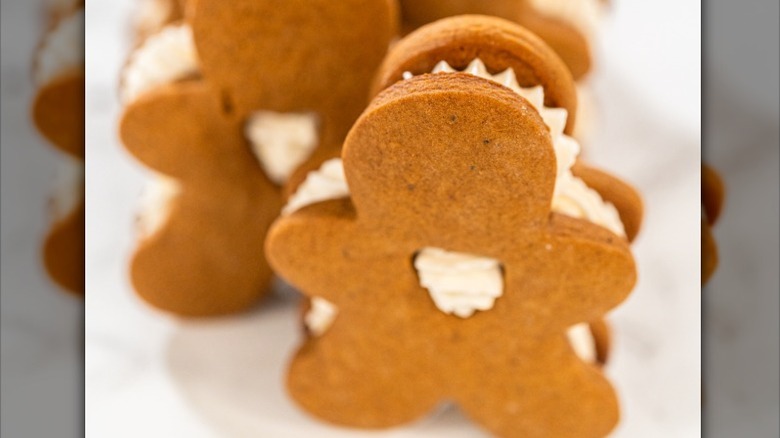
Even though we just spoke about royal icing and how you can add flavorings to it for a little more nuance, some folks still don't like its texture and flavor. In that case, you need to move away from royal icing altogether and try other options as they work equally well. Sure, you might not be able to decorate your cookies like you can with royal icing, but other types will definitely add a lot more flavor.
If you're looking for an alternative that's similar to royal icing, and don't want to do any fancy decorations with the frosting, go for glazes like citrus, maple, or brown butter glaze. You can also use chocolate or cream cheese glaze if you'd like something with a more pronounced flavor. Other than that, icing your cookies with spiced white chocolate ganache is also a good option — once it's been chilled and mixed, this frosting has a consistency that's a little similar to royal icing. You might not be able to decorate your cookies as extensively as you can with royal icing, but getting a little creative is possible. Last but not least, if you're okay with giving your gingerbread cookies a completely new look, you can also consider buttercream frosting. It will be difficult to ice the cookies with this icing the way you would with royal icing, but you can pipe the buttercream on the base of one cookie and then place another on top of it, turning it into a cookie sandwich.
10. Brush the cookies with a spicy simple syrup
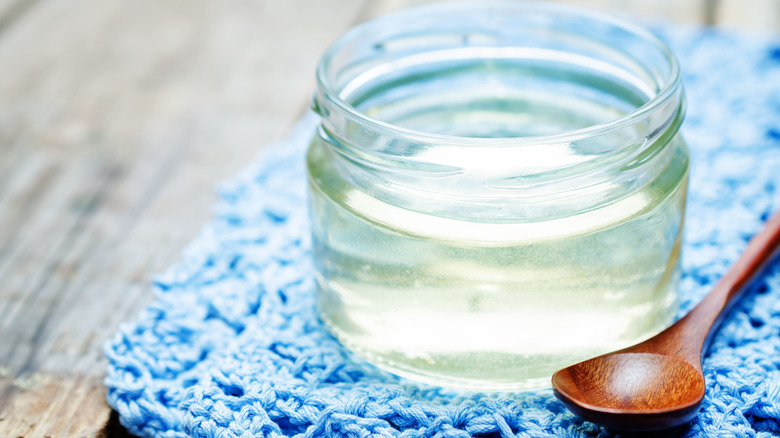
Usually, cookies aren't brushed with simple syrup. But I'd recommend brushing gingerbread cookies with a spicy one, as that's a pretty fantastic and easy way to amp up their flavor. This process will make the cookies slightly softer than they usually are, so if you prefer a softer cookie, this is the hack for you. The important thing here is to brush the cookies when they are right out of the oven, so they can soak up the syrup properly. If you brush them with the syrup after they have cooled down, it's very likely that they will turn soggy.
Start by measuring out your sugar and adding that to a pan along with an equal amount of water. Let the mixture simmer for a while until the sugar dissolves and the water starts bubbling. (One of the biggest mistakes everyone makes with homemade simple syrup is using high heat while letting it simmer, so make sure you keep the heat relatively low, as otherwise the sugar can burn or start caramelizing.) Next, remove the pan from the heat and toss in all the same spices you'll be using for the gingerbread cookies. Let them steep in the syrup for about half an hour, then strain the syrup. After that, you can brush the cookies with a thin layer of simple syrup while they are hot and fresh out of the oven — just be sure not to use too much syrup. Then, go ahead and let the cookies cool down, and devour.