

Give Beef Stew A Cozy Upgrade With 2 Fall Ingredients

Beef stew is one of those comforting dishes that has a nostalgic, homey vibe. However, even the most traditional meals can benefit from a culinary tweak on occasion. If you've got an easy beef stew recipe that's been passed down through the generations, consider giving it a cozy fall upgrade with a splash of apple cider and a handful of barley.
Adding apple cider to a beef stew (along with the requisite beef stock) lends the meaty and velvety broth an earthy tang and a fruity brightness. The natural acidity in the pressed apples also helps to tenderize the protein as it cooks, resulting in a dish that's meltingly soft, unctuous, and complex. Depending on the brand of cider you select, this unfiltered fruit juice can range from tasting sweet and balanced to zesty and sour. The best store-bought apple cider in our taste test of 10 contenders was Pepin Heights 100% fresh-pressed apple cider. Bright with a fruity aroma, it has a smooth quality and a complex flavor that's ideal for pairing with the savory notes of a slow-cooked beef stew.
While apple cider brings tang to the table, barley provides texture and bite. These little nuggets plump up as they simmer in the broth and become swollen with flavor. Once cooked, they have a toothsome consistency that's both chewy and soft, which lends the finished stew a satisfying mouthfeel and bulk. As the barley swells, it thickens the sauce until it's almost creamy and viscous, creating something substantial.
How to add barley to beef stew
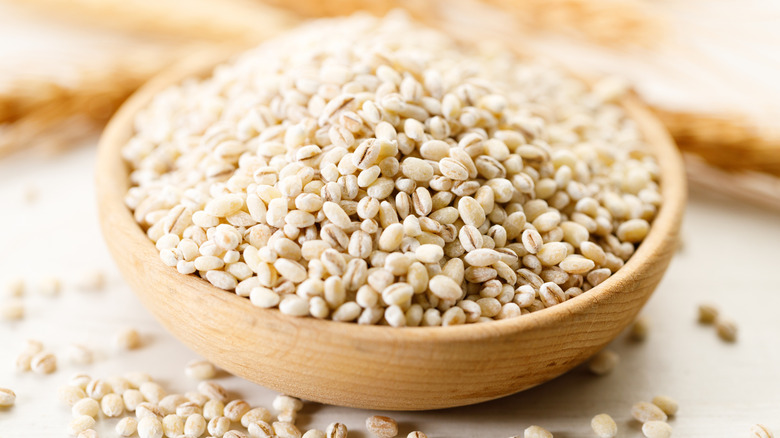
Pearl barley (versus hulled or flaked barley) is the best option for stews because it cooks more quickly than other varieties and still has that distinctive squishy texture. The proper way to cook tender barley in a stew is to add it directly into the liquid element of your recipe, whether that be stock, consommé, or water, and allow it to simmer for thirty minutes. Alternatively, if you don't want to thicken the base of your stew, boil your barley in a separate pan, drain, and add it to your stew once the meat is tender. If you don't mind soaking your barley overnight first and simmering it for longer, opt for hulled (or pot) barley, which still has some of its husk around it, tastes a bit nuttier, and has a better nutritional profile. Both varieties of barley are inexpensive, so they're awesome for adding bulk to a meal and stretching it further.
Can't get hold of apple cider? Feel free to sub it for regular apple juice. However, bear in mind that apple juice won't have the same robust punch as apple cider (it tends to be filtered and sweetened, which is why it isn't as velvety and cloudy as apple cider). Having said that, a glug of apple juice will still counterbalance the meatiness of a rich beef stew and elevate its flavor.