

Can You Put Paper Plates In The Microwave?
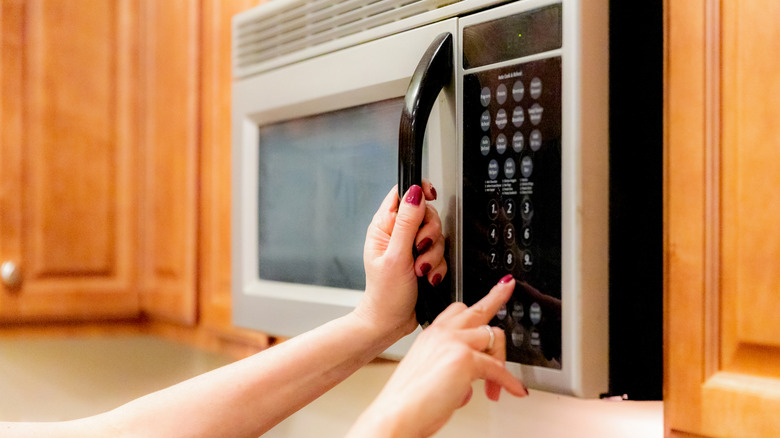
You're halfway through heating lunch when it hits you: the plate. Most of us have tossed leftovers on a disposable dish without a second thought, assuming paper is harmless. And in most cases, it is — but not always. The truth is that paper plates can go in the microwave, but only some of them are built for the job. The difference comes down to what they're made of and how long they're exposed to heat — especially if you're cooking a hot dog in the microwave, where grease and moisture make things trickier than they look.
This question ties into an even broader one — the types of containers that can go in the microwave without turning into a mess. Brands like Dixie say their products are safe for reheating, but they stop short of promising anything beyond that. Whirlpool gives the same warning: Some disposable tableware hides a thin layer of plastic that can warp or melt. A paper plate might look simple, but one invisible coating can turn it from microwave-safe to microwave-suspect. Knowing what's actually in your plate — and how to tell the difference — is what separates a quick warm-up from a kitchen science experiment.
When paper plates can't take the heat
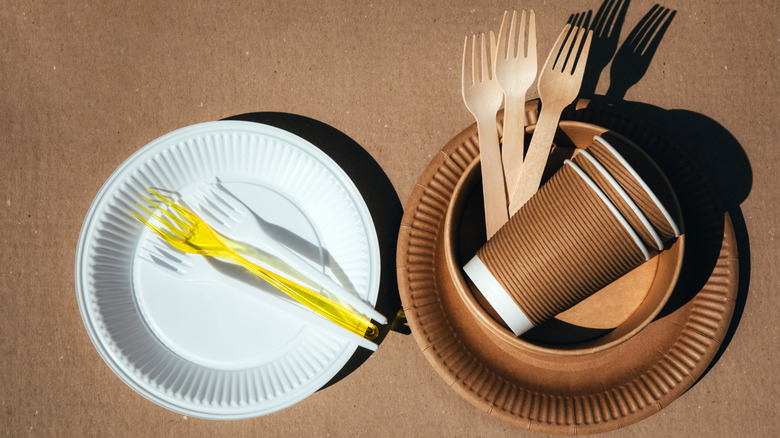
Some plates can take a quick spin in the microwave, but plenty give up the second you press start. Plain paper pulp does fine for reheats, though coatings are another story. A thin layer of wax or plastic might keep grease from soaking through, yet under heat, it can melt, smoke, or even fuse to your food. Those are the shortcuts that make convenience feel a little less convenient.
Printed plates bring their own issues. The colors and designs that look harmless on the table don't always hold up once they start to heat, and some inks can bleed right into what you're eating. Bagasse, the fibrous material made from sugarcane, is one of the few paper alternatives that actually holds steady under higher temperatures. It's thicker, sturdier, and doesn't buckle under a short microwave cycle — but even that has limits. Push it too long, and you'll see the edges wilt like any other plate.
As for what you shouldn't microwave, that list starts with anything coated, shiny, or colored. Plain white paper stays the safest bet, but only if it stays cool to the touch. The moment it feels hot or starts to bend, it's time to cut the power. Paper plates can handle a reheat when you're in a rush, but they're still paper — best used sparingly and never taken for granted.