

You Don't Need A Blade Sharpener For Kitchen Knives — Use This Item Instead
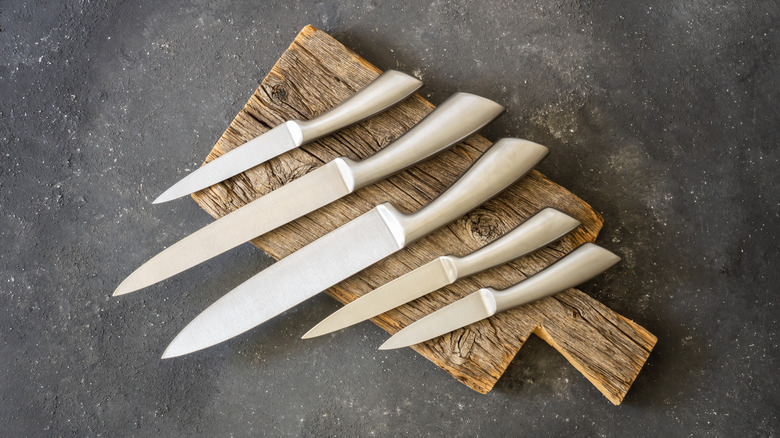
A good knife is a kitchen tool worth splurging on, but sharpening it regularly maintains its efficacy and protects your investment. Even the most expensive chef's knife in the world will dull over time when used for basic tasks like preparing salads, mincing aromatics, or carving steaks. The problem is that many of us purchase quality knives and fail to cough up the funds for a blade sharpener. Luckily, you can use a regular old piece of sandpaper from your tool shed as a substitute.
Sandpaper is far cheaper than heftier knife-sharpening tools like whetstones. While whetstones do an awesome job, they must be soaked in water for at least 10 to 20 minutes before they can be used. Sandpaper is immediately ready to go and doesn't take up much space in a kitchen cabinet. To begin, place your sandpaper on the counter, grit side up. Hold your clean knife at a 20-degree angle and scrape it across the sandpaper in one direction as if you were gently shaving the surface. Flip it over and sharpen the other side, making sure that the tip of the knife meets the paper so the entire blade is equally sharp (this is essential if you're sharpening a knife with a curved shape). Each stroke you make across the sandpaper should be steady, controlled, and always moving in one direction, rather than in a quick back-and-forth motion.
Which grade of sandpaper is the best for sharpening kitchen knives?
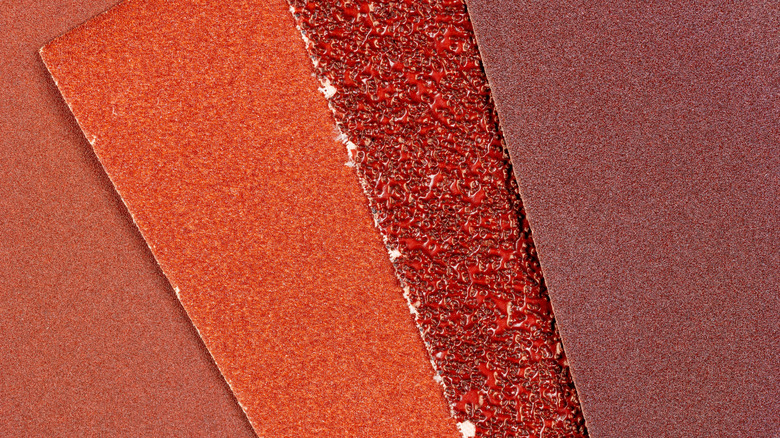
Sandpaper is graded by grit number; a finer grit will have a higher number. If your knife is very dull, begin with a coarser sandpaper with a lower grit number. Then you can move to a higher grit number for the final polish and a super-sharp finish. Adding a few drops of water to your sandpaper can make it easier to slide the blade across it, regardless of its texture. Once you're done, all you need is a piece of paper to test your knife's sharpness. Simply hold it up and draw your knife through it to check if it slices through with ease. If there's any resistance, run your blade across the sandpaper a few more times. If you want to sharpen several knives, you can staple or glue your sandpaper onto an old block of wood to create a steadier surface.
Avoid scraping your knives on cutting boards or placing them in the dishwasher, as this can dull them more quickly after all that hard work. While sandpaper is a useful option when you're in a pinch, investing in a honing steel may be a better long-term solution. These long lengths of steel (that look like thick metal skewers) are designed for sharpening knives and can last several years with the proper care.