

The Ultimate Salmon Buying Guide, According To Experts
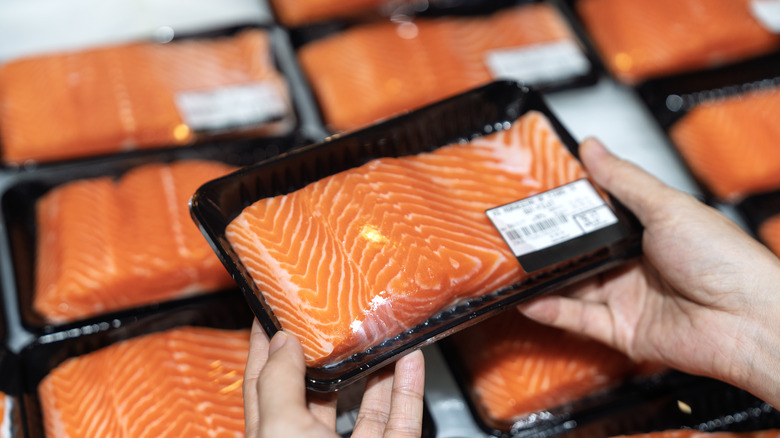
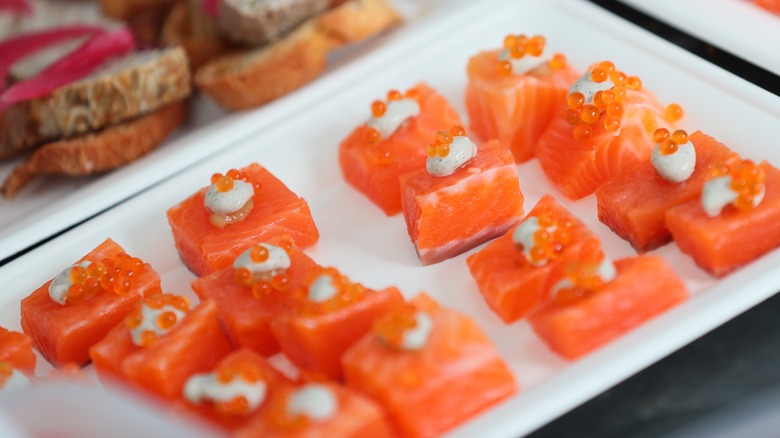
Salmon is among the rare foods that's both an emblem of celebration and a healthy choice. Cooked whole, it makes a visually striking centerpiece for a banquet. Cold smoked or cured raw, it makes flavorful little canapes, perfect with a glass of champagne. And cooks around the world have made salmon their own, creating delicacies ranging from sweet, candied smoked salmon, a beloved specialty of indigenous cooks in the Pacific Northwest, to Scandinavian gravlax and Japanese sushi.
And if all this didn't make salmon appealing enough, it's also good for you. Besides being a good source of protein, it's loaded with heart-friendly omega-3 fatty acids, which lower blood pressure as well as bad cholesterol and triglyceride levels. It's not, however, a budget protein –- home cooks treat it like a special-occasion food for a reason. To familiarize you with the world of salmon and help you make the most of your investment, we've lined up a team of experts: Adam Licht, a Culinary Institute of America-trained chef and CEO of All Fresh Seafood; Peter Adame, director of communications and sustainability at Lusamerica Foods; Aaron Flamini, senior U.S. market manager at the Aquaculture Stewardship Council; and Poul Andrias Jacobsen, head of marketing for Bakkafrost.
When shopping for salmon, seasonality matters
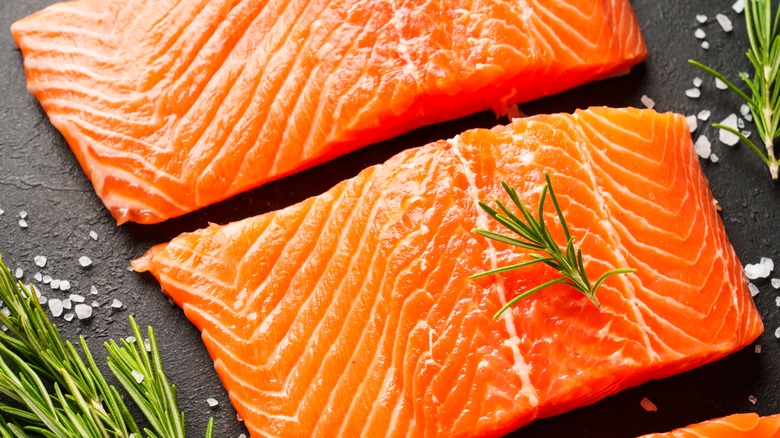
When you're shopping for salmon, the time of year matters as much as the type of salmon, especially if you're looking for wild salmon. "What happens in the wild salmon season is they release different species at different times of the year," Adam Licht explains. "So it might start off with sockeye salmon running really strong. And then they open up the Copper River for wild king salmon, which is the granddaddy of all fish." Seasonality affects prices as well. "Wild salmon availability peaks during the summer months, which can mean price drops and fresher options," Poul Andrias Jacobsen says.
In short, the summer months are the time to plan for a fresh wild salmon feast. Great salmon, however, can be found year-round. "Farmed salmon provides consistency, traceability, and availability all year, while wild salmon offers seasonal variety," Jacobsen says. But while farmed fish can be excellent, it pays to do your due diligence. As a rule of thumb, Licht likes to know the name of the farm the salmon came from. If a store shares the farm name, that means "it's not just your basic farm-raised fish, where you have no idea of the origin or the farm or their fishing practices," Licht says. Jacobsen agrees. "Not all farmed salmon are equal," he says. "Differences in feed composition, environmental practices, welfare standards, and transparency can greatly influence taste, texture, and nutritional quality."
Feeding salmon doubters? Get Arctic char
Salmon fans love the fish for its pretty rosy hue, toothsome texture, and robust flavor –- when you bite into a morsel of salmon, you know you're eating something that spent its life at sea. It's a flavor that stands up for itself, which makes it a great partner for other powerful flavors, such as pesto, mustard, or wood smoke. But like every other food, it's not for everyone. For those averse to or unaccustomed to strong, fishy flavors, it can be a bit much.
Still, if you're a salmon-loving cook who needs to feed a family member or guest uncomfortable with anything stronger than frozen fish sticks, you have options. Different salmon varieties vary greatly in flavor, and milder varieties can turn doubters into devotees. Adam Licht's go-to salmon for beginners is Arctic char, a cross between a salmon and a trout. "It's very mild in flavor, very delicate and soft. You almost feel like you're not eating salmon," he says. Peter Adame also recommends coho salmon, which is accessible on a couple of levels. "Coho salmon is going to be one of the more affordable salmon options: It's mild but delicious and more orange in color," he says.
For richer salmon, seek out fish from cold waters
Another trait many salmon connoisseurs love is its richness –- the buttery mouthfeel of good salmon makes its already enticing flavor even better. If this is your favorite thing about salmon, you'll want to zero in on salmon types that deliver maximum richness. And for this, you'll need to pay attention to where the fish comes from.
"The colder the water, the fattier the fish, typically," Adam Licht says. "The colder waters develop the richer flavor, and that's why the Scottish and Norwegian fish is so much more expensive." Different salmon species also offer differing degrees of richness. For a splurgy salmon that delivers on richness, Pete Adame recommends wild king (also known as Chinook) salmon. "It's typically wild-caught from Alaska, larger in size, more vibrant in color, richer in taste, and higher in cost," he says. He adds, however, that farm-raised Atlantic salmon can also offer richness at a more affordable price point.
Faroe Island salmon is an affordable alternative to Scottish salmon
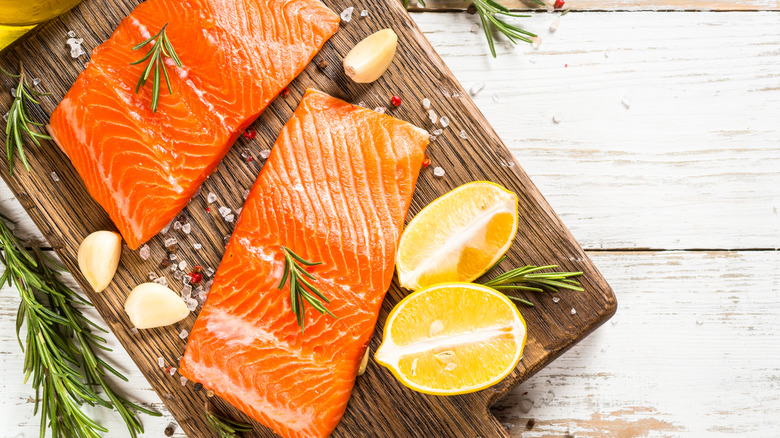
Scottish salmon has a near-legendary reputation among salmon lovers. Fish raised in the cold waters off the coast of Scotland build up plenty of fat to stay warm, and this fat translates into flavor and richness. This has made salmon not only Scotland's biggest food export but also the biggest food export in the whole U.K., according to Salmon Scotland. And the market for Scottish salmon is huge –- Scotland exports are on track to surpass $1 billion in sales in 2025, Salmon Scotland reports.
This high demand, along with prestige and high shipping costs, has made Scottish salmon impossibly pricy for many shoppers. But according to Adam Licht, budget-conscious fans of Scottish salmon have a good alternative: fish from the Faroe Islands, about 200 miles off the coast of Scotland. "It's farmed in the middle of the ocean, so you have a lot of free-flowing water, the fish tend to be a little fattier, like a Scottish salmon would be, and the price point is affordable," he says.
Leaner salmon can be better for some preparations
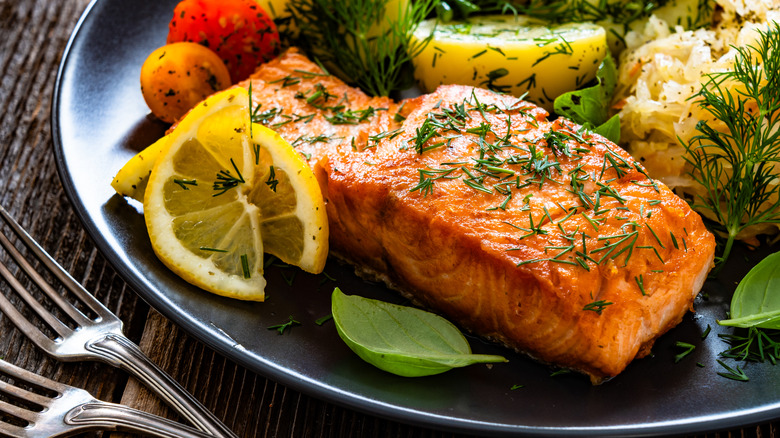
While many diners crave the richer, fattier varieties of salmon –- so much so that some cooks up the richness even further by poaching salmon in olive oil –- leaner varieties are also worth a look. Indeed, they may even be preferable in certain dishes. "If you're making a salad with it, poaching it and then combining it with some ingredients, it's a great option," Adam Licht says. "It also works great in burgers."
A lean salmon variety that Licht and several of the other experts recommend is sockeye. "If you shop with your eyes, chances are you'll be drawn to sockeye salmon, also known as red salmon for its deep red flesh color," Peter Adame says. However, he warns that its leanness means it requires extra attention in the kitchen. "Careful not to overcook this fish, as it has a lower oil content, meaning it can become dryer more quickly. So if you're new to cooking salmon, start with a different species," he says. To master your salmon-cooking skills, learn about the biggest mistakes people make when cooking salmon –- and how to avoid them.
Filets aren't your only option
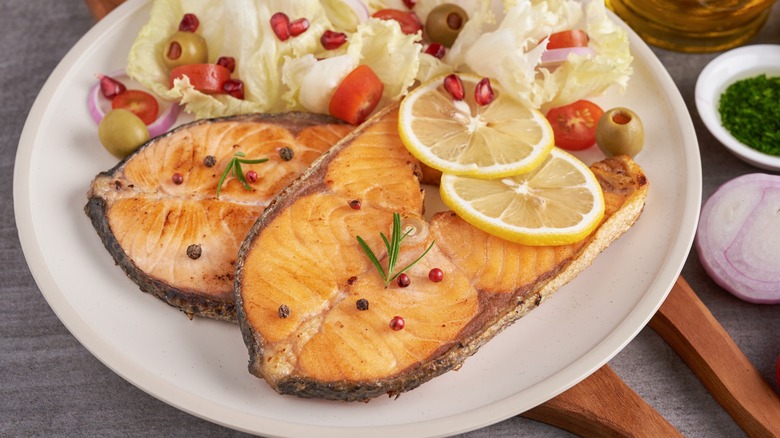
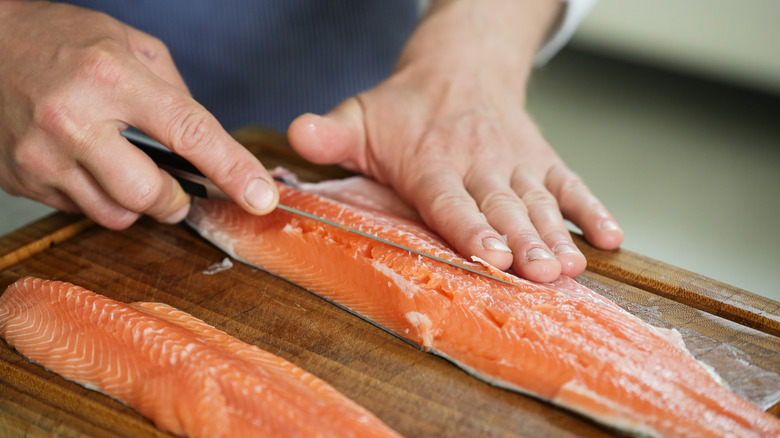
Salmon filets are easy to find and enormously popular, but they're not your only option. If you're ambitious and have a big refrigerator or freezer, Poul Andrias Jacobsen shares that a whole, gutted salmon offers "often the best value per kilo." If you're a serious salmon fan with sufficient freezer space, you can portion it into pieces yourself for later use. And don't throw out the scraps -– the head along with all those bones and bits of skin and meat are "ideal for broths, soups, stock, or homemade fish oil."
A lesser-known cut Jacobsen also recommends is the tail, a "leaner cut with fine muscle fibers and slightly lower fat." Good for grilling, stewing, or panfrying, salmon tails offer "good texture and value," he says. Adam Licht notes that some of his clients like to stuff or top salmon tails with crabmeat. Licht also likes salmon steaks, which are thick, crosswise sections of the fish. "It's kind of nice to cook it with the center bone still in it," he says. "You know, a lot of people say that adds some extra flavor to it, and then the bone pulls out very easily."
Don't sleep on frozen salmon
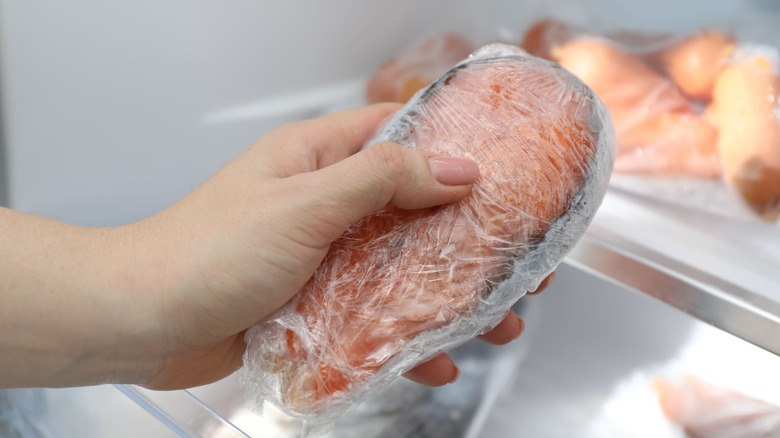
Hardcore foodies fetishize freshness and for good reason. Anyone who's tasted tomatoes straight off the vine or seafood fresh off the boat knows that their standard supermarket counterparts can't even begin to compare. But when it comes to salmon, our experts advise that frozen salmon is often a better choice. "Frozen salmon is an excellent option, often even preferred to fresh salmon," Aaron Flamini says. "The technology available today allows frozen salmon to maintain incredible quality and hold onto nutritional content that would otherwise be lost in a 'fresh' option that's not consumed immediately."
If you want to enjoy wild salmon out of season, frozen will be your only option. Peter Adame notes that good-quality frozen salmon will taste fresh because it's processed and frozen at sea as soon as it's caught to lock in its freshness and nutrients. Improper freezing or thawing, however, can compromise the texture of the fish. "When fish is thawed out slowly under ideal conditions, the fish can be nearly indistinguishable from fresh fish," Adame says. "However, if thawed out too quickly, ice crystals inside the flesh melt unevenly, breaking down cell walls." This can make the fish mushy or watery. For this reason, Poul Andrias Jacobsen advises consumers to avoid any frozen fish with visible ice crystals and to thaw fish slowly in the refrigerator rather than at room temperature.