

Yes, Cucumbers Used To Look Way Different Than They Do Now
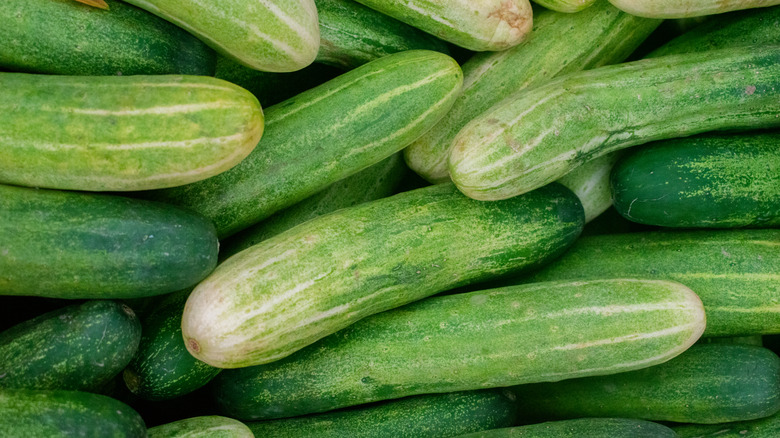
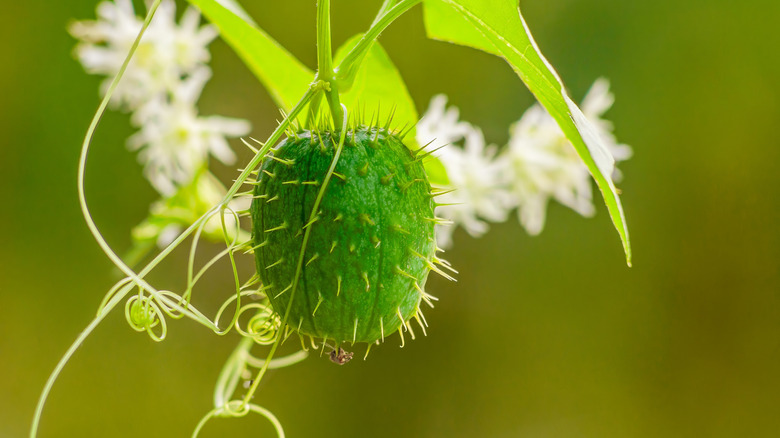
The cucumbers stacked neatly in grocery bins today are a far cry from their earliest ancestors. It's actually one of the many vegetables (or fruits, depending on who you ask) that used to look very different. Thousands of years ago, their wild relative, cucumis hardwickii, grew near the foothills of the Himalayas. It was small, round, and covered in sharp spines, more like a prickly melon than the smooth, crisp vegetable we know. Archeologists believe people began cultivating it roughly 11,000 years ago, long before anyone thought to toss it into a salad.
In its wild form, the cucumber was hardly appetizing. It carried an intense bitterness from compounds called cucurbitacins — a natural defense mechanism against hungry insects. Over centuries of selective breeding, farmers learned to tone down those harsh notes, creating a milder, more refreshing bite. Bit by bit, the vegetable stretched longer, lost its spines, and took on the glossy green skin we now recognize instantly.
That gradual transformation mirrors the broader story of agriculture itself: humans shaping plants to suit their palates. What once grew as a tough, spiny wild fruit is now the cool, mild staple that shows up in everything from summer salads to spa water. This is only the beginning because the cucumber's journey didn't stop once it became edible.
From ancient fields to the produce aisle
Once humans tamed the cucumber's bitterness, its journey around the world began. Believed to have originated in India, it spread through trade routes to Egypt, Greece, and Rome, where everyone found a different use for it. Egyptians enjoyed them fresh, salted, and sometimes brewed into a light, fermented drink through a curious bury-and-wait method that's probably best left in the past. The Greeks considered cucumbers humble but refreshing, while the Romans turned them into luxury: Emperor Tiberius insisted on having them year-round, prompting gardeners to build early versions of portable greenhouses to keep his table stocked.
Centuries later, the vegetable's reputation traveled north. Catherine of Aragon is said to have introduced cucumbers to England during her marriage to Henry VIII, while Columbus carried their seeds to the Caribbean and Florida in the 1490s. By the early 1800s, they had taken firm root in American colonial gardens. You may not have known the many different cucumber varieties that exist today — from long, mild English types to knobbier pickling kinds, yellow-skinned lemons, and the coiled Armenian "snake" cucumbers once mistaken for melons. Modern cucumbers no longer hint at their wild beginnings, yet their appeal has not faded. Whether you're layering them into sandwiches or deciding how to choose the best cucumber at the grocery store, the evolution of this once-bitter plant shows just how far a little patience — and a few thousand years of cultivation — can go.