

Clean Smudges Off Stainless Steel Appliances With One Pantry Staple

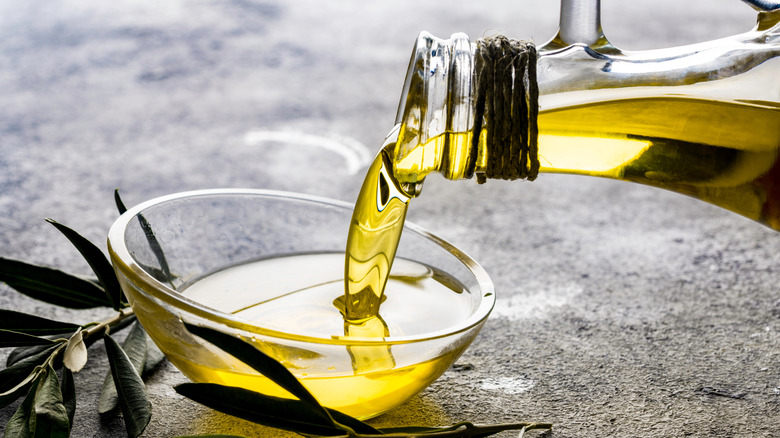
Pairing classic cabinetry with stainless steel appliances can instantly elevate a drab kitchen. The smooth and reflective nature of stainless steel lends a space a polished look and modern appeal. The only problem is taking care of it. Stainless steel is notorious for developing unsightly smudges and streaks, which can make even the neatest kitchen appear grimy at first glance. While you can't always stop children from placing their messy palms on the surface of your stainless steel fridge (or pressing stickers onto the doors), you can clean those smudges off quickly with one pantry staple: Olive oil.
Simply place a paper towel over your bottle and upturn it for a moment to coat it with a light layer of oil. Then, rub it over your appliance and watch those smudges vanish, leaving behind a fridge or dishwasher that looks pristine, streak-free, and as good as the day you installed it. Better yet, the oil will leave a protective sheen on the surface.
You can also use baby oil to polish stainless steel. However, it will leave an aroma behind in your kitchen. Olive oil is scentless, which makes it undetectable. Plus, you can use the cheapest one you have to do the job, making it a fast, inexpensive, and effective solution when you don't want to use chemical-laden cleaning products loaded with nasties.
Clean your stainless steel appliance with the grain
Examine your stainless steel fridge or dishwasher, and you should be able to see that it has faint, visible lines running across the surface known as the grain. When rubbing olive oil on stainless steel appliances, you should follow the direction of the grain to eliminate streaks and maximize shine. Usually, the grain runs horizontally, so move your paper towel across it, moving downwards in a side-to-side motion, instead of vertically. Once you've mastered this technique, feel free to employ it on stainless steel extractor fans, toasters, kettles, or microwaves. The beauty of using a paper towel is that you can discard it after use. However, microfiber cloths make the perfect reusable substitute that is better for the environment. Plus, they have a soft texture that won't damage your appliances and can be washed and set aside for later.
Polishing wooden cabinets and preserving cast-iron skillets are just a couple of other ways olive oil comes in handy when cleaning your kitchen. You can also use it to polish brass and copper, or rub it onto door hinges to stop them squeaking. Of course, it makes sense to use a cheap olive oil for these tasks; you don't want to waste an expensive bottle of Costco EVOO on fixing squeaky door hinges when it's best used for making peppery salad dressings. A vegetable oil can be substituted for olive oil if you don't have any on hand.