

Revive Burnt Cookware With An Everyday Bathroom Essential
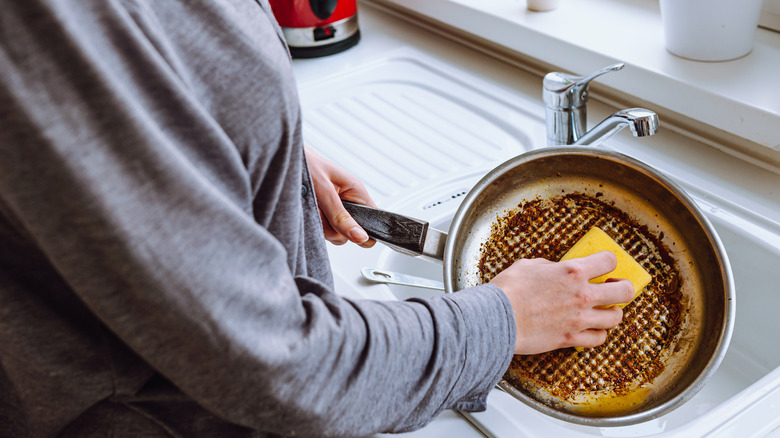
Investing in high quality cookware makes sense if you spend a lot of time whipping up new recipes in the kitchen. Select the right skillet or saucepan and it can last a lifetime with the proper care. If you've accidentally burned the surface of your expensive frying pan and are worried it can't be brought back from the brink, there's an everyday bathroom essential that can come to the rescue — Epsom salt.
Epsom salt looks like rock salt, but it isn't used for cooking. Instead, it's often added to hot baths to help relax the muscles and ease aches and pains. Also known as magnesium sulfate, this product's crystal texture makes it useful for scrubbing grease and grime off cookware, too. It's best to use pure Epsom salt to clean burnt cookware instead of varieties that include fragranced oils and additives. To start, sprinkle a handful over your pan, and use a sponge to rub it into the surface to dislodge any burnt material on the bottom or exterior. You may need to repeat this process if all the gunk and grime doesn't come off on the first pass, or add a squirt of dish soap and water to move things along. (For tougher charred or scorched areas, soak the pan for a few minutes to soften stubborn burnt-on bits.) Combining the salt with an acid like vinegar creates a more powerful mixture that cuts through greasy residues.
Epsom salt is safe on stainless steel but not on non-stick cookware
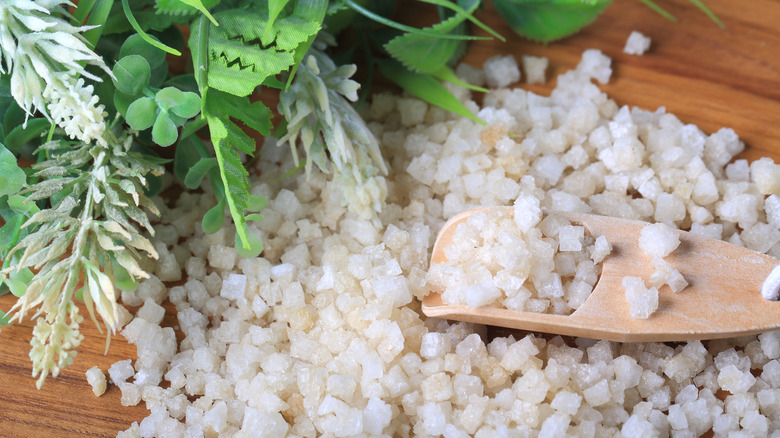
Epsom salt crystals are naturally abrasive but are far milder than steel wool and scrubbing brushes, making them an effective natural cleaning agent for a variety of surfaces such as stainless steel. However, if you're unsure, test it on an inconspicuous area first. Whatever you do, don't use Epsom salts on non-stick pans! Non-stick cookware has a coating on the surface called polytetrafluoroethylene (PTFE) that gives them their non-stick qualities. This surface can easily get scratched and chipped, so you should never use sharp metal utensils on it. As Epsom salt crystals are naturally textured and pointy, there's a risk they could scratch the non-stick material and decrease the lifespan of your cookware.
Don't have Epsom salt? Scrub grimy pots and pans with coffee grounds. A tablespoon of this leftover ingredient can be combined with a squirt of dish soap and some hot water to make an effective cleaner. Alternatively, clean your stainless steel pans with baking soda to save time scrubbing. The mild abrasive texture of the baking soda will lift off stubborn residue without damaging the surface.