
10 Appalachian Foods That Everyone Should Try Once

Appalachia is a mountainous region stretching across the Eastern United States, including all of West Virginia and parts of twelve other states. These other states include Alabama, Georgia, Kentucky, Maryland, Mississippi, New York, North Carolina, Ohio, Pennsylvania, South Carolina, Tennessee, and Virginia. The area is so special because it's biologically diverse and notably still "wild" in a United States that's now largely been deforested and built upon. Hearing the word "Appalachia" is likely to bring to mind mountains, forested expanses, coal mines, country music, and a determined, hearty people. What may not immediately come to mind is a rich cuisine and unique food history that perfectly showcases the Appalachian people's ability to thrive in challenging circumstances. But it's that food culture we're here to discuss today.
Traditional Appalachian foods often focus on necessity and availability. Some dishes were invented to suit a need, like the pepperoni roll, while many others focused on foods that could be foraged or cheaply bought, like chow chow. The best part about these foods is that they're a simple way to experience Appalachian culture firsthand, without having to travel or even leave your own kitchen. Of course, the question then becomes which foods are most worth trying when a slew of options exist. To help, we've compiled a list of ten regional dishes that we believe everyone should try at least once. Use these foods as a jumping-off point in your gastro journey across the Appalachian Mountains.
1. Pepperoni Rolls
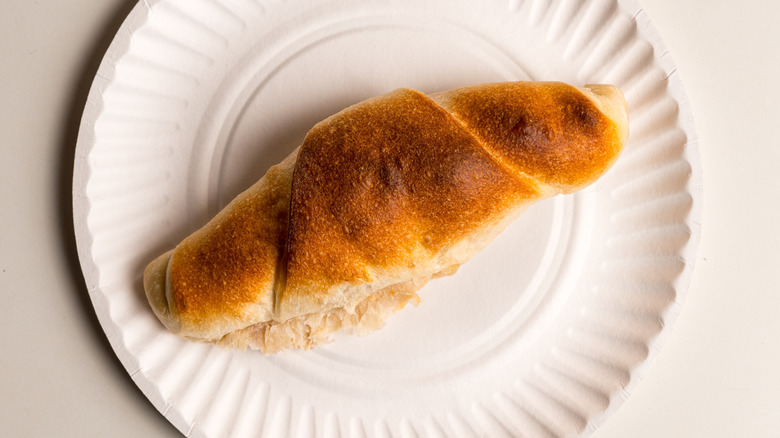
West Virginia is the only state to be fully encompassed by the Appalachian Mountains, and pepperoni rolls are the state's official food. They're so popular, in fact, that there's a festival dedicated to them. A pepperoni roll is a conveniently portable dish made with pepperoni and cheese baked inside a thick dough. During baking, the pepperoni leaks some of its juices into the surrounding dough, creating an orangish coloring. Most importantly, a pepperoni roll can be eaten with one hand — a fact that is central to its inception.
To make a long story short, the pepperoni roll was invented by an Italian immigrant by the name of Giuseppe Argiro, who saw a need for a portable snack for his coal mining friends after opening a commercial bakery. Remembering how the miners would eat a piece of bread in one hand and a stick of pepperoni in the other, he thought to combine the two into one. This way, the coal miners could eat their lunch with one hand, drink their water with the other hand, and quickly get back to work to meet their daily quotas.
Today, the pepperoni roll is still enjoyed by coal miners throughout West Virginia, but has expanded well beyond these humble origins, into other states, and is made in people's kitchens regardless of their line of work. Although still made at home, you can purchase a pepperoni roll to try yourself at nearly any restaurant, convenience store, or bakery throughout West Virginia and some surrounding Appalachian states.
2. Kilt Lettuce
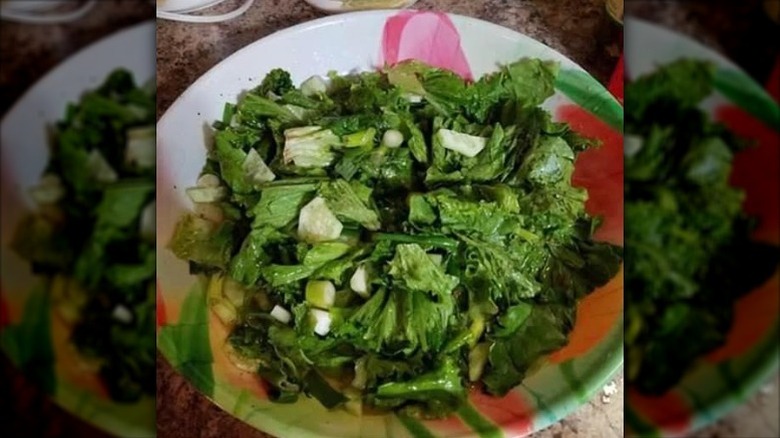
Kilt lettuce is sometimes also referred to as "killed lettuce" or "wilted lettuce." The name is a reference to how the lettuce in this recipe is wilted or killed purposefully by the other ingredients to create textural uniqueness and a varied flavor profile from standard salads. For this salad, you can use fresh greens from your vegetable garden, foraged greens, or lettuce bought from the grocery store, making this a versatile dish.
Once you have your greens chopped up and in a big bowl, you take a little bit of hot bacon grease and drizzle it over the lettuce to help it wilt. Then, you add a splash of vinegar to create the hallmark tanginess this fresh dish is known for. If you have other ingredients, you can add those, too, but you don't have to. Examples of additional mix-ins can include hard-boiled eggs, crumbled bacon bits, fresh diced tomatoes, sliced onions, and anything you might find in your vegetable garden.
You aren't likely to find this dish in Appalachian restaurants, since it's primarily a homemade dish, but it's incredibly simple to create kilt lettuce yourself. That makes it an excellent option for your first Appalachian food without having to travel beyond the comfort of your own kitchen.
3. Leather Britches
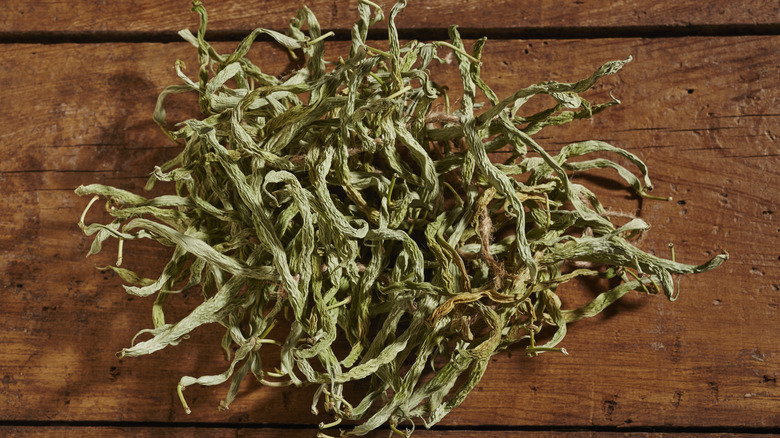
Leather britches are another food that's called different things in different areas around Appalachia. You may hear them called "shucky beans" or "shuck beans" instead. This dish is created by drying out pole beans (like green beans) and then rehydrating them in boiling hot water. Surprisingly, the result is a deeply umami flavor profile that's more akin to meat than actual beans — a result that Appalachians are familiar with yet nobody can quite explain.
To make leather britches, start by grabbing a bunch of fresh pole beans. You'll want to string these up using food-safe thread and a sewing needle, before hanging them up somewhere to dry. The porch is a good option if possible, since it has a lot of air circulation that will help dry the beans out faster and more efficiently. If this isn't possible, though, consider hanging them up somewhere in your own kitchen or a sunroom. Let them hang out for a few weeks until completely dried, before cooking them in a little boiling water. Once reconstituted, don't throw away the juice. Instead, add a bit of lard to thicken it, with a pinch of salt, and toss your beans back in.
This is another Appalachian dish you won't likely find in most restaurants, but you may get lucky with the menu in some smaller, local establishments. However, creating leather britches yourself is easy, albeit time-consuming, if you want to try them.
4. Soup Beans and Cornbread
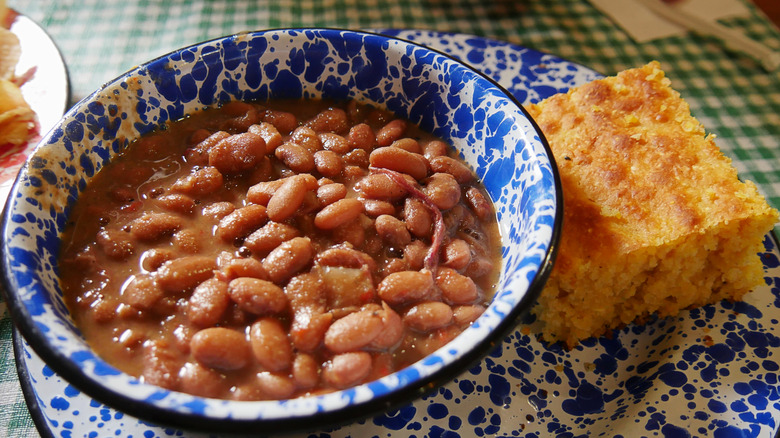
There are few dishes as quintessentially Appalachian as soup beans and cornbread. The meal is warm, filling, easy to make, and exceptionally affordable, highlighting all of the best qualities of the culture's cuisine. The soup beans are usually made from pinto beans, but you can substitute or supplement those with various other types of beans, depending what you have available to you.
Creating the meal is simple. Take dried pinto beans and cook them in water, with your preferred seasonings. The key here is to add a little extra liquid to make it soupy, rather than just enough to cook the beans. If you have it, you can use chicken or beef broth or stock instead of water. You can also throw in some ham or bacon for additional flavor, but it's not essential. While that cooks, you can make either homemade skillet cornbread or a pre-made boxed mix.
To eat this meal like a true Appalachian, you'll want to soak up the extra liquid in your beans with the cornbread. Serve it alone or with a side of homemade collard greens, chow chow, and fresh garden tomato slices.
5. Chow Chow
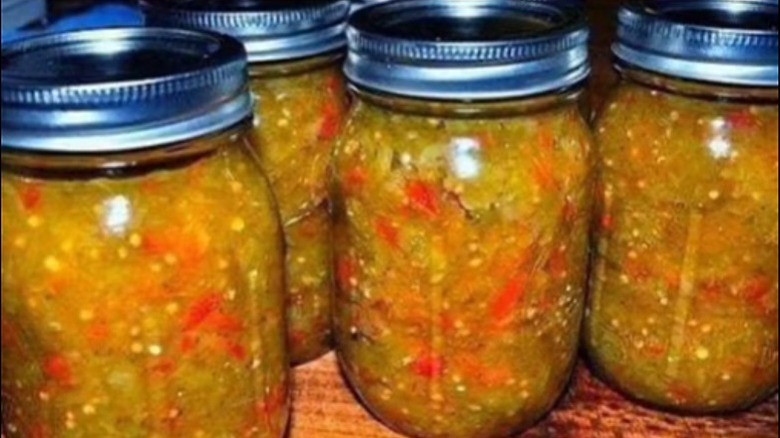
Chow chow is a type of vegetable relish that's also sometimes referred to as "piccalilli" in some parts of Appalachia. There are so many unique recipes for this dish that nearly every Appalachian family has a different one, but that's the beauty of chow chow — it can be made with whatever vegetables you have on hand and still turn out delicious.
The most important ingredients in this dish are an array of very finely diced vegetables. What vegetables you use is up to you and can affect the final taste quite a bit, but there are a few options that commonly make their way into recipes. These include cabbage, bell peppers, onion, corn, celery, green tomatoes, hot peppers, carrots, and zucchini. Once these are tightly packed into a glass mason jar, ingredients like pickling spices, sugar, and vinegar are added to preserve the vegetables and provide the hallmark sweet, tangy taste of the dish.
Serve your chow chow with almost anything. It can be eaten on crackers or bread, served alongside nearly any meal, or mixed into various dishes to elevate the flavor profile. Feel free to experiment with different serving methods, to see which you like best!
6. Hoecakes
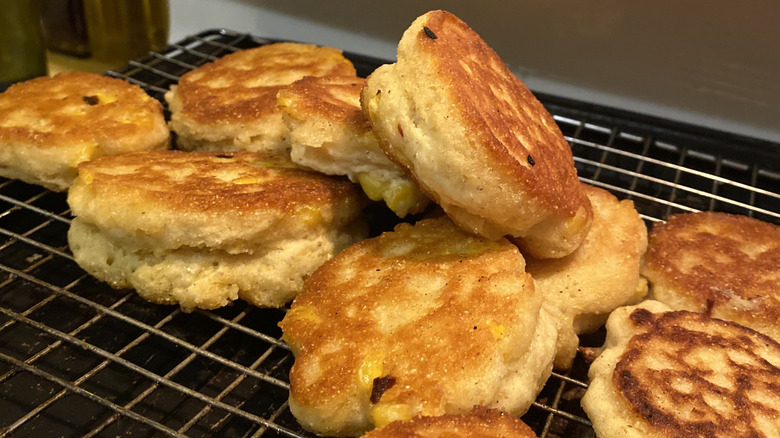
Hoecakes are little fried cornmeal patties that are also sometimes known as "corn cakes" or "johnny cakes," depending on the state you're in. This Appalachian treat is so popular because it uses very few common ingredients to create a warm, savory, filling dish. They're very similar to cornbread in preparation and ingredients, except that cornbread is usually baked in a dish while hoecakes are fried in a skillet. This difference in preparation lends itself to different textures and mildly unique flavor profiles.
Making hoecakes requires only four ingredients — cornmeal, salt, eggs, and boiling water. These are combined to form a batter that's then spooned into a greased frying pan and cooked into a patty. Some people like to make hoecakes in the same pan they just cooked bacon in, as this lends an additional layer of savoriness to the meal.
Hoecakes can be eaten by themselves as a quick savory snack, or they can be served alongside any meal as the accompanying bread. If you like, you can top your hoecakes with savory ingredients like sour cream, cheese, bacon, ham, sausage, or even sawmill gravy. Alternatively, you could top them with the same sweet ingredients you might enjoy on your pancakes.
7. Biscuits and Gravy
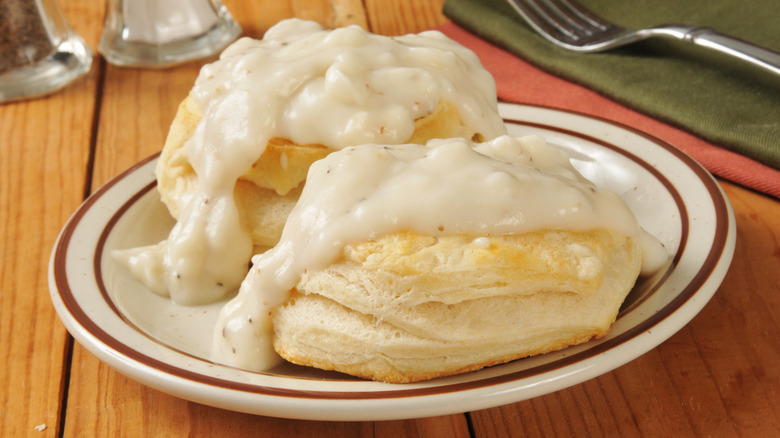
A classic Southern breakfast staple, homemade biscuits and gravy is another one of those Appalachian dishes that uses limited ingredients to stretch the budget while still filling stomachs. Although many people are familiar with sausage gravy over biscuits, the dish in Appalachia usually uses something called bulldog gravy or sawmill gravy. Although similar, bulldog gravy doesn't include meat.
Bulldog gravy is a thick, hearty gravy made from rendered grease, flour, and either milk or water (depending on which you have to hand). The rendered grease can come from almost anything you've fried, but sausage or bacon grease is preferred for the flavor. This is served over fluffy homemade biscuits to create a rich, savory dish with a nicely balanced flavor profile.
You can find biscuits and gravy in many restaurants throughout Appalachia, but like most of the dishes on this list, it's incredibly easy to make at home. Consider trying this Appalachian cuisine staple for breakfast one morning to experience the warming, filling ingenuity of this dish for yourself.
8. Fried Green Tomatoes
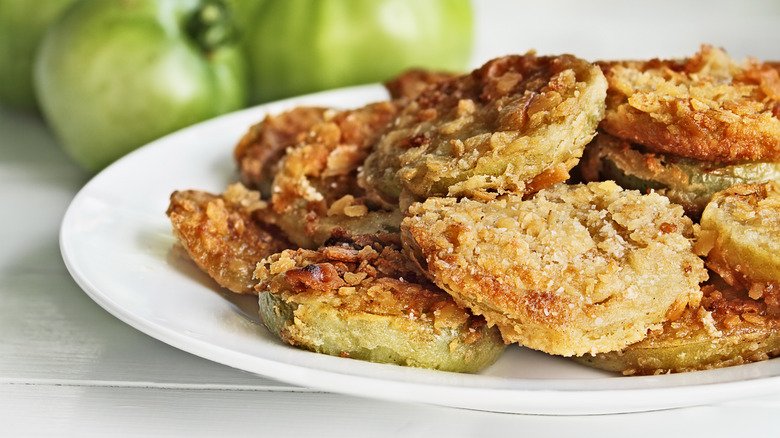
Green tomatoes are ideal for frying, because they're firmer than their red counterparts, allowing them to hold up better during the cooking process. These brightly colored fruits are also tangier than when they're fully ripe — a flavor that lends itself to Appalachian fried green tomatoes. This dish can be primarily made using tomatoes from the vegetable garden, along with a few basic items most people already have in their kitchen.
To make this dish, grab one or two green tomatoes and cut them into thick slices. You don't want the slices to be too thin, or they'll break apart during cooking — but you don't want them overly thick, either, since this can stop the centers from softening. Once cut, coat each slice thoroughly in a seasoned cornmeal batter and fry them all in a pan over medium-high heat until golden brown. When you remove them from the pan, lay them out on a napkin to catch the grease, and sprinkle them with a pinch of salt before serving.
You can find fried green tomatoes in restaurants throughout Appalachia and the American South, or you can make them yourself at home simply and quickly. No matter how you come by them, fried green tomatoes are one Appalachian food you'll want to try at least once.
9. Ham and Red Eye Gravy
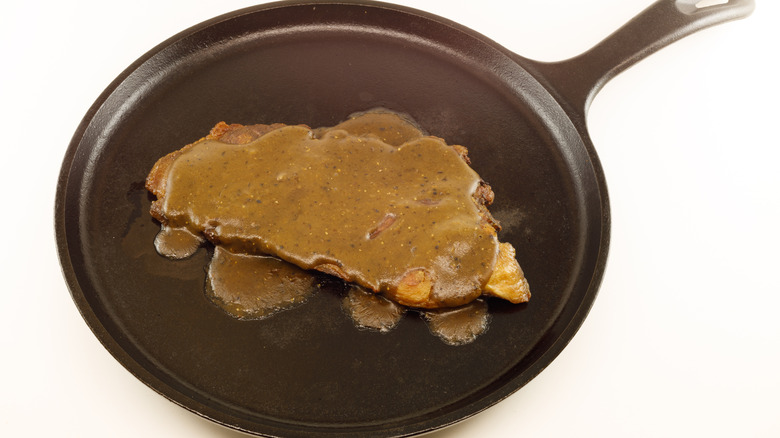
Ham and Red Eye Gravy is a uniquely savory and bitter dish that works well for any meal, but is most popular for supper throughout the Appalachian region. Some people may also know this as "ham and red sop," but no matter what you call it, it's a dish of salty country ham and a gravy made mostly from strong black coffee.
Country ham tends to be thicker and saltier than other cuts, with big stripes of fat running through it. This is fried in a pan with a little oil until done. Once finished, pull the ham out and set it aside before adding a cup or two of coffee to deglaze the ham renderings from the bottom of the pan. Allow this to boil until it thickens — but not too much. This gravy is meant to have a thinner consistency, though some people also add a little cornstarch for extra thickness. A dash of brown sugar to counteract the bitterness of the coffee is also a popular variation.
You may be able to find ham and red eye gravy in restaurants throughout Appalachia and parts of the American South, but it isn't as popular today as it once was, so you may need to make it at home. Thankfully, doing so is quite easy and uses ingredients you can find in grocery stores, basically anywhere in America.
10. Cornbread in Milk
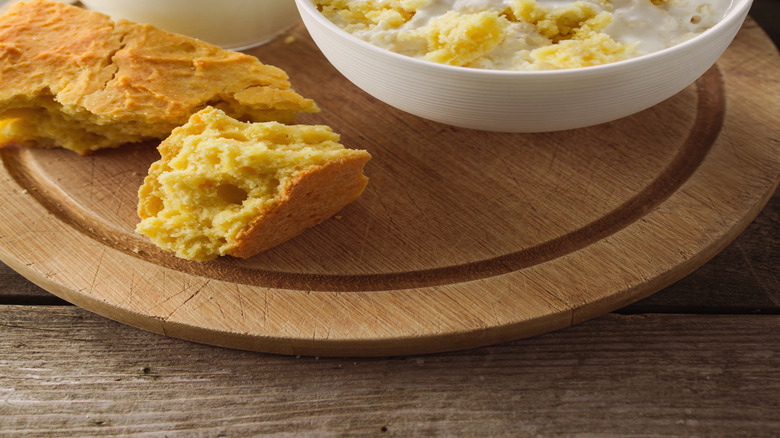
Cornbread and milk create a delicious cold treat from things that poor Appalachians likely had access to historically. Like many other dishes on this list, this one is versatile and can be made with whichever options you have on hand. The cornbread can be hot and fresh, or it can be cold and a little stale, making this the perfect way to use up leftovers. The milk can be any you have, but is preferably either buttermilk or whole milk — ice cold, of course.
For this dish, you can use leftover cornbread from the night before, but if you don't already have that on hand, you can bake fresh savory cornbread (not the sweet kind). Then, grab a tall glass or a bowl and crumble the cornbread into it. Pour whole milk or buttermilk over the top and eat it immediately. This isn't a dish you want to prepare in advance, as the cornbread will become too soggy. If you want to embrace the savory flavor profile, you can sprinkle a bit of black pepper into your glass. Or, if you want to cut the tanginess of buttermilk, you can add a tiny bit of honey, syrup, or sugar.
The only way to experience the delicious resourcefulness of cornbread in milk is to prepare it at home. Thankfully, it's one of the easiest Appalachian foods to create, making it the perfect first option for your gastronomical journey across the region.