

How An Unexpected Grocery Chain Wipeout Could Contribute To 'Food Deserts'
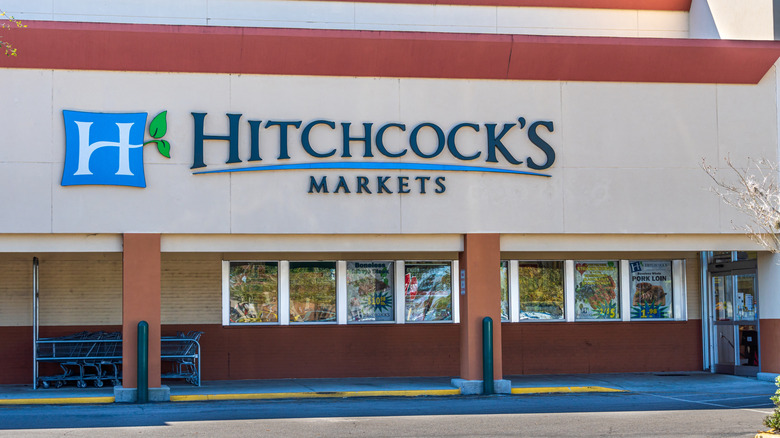
Shoppers in central Florida are about to see a drastic change in their grocery habits. Hitchcock's Markets, a regional chain of 10 stores situated in rural, underserved communities, is suddenly closing all of its locations, as reported by The Street. The good news is that, according to Mainstreet Daily News, all 10 locations are expected to remain grocery stores, just under new names and ownership. But not all of those deals are closed yet, raising concerns about potential food deserts.
If you've ever lived in an area without a nearby grocery store that stocked fresh meat and produce, then you've experienced life in a food desert. People in these regions often resort to dollar stores and convenience markets for ultra-processed foods, which are typically filling and affordable but are also low in nutrients and linked to many chronic diseases.
Larger chains like Winn-Dixie and Bravo are purchasing certain Hitchcock's Markets stores with their inventories intact. Other locations, however, are liquidating all products. Not only that, but Hitchcock's employees don't know whether or not they'll be able to keep their jobs. The future Winn-Dixies stores will also be closed for about a month before reopening, temporarily leaving consumers with fewer fresh food options — or none at all.
How big of a problem are food deserts?
Food deserts are not an exact science. In fact, some studies suggest that food deserts may be a myth. Back in 2012, a study published in Social Science & Medicine found that low-income neighborhoods generally did have adequate access to grocery stores (in addition to more ultra-processed foods than wealthier communities), indicating a lack of correlation between food availability and children's diets. In 2018, a paper published in the National Bureau of Economic Research also reported a lack of correlation between widespread access to fresh foods and people actually purchasing them.
Despite this, food deserts — real or not — are a major talking point among those hoping to improve nationwide access to fresh, safe foods. Incidentally, two of the best reasons to avoid grocery shopping at dollar stores are their lack of fresh goods and their low quality control compared to other outlets. Safe food handling is important for a healthy population, regardless of terminology.
So, while central Florida is losing a local giant of its grocery store scene, ownership transfer to other chains will hopefully go smoothly, and affected residents ideally won't have to worry about employment or fresh food access for long. Whatever happens, this will be a far cry from the volcanic winter of 536, one of the worst food shortages in history.