

Stubborn, Sticky Stains On Your Kitchen Cabinets? Try One Cleaner Sitting In Your Garage
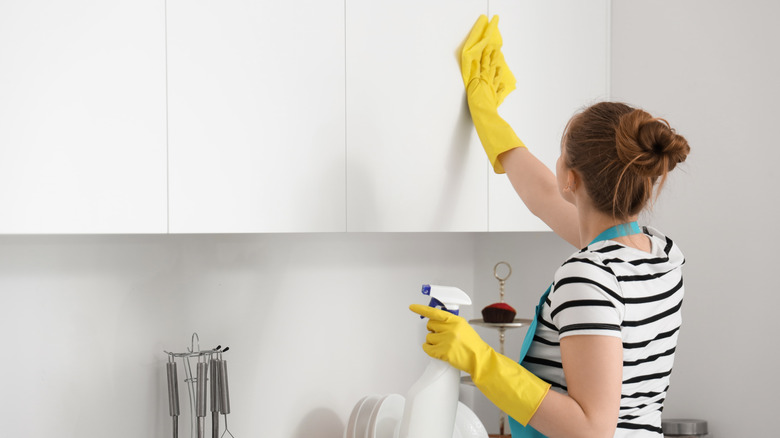
If you're a keen cook and enjoy whipping up inventive meals every day, you'll know how grease can build up in your kitchen. Even with the best extractor fan, grease from airborne particles of food, premium cooking oils, and sticky substances, like syrups and sugary snacks, can latch onto cabinetry. This can make them look unsightly and feel gummy on the fingers. Worse still, are the stubborn little stickers that the kids plaster over the pantry doors. While you could scrape these off with a palette knife, you risk damaging your cabinets, which is where one cleaner that's likely sitting in your garage comes in handy; a can of WD-40.
WD-40 is a lubricant that's commonly used for lubricating tools and unsticking tight nuts and bolts, which is why it's a common sight in garages and tool sheds. It can also be used to keep vehicles looking shiny by repelling grime, and hamper rust and corrosion on lawnmowers, shovels, and spades. Within the home, the lubricating properties of this spray are perfect for eliminating the sound of squeaky door hinges or greasing up the wheels of a rolling kitchen island. Better yet, WD-40 is superb at removing grease and sticky spots on kitchen cabinets. All you have to do is spray it on the sticky area and allow it work its magic for several minutes. Then use a rag to wipe it off and you should find that all that gunk has been dislodged and removed with ease.
Other household uses for WD-40
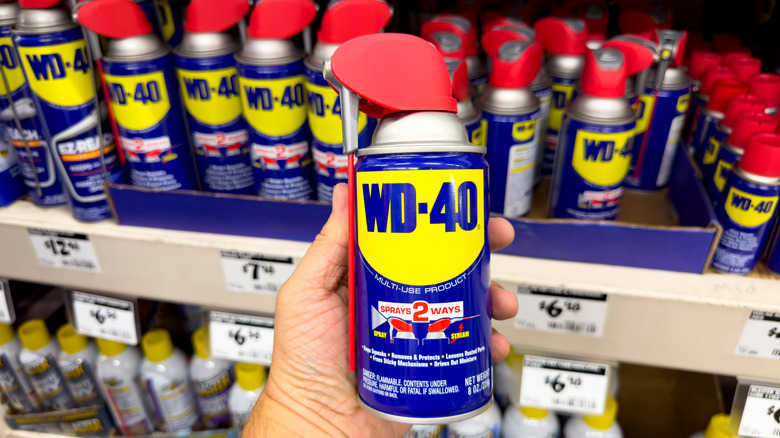
A small spray of WD-40 can be used in several other useful ways in the kitchen, which is great news if you don't want to spend money on extra cleaning products. For instance, rub it onto stainless steel appliances, such as the front of dishwashers and refrigerators, to polish them up and eliminate messy fingerprints. You can also spray it onto artificial plants to shine them up or use it to buff up the sheen on cabinet handles. The best way to get sticky grease off a range hood is to use a WD-40 degreaser but you must wash it down afterwards with dish soap and water. Bear in mind that, you must only use WD-40 on cabinets and appliances that are far away from a heat source like a stovetop (degrease your stovetops with natural products, like lemon juice and distilled white vinegar instead). This is because it's classed as a flammable product due to the mix of chemical ingredients inside. Once any sticky spots have been removed from your cabinets, wipe them down with soapy water to remove residues and drive away its chemical smell. Any cloths or rags that you've used to rub the WD-40 onto your surfaces should be washed with laundry detergent as soon as possible.