

8 Types Of Negative Restaurant Reviews You Can Safely Ignore
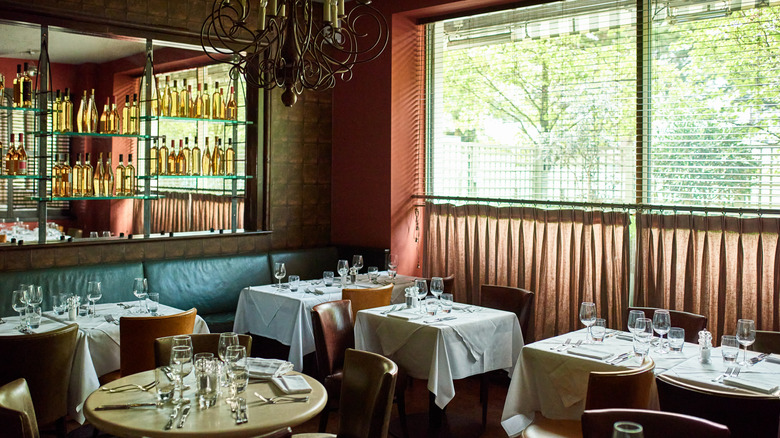
Whether you're looking for the best fine dining in North America or an unassuming hole-in-the-wall restaurant, you'll likely think about checking the reviews online before you reserve a table. This can be a good way to assess a restaurant's quality, food, and service — but things aren't as simple as looking at an eatery's star rating and glancing over all the reviews. There are some types of negative reviews that you can ignore, and the inclusion of those irrelevant write-ups may skew the star rating.
Before you know which negative restaurant reviews to avoid, it's important to know what to actually look for. For starters, you should be looking to see if reviews are primarily positive or negative — a single bad experience doesn't make a restaurant bad. Do many reviewers mention the same thing, good or bad? If so, that's something worth taking note of. Also, keep in mind that recent reviews are more telling than reviews that are one or more years old. Consider if and how the restaurant replied to the comment, if appropriate. Did they respond thoughtfully, address the issue, and offer to assist in bringing closure to the problem? If so, that's a great indicator of their level of service and dedication to the customer base.
Even some of the best restaurants can pick up terrible reviews, so now that you have a general idea of what to look for when reading restaurant reviews, let's talk about which write-ups are safe to disregard. Here are eight types of negative restaurant reviews you can safely ignore next time you're looking for a new place to eat.
1. They were closed

Sometimes you'll find that people give a restaurant a really low rating simply because it was closed. You don't need to be a Michelin inspector to write a review, but you should at least focus on the quality of the food and the establishment while doing so. That makes reviews like these completely irrelevant, because opening hours have nothing to do with the quality of food or service and, in fact, these reviews say more about the person writing them. Why didn't they check the place's hours before arriving instead? And why would they become so upset over missing a restaurant's posted hours that they took to writing a negative review online? Doing so hurts a place's reputation unjustly.
It's safe to say, you can ignore these types of reviews and disregard the rating they gave when determining the actual quality of an eatery. For yourself, it helps to check the days and times a restaurant is open before you go, because some may not have "standard" business hours. This ensures you can avoid the frustration of driving however far to get that delicious meatloaf you wanted just to come home empty-handed.
2. They were too busy
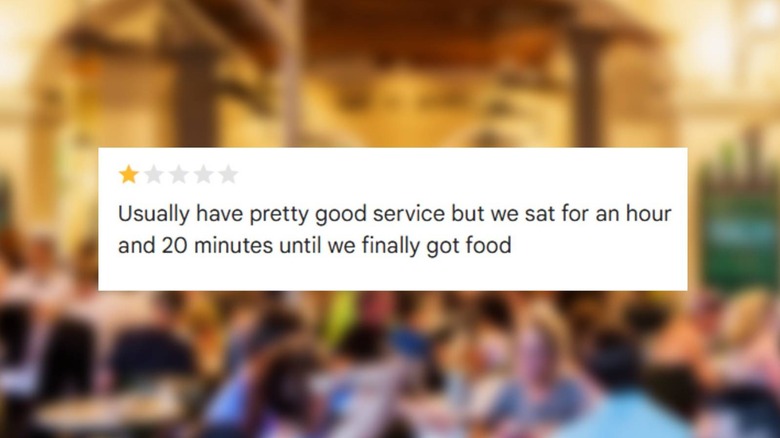
We understand that having to wait for your table or food can be frustrating, but sometimes it just can't be helped. Plus, a busy restaurant is often a good thing because it might be an indicator that the food is really good and worth waiting for. Maybe it has the best local hamburgers or mashed potatoes that are to die for. Unfortunately, some impatient people take to writing digital reviews that are scathing because of the wait time, and some of those same reviews even note that the food was good once it arrived.
Now, you may want to pay attention to these reviews in select situations — like if you'll be on a strict time schedule for your food — but that's a matter of convenience and staying on schedule rather than whether or not the restaurant is worth going to. If you do have the time and patience, consider the reviews saying a place is "too busy" as a reason to go and see what the fuss is all about. You may find yourself pleasantly surprised at just how good the food or service is.
3. Nothing nice to say
This ignorable review is a little harder to spot and may take a little bit of research on your behalf. But it's likely worthwhile when a restaurant has many rave reviews and just a few really negative ones. Some people just can't be pleased no matter how hard you try and, as a result, they only leave bad reviews of restaurants and other venues. If you find that a customer's review history shows they have nothing nice to say, you can safely ignore their negative review by chalking it up to some people simply being difficult.
Unfortunately, these hard-to-please people are more common than you might think. Some studies show that customers are over 20% more likely to leave a bad review versus a good one, and that can be really bad for business. Instead of listening to these specific negative reviews, look at the review trends from the past year. Are they mostly positive outside this one bad review? Or do most reviewers have the same negative things to say? If the former is true, it's probably safe to visit the restaurant and expect a decent time.
4. Doesn't understand the food

Sometimes people know exactly what to expect from a restaurant. For example, most people understand that fast food will be quick and okay, but it won't be anything gourmet. Many people realize that Mexican cuisine or Cajun food will be a little spicy. However, there are some people who don't level their expectations like this, and leave a bad review because of it. When you see a review that just doesn't understand the food, you can safely ignore it.
A review shows they don't understand the food when they align cultural cuisines with Western ideals. Maybe they state they thought a spicy dish was "too spicy" or that something not meant to be thoroughly cooked was underdone (mahi mahi tuna, for instance, should not be overcooked). It's also possible that a review expects five-star food and service in a standard mom-and-pop shop, which just isn't realistic. They may call out the atmosphere, too, for not living up to their five-star expectations. It's important to level your expectations based on things like cultural standards, venue types, and proper dish preparations.
5. Waiter/waitress was rude

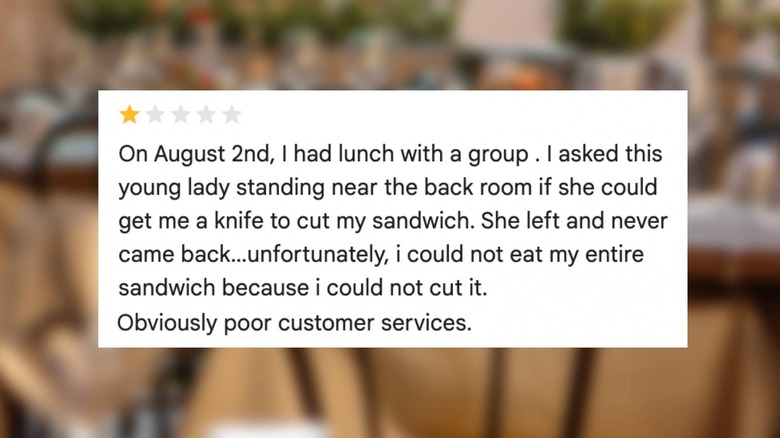
Many bad reviews focus on the service or wait staff, and sometimes, this might make sense. For example, if multiple wait staff were rude, that might warrant a negative review of the restaurant's overall culture. But then there are reviews that discuss a single waiter or waitress being rude or taking too long with their food, which isn't likely indicative of the overall service offered. Plus, restaurant staff are human, too, and they're allowed to have a bad day once in a while — this isn't saying it's okay to be rude to customers, but it does happen.
If a restaurant has overall good reviews but one or even two negative reviews stating that a specific staff member was being rude, you're likely safe ignoring those. But if there are many reviews complaining about bad service or rude staff, you should take that into consideration. Remember, it's all about looking for patterns in the reviews, not focusing on a single one.
6. The restaurant was too noisy
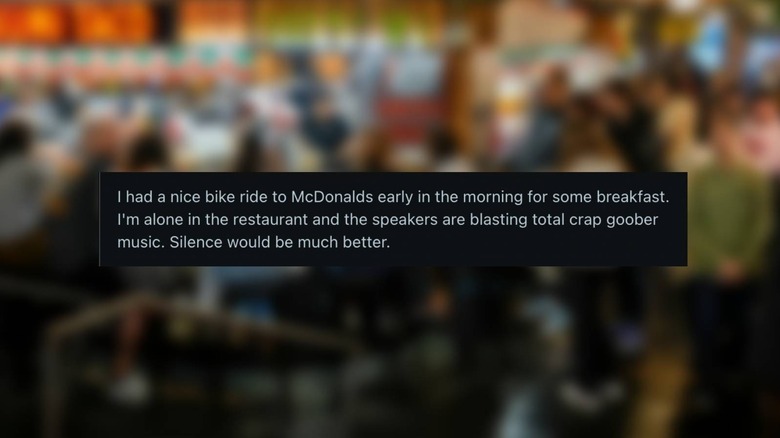
Noisy restaurants aren't for everyone, and that's okay. But many people don't mind when a restaurant is filled with the sounds of children laughing, people talking, waitstaff singing, and a general cacophony of noise. If you're the latter, then the negative reviews saying a restaurant was "too noisy" can be safely ignored.
If you're looking for a quiet setting for your meal, then it does pay to give some attention to these specific negative reviews, but it's important to actually read them in full. For example, some of the reviews may be complaining that specific patrons were noisily talking on the phone or that a certain child was crying. If there's only one or two of these reviews complaining about specific people, you can still safely ignore them. The chances of the same people or situations occurring are very slim.
If you're looking for a quiet setting and notice many comments about the loud atmosphere, whether the reviews are positive or negative, you may want to reconsider eating there. This simply boils down to personal preference.
7. Outdated or old reviews
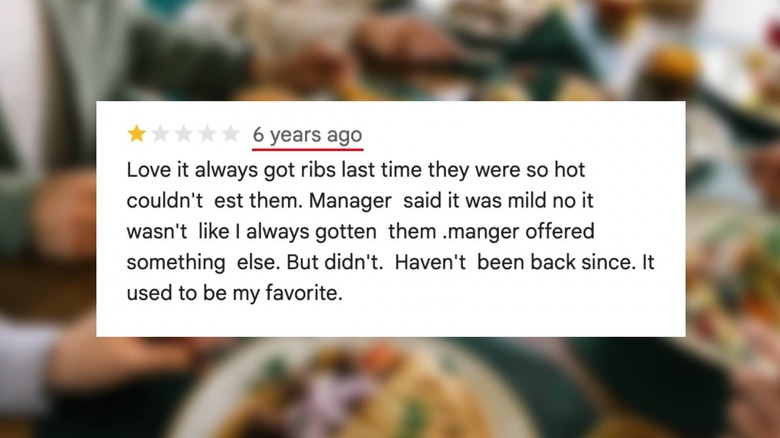
If a review is outdated, it can safely be ignored. By outdated, we mean any review more than a year old, because it may not reflect the current establishment. A lot can change over time that may influence a restaurant's food or service — new staff, new management, renovations, new menus, and so on.
The more recent the reviews are, the more relevant they'll be in your search for a new place to eat, and this can work either in the restaurant's favor or against it. For example, you may find that there are many negative reviews overall, but in the last six months or so, nearly every customer has only good things to say. Or, you may find that there are more positive reviews overall, with the most recent ones being primarily negative.
An easy way to look at the most recent reviews is to filter your search by date. There should be a drop-down box (usually located in the right corner) on most review sites. Filter by "most recent" and scan through the first handful of ratings and reviews that come up.
8. Contradictory reviews
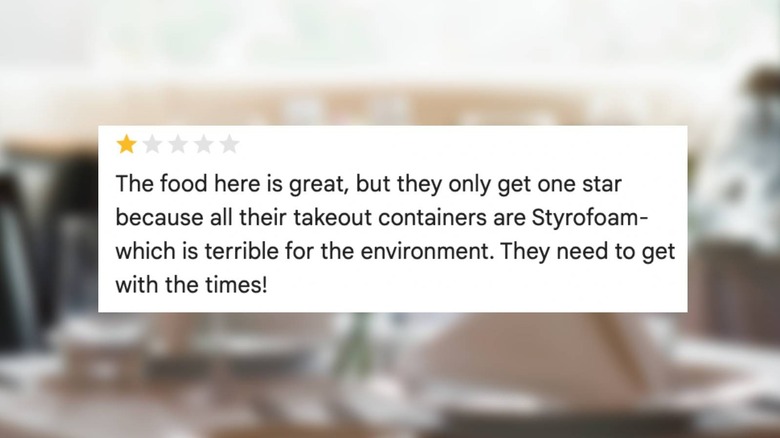
Contradictory reviews are one of the most obvious ones you can ignore. There are several ways a review might contradict itself, but two primary ones are a negative review with a positive rating, or a positive review with a negative rating. Both of these should be ignored.
Negative reviews with a positive rating are the less frequent offender, but they do happen. For example, the review may say something like they'll never eat at a place again because they thought the chicken tacos were awful, but then go on to say the server was really nice and give a five-star rating despite not enjoying the food. These should be ignored and can skew a restaurant's overall rating to be more positive than it should be.
The more common offenders are predominantly positive reviews with a negative rating. Often, the low rating is given due to a very minor, small issue, despite the rest of the visit going well. For example, the review may say something about thinking the restaurant's buffalo wings were amazing and rave about the service, but give a one-star rating because it took too long to get a table. This unfairly skews a restaurant's overall rating negatively.