

The Bed Sheet Hack To Prevent Weed Growth In Your Vegetable Garden
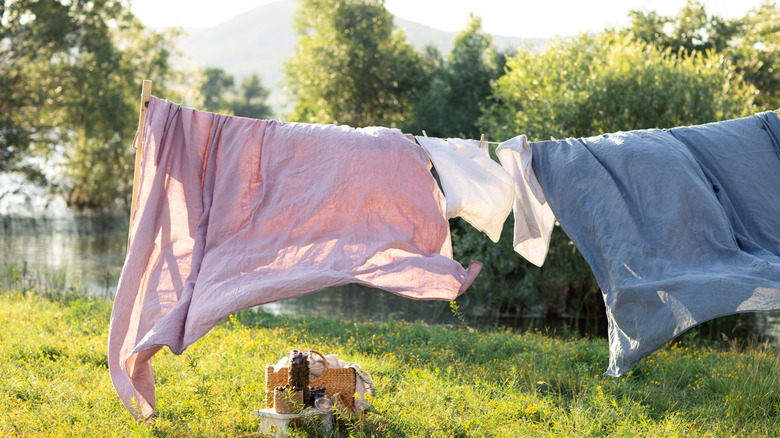
Whether you're an eco warrior, a thrifty homesteader, or a farmer with a really full linen closet, this bed sheet hack might just solve two problems at once. As we all know, weeds are just plants we don't really want to hang out with, but that doesn't make them any easier to deal with. Particularly when they are choking the tomatoes in our beds or overshadowing the herbs in our kitchen gardens. Luckily, the solution is actually waiting inside your home. You've probably worked it out already: Old bed sheets make a great weed suppressant. Just like modern weed-suppressing layers that are designed for the task, sheets block light, which means weeds cannot photosynthesize. Sheets also physically stop growth, trapping young shoots before they become strong enough to push against the fabric above them. At the same time, they allow water and nutrients to soak into the soil, so they don't damage soil quality in your vegetable garden.
There are several great reasons to use old sheets rather than plastic sheeting or weedkiller. By using the old sheets you already have and want to get rid of, you're avoiding both waste and spending. Additionally, cotton sheets are biodegradable, so they will break down over time, saving you the work of getting rid of them. Finally, some studies show that using plastic sheeting, plastic greenhouse tunnels, plastic mulch films, or plastic pots in agriculture can introduce microplastics into plants. This is true in the garden, too, and it is problematic if you are growing vegetables. Microplastics are, unfortunately, present in much of our soil, but there is no need to introduce additional contaminants.
Why using old sheets might be the best weed suppressing choice for your vegetable garden

Using old sheets, curtains, and other pieces of fabric as a weed-suppressing layer could not be simpler. When you aren't growing vegetables, you can put suppressing layers over entire beds. This is particularly useful in the spring before you plant anything, when weeds are starting to emerge after winter. Just fold your sheets double to create a thicker barrier and cover the bed you want to keep weed free. Then, put a layer of organic mulch on top to weigh the sheets down and add nutrients to the soil for the growing season to come.
Fabric, such as old sheets, can also be used to suppress weeds while plants are growing. Once you have planted out your seedlings, either cut strips of fabric to lay between the rows or Cut X's in the fabric and carefully push the young plants through those X's. As the sheets are less tough than plastic, you do not have to be very specific about the size of your holes. You should be able to enlarge them later quite easily if you want to add kitchen scraps to your tomatoes or make other garden tweaks. Of course, weeds are by definition pretty hard to get rid of entirely. You may find that some still grow between sheets or very close to the plants you want in your beds, but these should be manageable and easily dealt with through regular hand pulling.
Old bedsheets do more in the garden than just keep down weeds

For crops planted early, like your first tomatoes, or late growers like winter squash, root vegetables, and hardy greens, the old bed sheets will do double duty. They not only keep down weeds, but they also help regulate soil temperature if there is an unexpected change in weather. Later in the year, as the weather gets colder in general, it is a good idea to cover as much of your garden as possible. Keeping your topsoil covered protects it from the cold, wind, and intense rain or snow that could damage its health. At the same time, it stops any pernicious winter-growing gaining ground and putting down deep roots where you want to grow vegetables in a few months. Old sheets really are a gardener's best friend all year round.
You can also compost in place in winter, which means adding fall leaves, dead plants, and other composting materials to the mulch on top of your insulating and protective layer of sheets to add nutrients and further guard against the weather. In addition, keep your kitchen compost bin going over the winter and cover your outdoor compost heap to keep it warm enough to break everything down. You could use a couple of layers of old bedsheets for this, if you have any left after covering all your beds. You will be glad you did when spring comes and you have plenty of fresh compost to mulch with.