

Avoid This Type Of Beef For Homemade Pot Pies
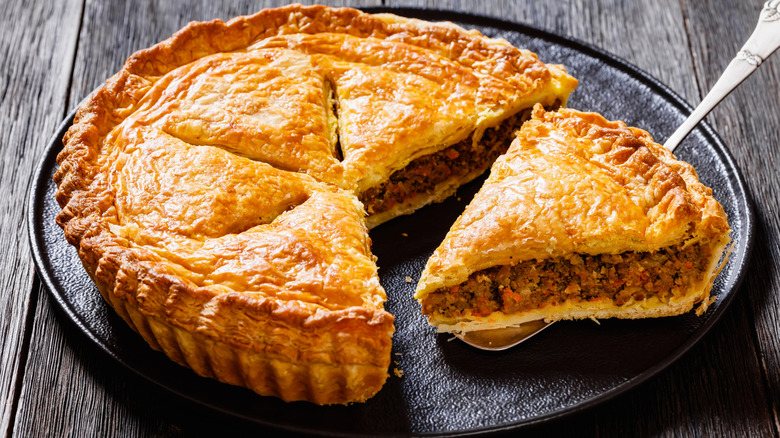
Take a stroll down the frozen aisle at the grocery store and you'll be met with an array of beautifully packaged pot pies. These convenient meals are a useful dinner when you're in a pinch and need something fast and filling. However, if you've extra time to invest in cooking, there's no comparison to the flavors and textures of a homemade beef pot pie. There's just one thing you need to remember: Avoid using expensive cuts of steak like rib eye and filet mignon when preparing your filling.
While you might think that premium steaks would result in a tender and flavorful pot pie, the math doesn't add up on closer examination. The prized feature of a pot pie is the tender texture of the meat filling, which is achieved via a low and slow braise. If you were to cook a steak that you'd normally sear in a skillet this way, it would dry out and become tough and rubbery. This change in texture occurs because these cuts contain very little marbling and connective tissue that can render down and melt during a slow simmer. While lean cuts of steak, such as eye of round and sirloin tip, are available at the grocery store, these options lack flavor due to their low fat content and are best pan-fried at speed so they can retain their succulence. Slow cooking them is like tossing your money down the drain.
The best cut of beef for a tender pot pie
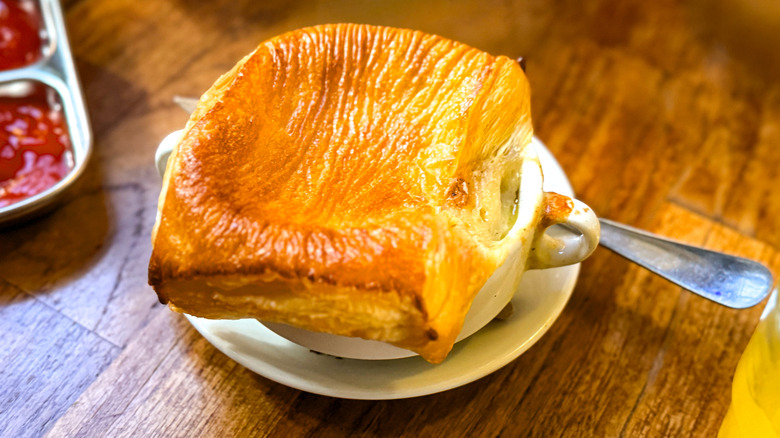
Any cut of beef that benefits from a slow braise, such as chuck roast, is ideal for turning into a pot pie filling. These larger hunks of beef have plenty of marbling and connective tissue, which means they can be cooked for a long period without drying out. As the fat renders down, it keeps the meat wonderfully tender and gives it a fall-apart character. Moreover, these fatty areas are a source of flavor and richness, which provides the filling with a velvety texture and a surrounding gravy that has an inviting, unctuous quality. Chuck roast makes an excellent substitute for brisket because it's cheaper and goes farther, but with either option, always sear the meat first to lend it a caramelized flavor and golden color.
The awesome thing about making pot pies is that you can braise the meat in advance and set it aside until you're ready to make your pastry lid (or you can use a sheet of ready-rolled puff pastry). In fact, leaving the filling in the fridge overnight allows the flavors to meld, resulting in a pie that's rich and robust. Any leftover ingredients can be stuffed into a hot sammie, scattered over loaded fries, or topped with mash to make a twist on a classic Shepherd's pie.