

This Once-Popular 2000s Flatbread Chain Quickly Vanished. Here's Why

If you don't remember Cosi, we don't blame you. This sandwich chain was once the talk of the town back in the 2000s, and at one point, it felt like a serious rival to Panera Bread. Specializing in serving Italian-style sandwiches to busy office workers, Cosi started life in the late 1980s, and within a decade, it had dozens of stores across the country. By the mid-2000s, it had reached huge success with over 150 units and a menu that kept people going throughout the working day.
Pretty soon, however, the bubble burst, and Cosi was over. Well, not quite over. It's actually still around today, but it's a shadow of its former self, with just a few locations here and there. The thing is that with Cosi, it was never about the food: Its menu boasted (and still boasts) a host of delicious options, and if you're lucky enough to find a Cosi today, you'll be able to treat yourself to flatbread sandwiches with fillings like hot honey chicken, turkey and Brie, and buffalo chicken with blue cheese dressing. Sadly, it was the forces behind Cosi that led to its downfall, and its tale is littered with poor business decisions, personnel changes, and multiple bankruptcy claims.
Cosi's story started with a trip to Rome

Like all good businesses, Cosi started with a flash of inspiration. Its inception came when Drew Harré, a New Zealander, left his home country for Paris at the tender age of 17, in search of the perfect sandwich. Unable to find what he was looking for in France's capital, he then traveled to Rome on the advice of his former manager, heading to a bakery run by two brothers, Giuseppi and Silvano. It was there that he stumbled upon the flatbread that would eventually form the cornerstone of his business.
Harré decided that he needed to learn the ropes, so he worked as an apprentice under the brothers, learning how to nail the preparation for the bread from a century-old recipe. Eventually, Harré took the bread back to Paris, and it was time to open his restaurant. Before that, though, he needed a name for it, and opera provided the inspiration. Harré named Cosi after "Così fan tutte," a work by Mozart that was the burgeoning restaurateur's favorite opera. On May 1, 1989, Cosi opened for the first time.
Cosi specialized in a twist on pizza
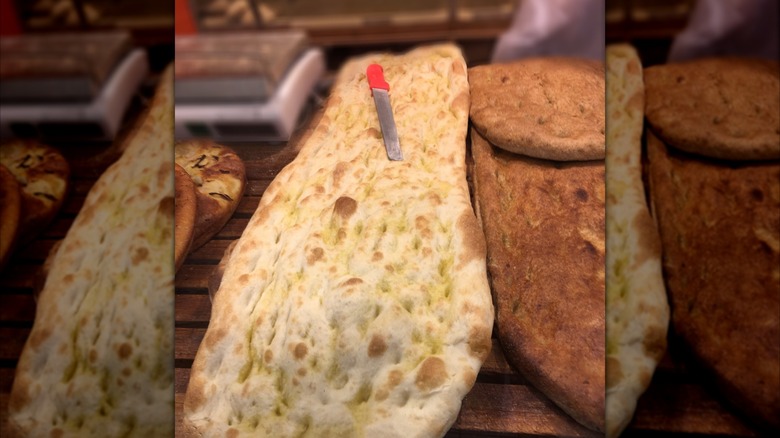
Cosi may be famous for making flatbread sandwiches, but the roots of its primary offering are based in something else entirely: Pizza. Perhaps that isn't too surprising. Pizza, after all, is a flatbread dish in and of itself, with the toppings placed on the dough instead of inside it. However, Cosi's take is a spin on a specific type of pizza known as pizza bianca, a type of pizza Romana that resembles ciabatta in its long, slipper-like shape. Although pizza bianca can also refer to a pizza with a white base, the other version is a loaf of flatbread that's sliced down the middle and stuffed with ingredients. Each side of the bread is slim, allowing the toppings to take center stage.
Pizza bianca is typically filled with cheese, meat, and vegetables, and Cosi doesn't stray too far from these principles with its own fillings. However, it did skew its sandwich items more towards fillings like the tuna melt and turkey club, to bridge the gap between Italian cuisine and American classics. The use of flatbread definitely capitalized on a trend towards slightly lighter bites during the '90s, but it's arguable that it just wasn't unique enough to stand out in a crowded market.
In 1996, Cosi made its debut in America's food scene
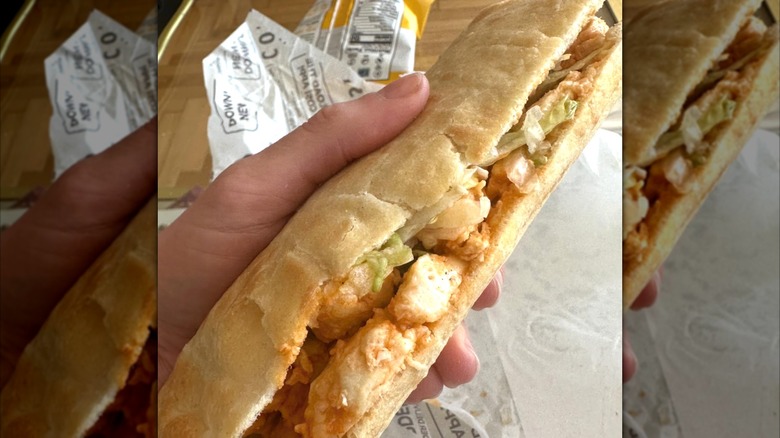
There's a world in which Cosi never made it over to the United States at all. From its opening in 1989 until 1996, it operated on the Rue de Seine in Paris. The single restaurant became a favorite of Parisians who were looking to grab a light lunch, and it may well have stayed that way until brothers Shep and Jay Wainwright visited the store and tried its sandwiches. The Wainwrights immediately saw the potential for Cosi to take off in the U.S., and they bought the rights from proprietor Drew Harré.
In 1996, the first Cosi in the U.S. opened in New York City, and almost immediately, it was a roaring success. The Cosi brand started to build, with the Wainwrights leveraging their connections to draw investors in, despite their youthful age (they were both in their 20s at the time they bought the brand). By 1999, Cosi had 18 different restaurants on the East Coast, and 13 in New York alone. It was clear that this was a restaurant on the rise.
Mergers and IPOs raised its profile and finances — but cracks were starting to show

As the 20th century came to a close, there were a lot of restaurants jostling for attention, but Cosi was quickly coming from the outside to set itself up for prominence in the 2000s. In September 1999, Cosi announced that it was undergoing a merger with Xando Coffee and Bar. The new company, which was named Xando Cosi Inc., wielded the combined power of the two brands, but it was Cosi that ultimately commanded more recognition. The restaurant continued to expand and gain more stores, and by December 31, 1999, it had 36 locations.
Cosi continued to grow at an extraordinary pace, and in just three years, it had accrued almost 50 more restaurants. With such success, it wasn't long before it went public, and in 2002, it began trading on the Nasdaq. However, this initial public offering was also marred by controversy, and it seemed like things weren't all rosy for Cosi. When going public, Cosi stated that it was planning to open many more restaurants than it had the capacity to, and it was subsequently accused of providing false statements to potential investors. It was hit by a string of lawsuits, and its CEO, Andy Stenzler, had to step down. All of a sudden, things didn't look too great.
As the brand evolved, Cosi started facing competition
Cosi's meteoric rise made it seem like it was unstoppable, but in the landscape of the early 2000s, it was far from the only sandwich restaurant out there. The fast-casual world was littered with options, and titans like Subway and Jersey Mike's dominated the sandwich space. Although Cosi's core concept of offering flatbread sandwiches, as opposed to subs, gave it an edge, it was also challenged by new players like Panera Bread and Chipotle, which were also offering innovative ways to eat on the go.
Panera was a particular problem for Cosi, mainly because it was doing a similar thing to the flatbread chain. Panera's image in the early 2000s was all about wholesome food made with speed, and its promotion of things like whole-grain bread, antibiotic-free chicken, and starting the fast-casual trend of showing nutritional information made it highly appealing to customers. The restaurant shot to huge success during this time, and in just five years, it opened over 1,000 units. Cosi just couldn't keep up with that pace, and although it was still growing at a respectable rate, it was clear that there might not be space for both restaurants in the market.
2008 saw Cosi's biggest year yet — and then the crash came

Cosi may have been facing stiff competition during the 2000s, but it was also carving out a large chunk of the market in its own right. Although it couldn't replicate the speed of its expansion in the early 2000s, by 2008 it had reached 151 units, and that number could well have continued to increase. However, by the time that year hit, Cosi was already struggling to keep the lights on and pay rent, with customers beginning to pull back from spending at the end of 2007 as the housing market began to look rocky.
Then, in 2008, everything changed when the financial crisis hit, leading to a huge recession. Restaurants began to face more trouble than ever. Eateries were hit by a need to simultaneously raise prices and retain customers who were looking to limit unnecessary purchases. The industry took a nosedive, with casual dining taking a big hit. Cosi, faced with an inability to match rent expenditure with revenue, was in serious trouble.
Cosi's business model began to lead to its downfall

What was first so appealing about Cosi was also the thing that began to lead to its reversal in fortunes. Its business model was based around catering to workers in business and financial districts, and carving itself out as a go-to spot for a quick breakfast or lunch. However, this meant that it was operating in areas that had high rent costs, and this prioritization meant that its rent spend ended up being highly imbalanced. It also meant that its customers would spend money during the morning and lunch rush, but by the time the end of the day rolled around, its stores were empty. For hours at a time, its restaurants were making no money, while competitors like Panera were doing a brisk trade throughout their full opening hours.
Cosi also began to see its uniqueness chipped away at by other restaurants. Alongside its famous flatbreads, Cosi stood out thanks to its breakfast offer. Customers who needed a quick bite in the morning could head to Cosi, which was catering to them in a way that other eateries weren't. However, as the 2000s rolled to a close, other restaurants were bringing out exciting new fast-food breakfast options, and suddenly, Cosi wasn't so special. It brought out a revamped breakfast menu in 2009, to try and inject excitement back into its offer, but it all felt a bit too late.
Cosi began to sell off stores, and personnel changes created chaos
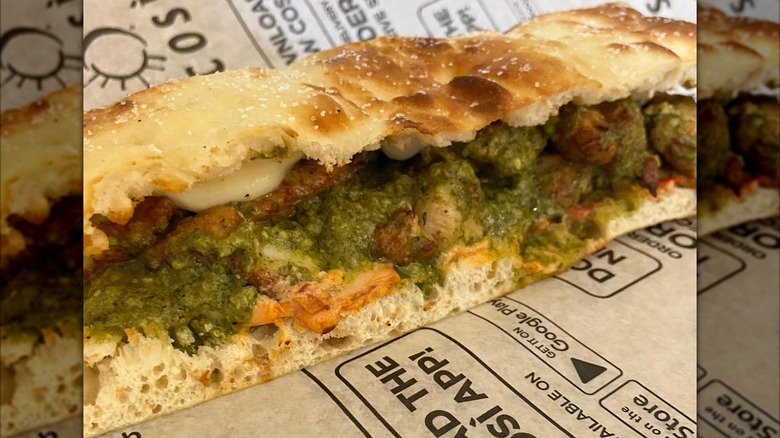
By the time the 2000s were over, Cosi's heyday had well and truly ended. The financial crisis had made a massive dent in its fortunes, and it was now facing what looked like a rescue operation. In 2010, it announced a large sell-off of its stores, with 13 of its Washington, D.C. units handed over to Capitol C Restaurants under a franchise agreement. Capitol C agreed to open six more Cosi restaurants as part of the deal, but it seemed to be a move that inadvertently acknowledged that the company's finances weren't looking great.
As the 2010s pressed on, further changes at Cosi indicated that there was trouble brewing. Its top executives were beginning to rotate with serious speed, with CEO James Hyatt replaced by Carin Stutz in 2011, who was subsequently replaced by Stephen Edwards in 2013. In 2014, its CEO changed yet again, with RJ Dourney taking the reins. Dourney, a former franchisee, also decided to merge his franchised restaurants with the company itself, a move that saw a brief jump in stock price. Despite this, though, its net operating losses were still massive, and it would have had to be a miracle for Cosi to come back from the brink.
In 2016, Cosi had to file for bankruptcy

Cosi's 2010s had a rocky start, to say the least, and while it looked as though it might have been able to cling on, by 2016, the writing was on the wall. At the start of the year, it announced that it was closing more than 10% of its units. In just eight years, it had gone from 151 locations to 74 company-owned restaurants and a few dozen franchises, but it was marred by an inability to turn things around. During the closure of these restaurants, it also announced that it was firing some of its core staff, with 11 corporate positions being removed.
These measures just weren't enough to keep it afloat, though, and later that year, it told the world that it was filing for bankruptcy. Cosi just wasn't able to keep operating as it normally would, and it was unable to raise the funds needed to avoid restructuring. It lined up a string of investors who were willing to take the company over and began figuring out its next steps.
Cosi still exists today, but it's a shadow of what it once was
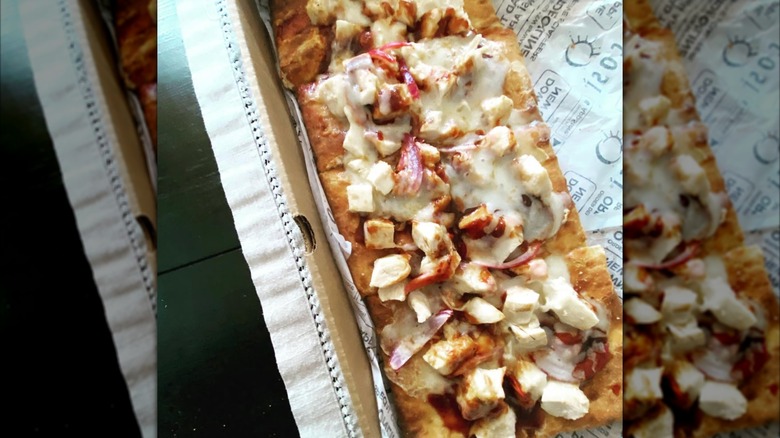
After Cosi's bankruptcy claim in 2016, it never quite returned to the heights it formerly stood at. Instead, it sank even deeper into struggle. In the years that followed, it continued to lose units, and at the start of 2020, it had to close even more locations. Cosi simultaneously prepared itself for sale, seemingly unable to continue operating as before. Then, just a month or so later, it announced that it was filing for bankruptcy once more and switching to a catering model. By February 2020, it had just a handful of operating restaurants left.
Then, COVID-19 hit, creating even more chaos in the restaurant space, and Cosi had to consider its next steps. It decided to withdraw its bankruptcy claim in a bid to apply for the Restaurant Revitalization Fund, before reopening its bankruptcy case in 2022. Somewhat incredibly, Cosi is still in operation to this day, and alongside its catering model, it has a string of restaurants in the Northeast and Upper Midwest. However, it's likely that it'll never grow back to the size it once was.