

Transform Canned Biscuits Into Soft Pretzel Bread In A Few Simple Steps
We may receive a commission on purchases made from links.
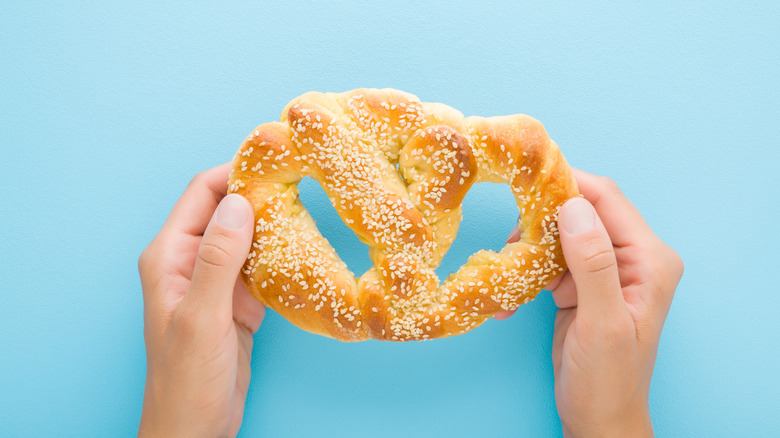
If you want to bring a little pretzel-ness to your morning egg sandwich, or make a homemade warm pretzel for game day, you don't have to make it a whole production with dangerous lye water and hours of waiting for yeasted dough to rise. There's also no real need to dip the dough into boiling water with baking soda. Yes, using lye or baking soda and boiling water will get you closer to a traditional pretzel, but you can coat your dough with a solution of hot water and baking soda to give it a pretzely flavor and crunch.
Using canned biscuits saves you from making dough from scratch and brings a flaky goodness to the mix. Pretzel-ified biscuit is as delicious as it sounds. To make a full pretzel from this, simply roll out the canned biscuit into a long cylinder, knot it up into a pretzel shape, coat it with a solution of two parts hot water to one part baking soda, and sprinkle with pretzel salt. Bake as normal and enjoy. You can also apply the solution to a normal biscuit shape to use for sandwiches. Add an egg wash to cheat with a more browned looking end result.
The science behind the biscuit to pretzel transformation
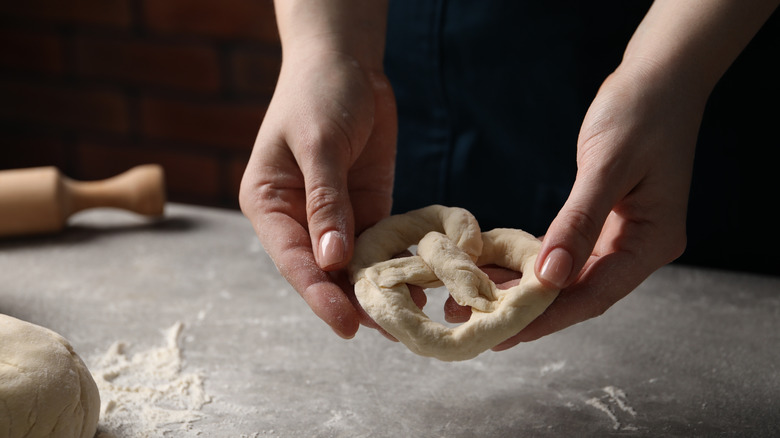
The alkaline water coating gelatinizes the starch in the dough, forming a slight barrier that helps keep moisture inside. A Maillard reaction is initiated by the alkalinity, speeding up the browning, creating that distinctive pretzel outer layer.
Admittedly, this isn't a "proper" pretzel. For that, you would need a lye bath. Lye is more alkaline than baking soda, with a pH of 13 compared to baking soda's 8. This makes it caustic, meaning it can cause chemical burns. You want to avoid inhaling it, getting it into your eyes, and touching your skin. Baking soda is a safer way to make your pretzels.
You can lower the alkalinity of baking soda, sodium bicarbonate, by spreading a layer of it on an aluminum foil-covered baking sheet and tossing it in the oven for an hour at 250 to 300 degrees Fahrenheit. This turns the sodium bicarbonate into sodium carbonate, which, while still weaker than lye, can irritate the skin, so be careful!