

Stop Storing Coffee Creamer In The Fridge Door: Why It Causes Faster Spoilage
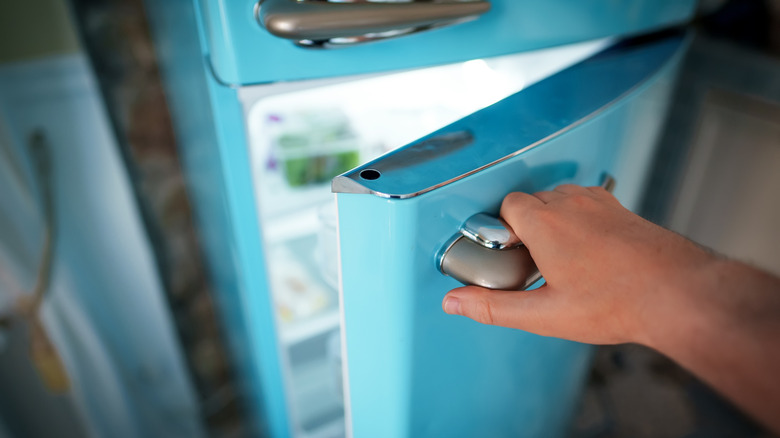
The door of your refrigerator is a tempting place to keep your coffee creamer, we get it. It's easier to grab it first thing in the morning before your brain has been jump-started with a jolt of caffeine, but keeping it there will cause it to spoil faster thanks to the temperature changing every time you open the door. Each time you look for that leftover oatmeal that you're sure was in the fridge somewhere, that creamer is sitting in room temperature air getting above the required 40 degrees Fahrenheit needed to safely store perishable goods.
Whether you have a dairy or non-dairy based creamer, there will be ingredients that can break down faster in the warmer air. Typically, creamers last one to two weeks once opened. If you've made your own coffee creamer using our guide here, it should last about four to seven days. In order to help store-bought creamers last the full two weeks, keep your creamer on a shelf in the interior of the fridge with the rest of your dairy. Even if it's up front, when the door is open, it won't be sitting fully in room temperature air.
How to tell if creamer is still good
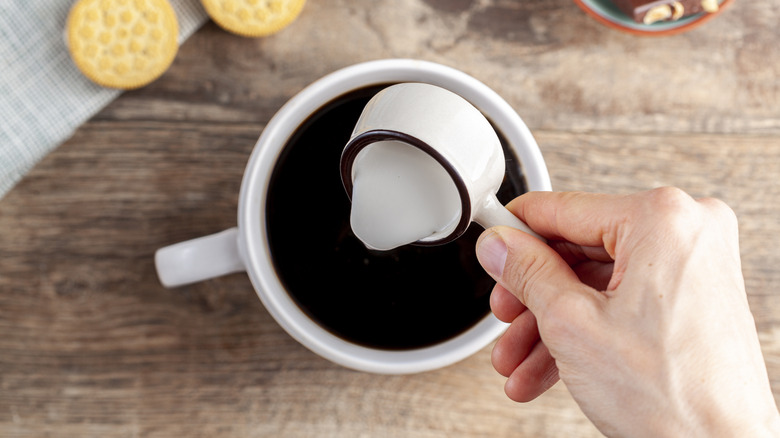
While dairy creamers are pasteurized, bacteria can still grow over time in the right environment. Plus, once the container is opened, other uninvited organisms can make their way in. If the dairy in the door gets the occasional blast of room temperature air, the bacteria that survived and were dormant in the below 40 degrees Fahrenheit temperature can wake up and start to multiply, spoiling the dairy. Non-dairy creamers that get warm will have enzymatic processes that speed up in the warmth, breaking down the ingredients into those bits and flecks you don't want in your coffee.
With this in mind, it's best not to do a taste test to tell if the creamer has gone bad. The taste will be disgusting, and you'll most likely spit it right out. Typically, you'll be able to tell through smell or appearance. A musky, sour smell will develop when it spoils. If there are clumps or it looks spotty, then you can probably skip the miserable step of smelling it and toss it. Finally, if it clumps in your coffee, that's a sign it's gone bad. These tips aren't just for home use, either. When you're navigating the office fridge, keep in mind the community creamer. No one wants a stinky cream ruining the breakroom vibes.