

Why Eating Elderberries Could Be Dangerous For Your Health
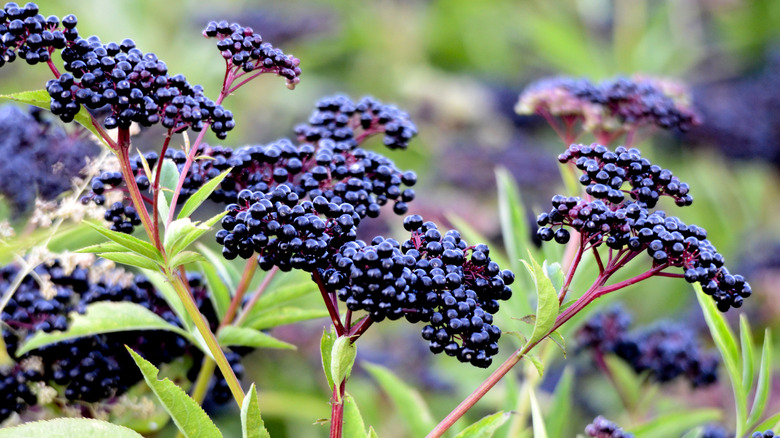
If you've ever had someone suggest elderberries as the go-to remedy for a cold (likely based on a social media post), the advice does hold some weight. Elderberries are one of the lesser-known berries you should try, in case you haven't. They can give your immune system a boost because of their high antioxidant content, especially black elderberries, which are rich in anthocyanin. Think of them as Popeye's spinach, just tastier, which is why they're often used as a remedy for colds and flu.
Hippocrates, known as the father of medicine, called the elder tree, where these small, blue-purple berries grow, a "medicine chest." Although in modern medicine its impact isn't as definitive, consuming too many elderberries can actually be detrimental to your health. There's a good reason for that. The elder plant contains cyanogenic glycosides, compounds that can produce cyanide when digested. Yes, the same cyanide you often see in spy films or murder mysteries.
You're not going to drop dead from eating elderberries (unless you're seriously overdoing it), but they can cause nausea, vomiting, and diarrhea. Thankfully, these compounds aren't found in high amounts in the ripe berries or flowers. Still, it's best to err on the side of caution when consuming the fruit, especially since research on its safety remains limited, particularly for those who are pregnant or breastfeeding. So how do you consume elderberries without putting your health at risk? There are a few ways.
How to enjoy elderberries without risking your health
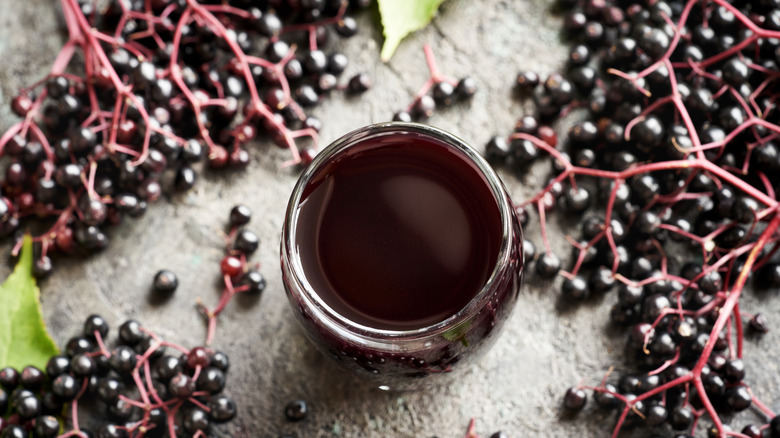
To make sure you're not ingesting the harmful toxins found in elderberries, the easiest fix is cooking them first. Heat takes the edge off the danger while keeping all that immune-boosting goodness intact. Freezing is another option, though make sure you store the berries in the right spot in the fridge to preserve maximum nutrition. Dehydrating or canning the elderberries can also make them safer to consume. If you think such a method would take away the nutritional value, that's perhaps the biggest canned food myth you need to stop believing. Another important thing to keep in mind is that the process really depends on the type of elderberries you're using. Based on acid content, there are about four main types. The higher the acid levels, the more options you have for preserving and enjoying them. But berries with a pH above 4.6 (less acidic) are unsafe for water-bath canning, except in high-sugar recipes. Blue elderberries, which are perhaps the most commonly used commercially, are both high in acid and antioxidants. You can use them just like any other berries, such as strawberries or blueberries. Make a fruity and delicious mixed berry jam, can them, or dehydrate the fruit to sprinkle over your morning cereal bowl.
Then there's the greenish-yellow European elderberry, or goldbeere. These are low-acid berries that are safe to freeze or dehydrate, but shouldn't be canned using standard high-acid mixtures. This variation should only be canned with high-sugar recipes, but is also safe to freeze or dehydrate. If you happen to come across the last category, which is red elderberries, consider it a red flag. You don't want a real-life "Into the Wild" moment. And these berries definitely aren't worth a trip to the ER.