

This Green Vegetable Packs More Vitamin C Than An Orange
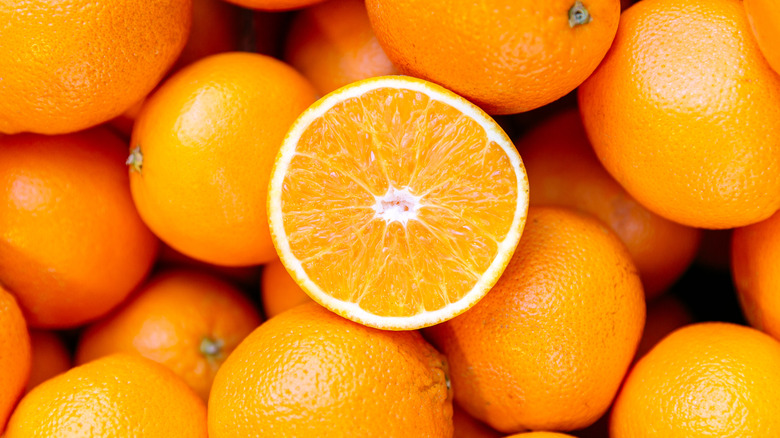
Oranges and vitamin C have become synonymous at this point, so you'll likely be surprised to learn that there's actually a vegetable that packs much more vitamin C than an orange: Brussels sprouts. In fact, the difference is quite significant.
Oranges contain about 59 milligrams of vitamin C per 100 grams, while Brussels sprouts pack about 85 milligrams per 100 grams. Importantly, this amount is specifically about raw Brussels sprouts. The vitamin C amount is slightly lower when the sprouts are cooked: about 62 milligrams per 100 grams. So, to pack in the most vitamin C, it's best to eat the vegetable raw — and make sure to read our guide on what you should know before eating raw Brussels sprouts. And we have a great recipe for a Brussels sprouts salad with pear and pomegranate, to start with.
If you prefer them cooked, you can still rest easy knowing that you're getting a significant amount of vitamin C (and more than you would get from eating an orange). After all, it's hard to beat a well-cooked maple-dijon Brussels sprouts side dish.
Other fruits and veggies to eat for a vitamin C boost

If you're looking to get more vitamin C in your diet, you can't go wrong with Brussels sprouts, which offer an impressive amount. But there are plenty of other veggies and fruits with significant levels of vitamin C to consider. Regarding veggies, different options that pack plenty of vitamin C include kale, raw broccoli, and yellow bell peppers. Kale and broccoli contain 93 and 91 milligrams of vitamin C, respectively, per 100 grams. Meanwhile, red bell peppers contain a whopping 142 milligrams per 100 grams. So, if you feel like you could use an extra boost of vitamin C, try working in a couple of these vegetables into a meal — perhaps roasted brussels sprouts and broccoli as a side dish or a salad with kale as the base.
Meanwhile, for fruits, some great vitamin C-packed options include kiwis, strawberries, and mangoes. Kiwis have about 58 milligrams, and strawberries have about 59 milligrams of vitamin C per 100 grams — so, in other words, they both have about the same amount as oranges. But mangoes contain even more vitamin C: 168 milligrams per 100 grams; use these fruits to make a vitamin C-packed fruit salad.