
The Absolute Best Type Of Pan To Use For Baked Egg Dishes
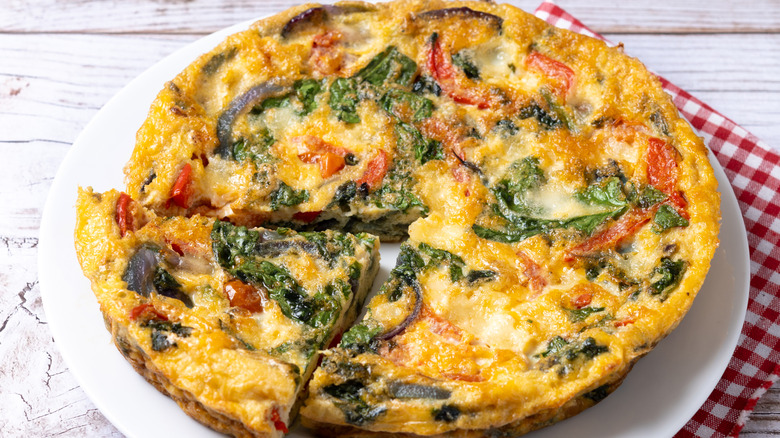
There are countless ways to cook an egg, from mixing it into blueberry pancake batter to simply boiling it and sprinkling some flaky sea salt over its jammy center. Baked eggs, however, are absolute winners if you like a hands-off approach in the kitchen. Simply tip your eggs into a dish (along with any other ingredients you desire) and let the oven do its thing while you finish preparing the rest of your meal. The best type of pan to use for baked egg dishes is one made of silicone because the material is naturally non-stick.
Silicone pans are heat-resistant, durable, and dishwasher-safe, but their flexible, non-stick qualities are what make them perfect for un-molding baked cakes and jello. These key features also make them suitable for seamlessly removing baked egg dishes, like breakfast casseroles and thick Spanish omelets that have a tender middle. The eggs won't cling to the surface as they would in metal pans, so you can often get away without greasing them, too. (Still, a bit of butter on the inside is a useful insurance policy.)
Unlike metal dishes that are better heat conductors, silicone is an insulator. This means the exterior of your baked egg dishes won't develop a super-brown color, but this feature can still be a positive. The circumference of your crust-less quiches or egg bites are less likely to burn and develop an unappetizingly tough texture in a silicone vessel.
Silicone pans don't require preheating
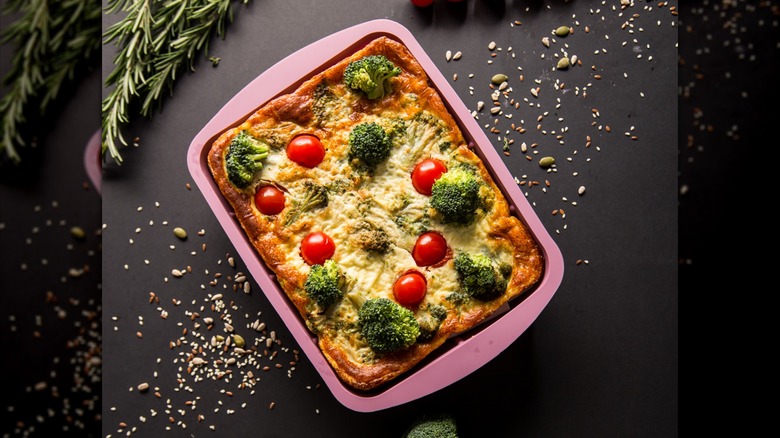
Ovenproof glass dishes and metal pans like cast iron skillets do have their perks when you're making a baked egg dish. Seasoned cast iron, for instance, provides flavor while transparent glass allows you to check easily for burning. However, you have to preheat cast iron to prevent sticking, whereas non-stick silicone is fit for immediate use with little prior prep.
The one drawback of silicone baking pans is that they're super flexible, so transporting them to the oven when they're filled with liquid ingredients, like beaten eggs and heavy cream, can be tricky. Fortunately, there's an easy fix for this. To avoid spillages, place your mold on a baking tray first before pouring in the ingredients for dishes like spicy North African shakshuka or Italian eggs in purgatory. Then just slot the entire sheet pan into your oven. Because silicone distributes heat evenly, your dishes will have a uniform texture throughout.
Finally, silicone pans are incredible for preparing make-ahead breakfast egg dishes because they're suitable for both the oven and freezer. This means you can make (and cool) large batches of eggs, slice them it into portions, and pop the whole dish straight into your freezer instead of placing each serving into a zippered bag for later.