

The Affordable Way To Make Espresso Without A Fancy Machine

We may receive a commission on purchases made from links.
Espresso elevates the daily scramble for caffeine, packing all the power of a cup of coffee into a 3-ounce demitasse cup. It serves as a breakfast shot and the foundation for complicated coffee drinks. You can invest in all sorts of fancy machines to make perfect espresso at home. These machines generally range in cost from $200 to $500, and they can break fairly easily, especially if they are not properly maintained. There is another, more affordable way to make espresso at home, though, using a centuries-old Turkish coffee maker called a cezve.
A cezve is a small metal pot shaped like a cup with a long handle that can brew a strong cup of robust coffee on the stovetop in just a few minutes. They are made from copper, brass, or stainless steel and hold a few ounces of water that is boiled with loose coffee grounds to create a couple of servings of Turkish coffee. It tastes strong, abuzz with bold flavors, enticing aromas, and about 50 milligrams of caffeine. There are several sizes, ranging from 5-ounce pots to 16-ounce pots — the perfect amount for those demitasse espresso cups you have stacked in your coffee nook. You can get a cezve on Amazon for under $20, and watch a few Turkish coffee tutorials while it ships to learn the best techniques to produce robust and full-bodied coffee in about four minutes.
Make espresso with a small copper pot instead of a cumbersome machine
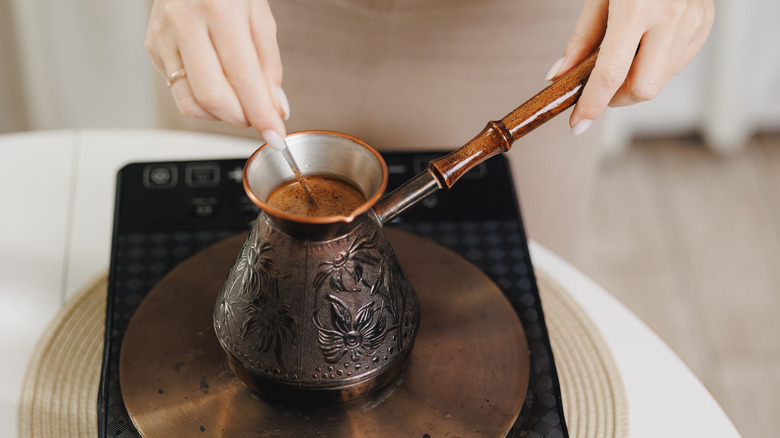
The difference between espresso and Turkish coffee is similar to the difference between coffee and espresso — it lies in the size of the grind and brewing methods. Espresso is made by pushing pressurized water through finely ground and tightly packed coffee beans in a machine. Turkish coffee is made by boiling loose grounds with water in a cezve Turkish coffee making pot with no pressure involved at all. It is a process that originated in the Ottoman Empire and has been used for around 500 years to brew complex, flavorful, and robust coffee with a complex and layered aroma. It is thicker and grittier than espresso because the grounds are added to the cup with the coffee itself (don't worry, the grounds end up settling at the bottom), and there is a natural layer of foam that develops on the top as the coffee brews.
Turkish coffee is so strong that many people add some water or milk to even out the flavors. Make an unbeatable coffee creamer at home and chill it in the fridge for an extra touch of unique flavor. If you want to experiment with pairing, serve with the Turkish turnovers known as böreks and other foods and drinks you need for a traditional Turkish breakfast. It is also great with classic breakfast dishes and pastries, and as a standalone pick-me-up.