

Red Meat Vs Dark Meat: What's The Difference?
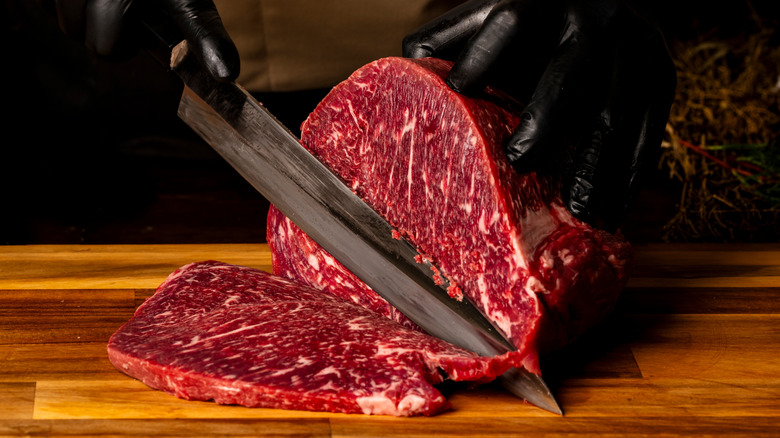
You've probably been warned about the dangers of eating red meat every day, or maybe you've been politely nudged to stick to white meat instead. But have you ever heard of dark meat in that context, or even otherwise? If you have, and wondered what the difference is, or if dark meat is the same as red meat, well, it's not. A good way to understand this is by looking at the difference between red meat and white meat.
The USDA defines red meat as any meat obtained from mammals, while white meat, as you guessed, is not sourced from mammals. White meat is white in its uncooked state and stays light after cooking (unlike pork). When it comes to red meat versus dark meat, the first distinguishing factor is that dark meat comes from poultry, so it cannot come from a mammal, which is already a big difference. But there's another defining aspect that is paramount to understanding the difference between types of meat: It's a protein called myoglobin. All meat contains myoglobin — a red protein that carries oxygen to the muscles, and the concentration in each is what separates them from each other.
Red meat
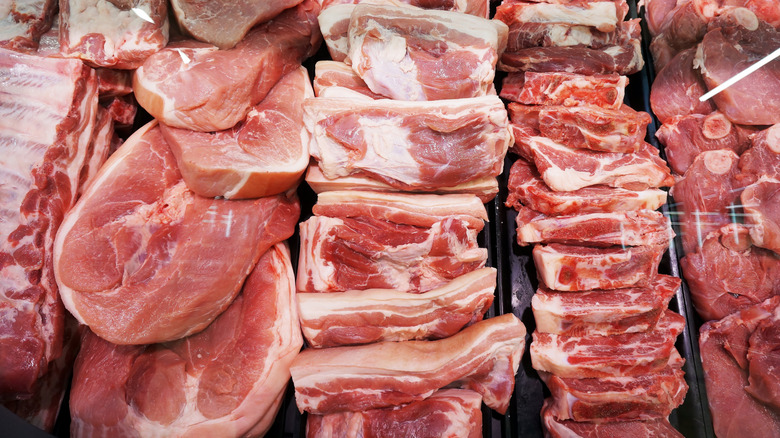
Red meat has the highest concentration of myoglobin, dark meat falls in the middle, and white meat has the lowest. When you're cleaning raw meat and spot that red, slimy, gelatinous clump, it's not blood — it's myoglobin, though the protein itself is purple in color. Beef, mutton, pork, lamb, bison, buffalo, and venison all fall under the red meat bracket; it's a big bracket and a tantalising one for meat lovers. Red meat also has higher amounts of vitamin B12, vitamin B6, iron, and zinc. So, contrary to what many assume, it has plenty of nutritional value. The flip side, however, is that red meat tends to be more flavorful because it has more saturated fat, which is what gives your steak that beautiful, juicy marbling. But too much of it can easily tip into the unhealthy zone, and if you're wondering whether lighter-looking versions like ham or spam can be eaten more freely, the answer is no. Ham, in fact, is among the unhealthiest forms of red meat. Beyond preservatives, processing strips away many of the minerals and vitamins, making it far less wholesome than a fresh cut.
Dark meat

Dark meat, as mentioned, comes from poultry, so chicken, duck, turkey, goose, or really any bird. But not just any part, these cuts are darker because they carry more myoglobin than the lighter parts of the bird. Legs and thighs, for example, are rich in myoglobin since they're the muscles most used for walking, and myoglobin delivers oxygen to those muscles. Still, no matter the bird, dark meat never reaches the myoglobin levels found in red meat.
These cuts also carry more fat, the built-in energy reserves that make them juicier and more forgiving in the pan. Wings and breasts, on the other hand, sit squarely in the white meat camp. The difference is easy to spot. Dark meat is laced with red fibers, while white meat is mostly pale. But the real contrast is on the plate. Dark meat's extra fat and protein give it a luscious flavor and silkier texture. This is also why dark meat requires a different cooking temperature than white meat.