

The Island Country That Eats The Most Spam (Far More Than Hawaii)

Spam, which is available in different flavors, is known as the humble canned meat that fed a nation and her troops, along with the United States' allies, during World War II, but it is still beloved today. This protein, with a long shelf life, has been around for over 85 years and has sold over 9 billion units across 48 countries. But if you want to know which part of the world consumes the greatest amount of this product, it might surprise you to learn it's not Hawaii, but rather Guam.
Hawaii is the largest eater of Spam per capita within the 50 states, consuming 7 million cans per year. The Land of the Chamorro, the indigenous people of the Mariana Islands, pop open more than 16 cans of Spam per person, per year. That's more than any territory or country, but Guam has an interesting relationship with this product made by Hormel. This Pacific island was invaded by Japan in 1941. Their food supply was seized by their captors. When America liberated the people of Guam, the service members passed out rations that included Spam. It didn't take long for it to become a staple.
How Charmorros prepare Spam
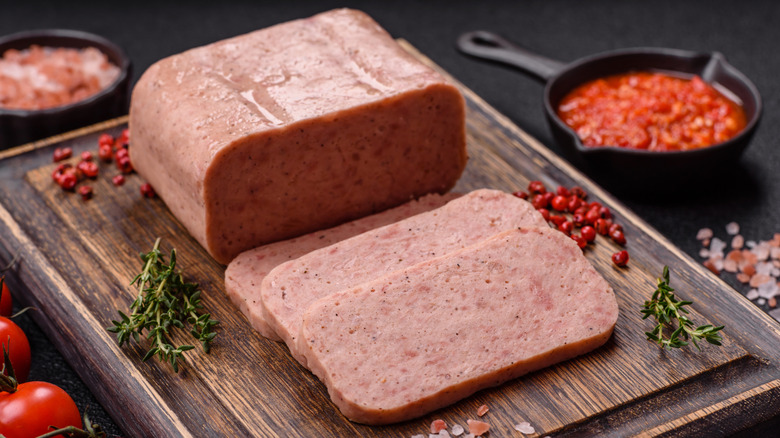
The Chamorros call it "poor man's steak" and use it in dishes like Spam Kelaguen, a coconut, citrus salad where the Spam is cut into small strips and mixed with hot peppers and onions. But you don't just find Spam in household pantries. Today, visitors to Guam can enjoy spam at local eateries like Denny's, King's, and Shirley's, where it is part of their breakfast menus.
What exactly is Spam? It's made with just six ingredients: Pork, water, salt, potato starch, sugar, and sodium nitrate, and its texture is similar to bologna. When you bite into this meat, your taste buds immediately feel the savory, umami flavor it brings. It is precooked, and it is often fried to create a delicious sandwich. You can even layer an egg on top of it for a breakfast meal. If you want to incorporate Spam into your diet, use it as a protein in a stir-fry or in fried rice. You can also check out The Daily Meal's guide to spam and how to cook with it for a little inspiration.