

Why You Should Remove Tomato Seeds Before Making Your Fall Soups
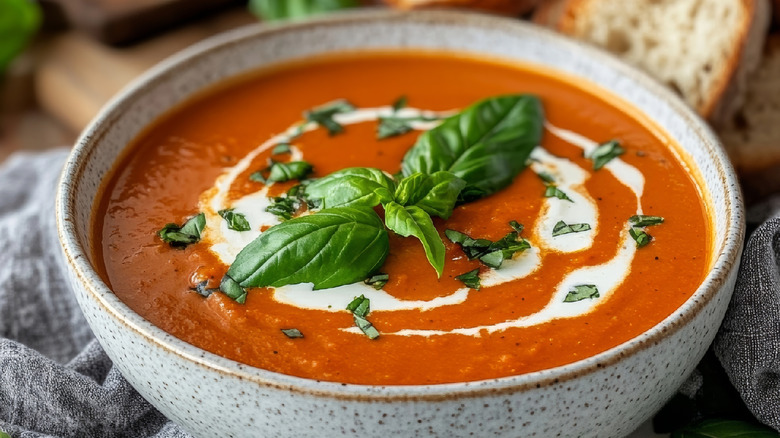
With decreasing temperatures come an increased demand for good hot soup to keep us cozy during the fall and winter months. One pillar ingredient of many of these soups is none other than tomatoes, an incredibly versatile food that is legally a vegetable. They will likely appear in recipes when you begin your soup-making endeavors this year. However, when using tomatoes in soups, one question that is constantly asked is whether or not to remove the seeds. It can actually be a smart choice to put in the extra effort and cut out the tomato seeds, as it will lead to a smoother and better-looking dish in the long run.
The reason why the removal of these seeds is important is that, in many soups and stews, having a great texture is one of the most important qualities. Smoothness is king among many of the best fall soups. Because seeds can lead to soup having a crunchy or jelly-like texture, it's especially important to ensure that more elegant dishes — such as an upgraded tomato soup with soy sauce — are seed-free to avoid sullying the vibe of your dish.
How to remove tomato seeds

As for how to get rid of a tomato's seeds when you need to, the best strategy all-around is to scoop out the seeds after cutting the tomato in half, allowing you to remove every single one without issue. This can be accomplished using your fingers, a spoon, or a knife, with some home cooks saying the most efficient and precise way to get it done is by cutting the tomato into fourths and using a knife to cut out the seeds.
Now, there is a specific instance in which you'll likely be able to get by with leaving tomato seeds in your soup, and that's in a chunkier dish like chili. Seeds most notably stand in the way of the smoothness of your dish, and chunkier soups don't hinge on that texture to be ideal. Since removing tomato seeds also results in less of the tomato pulp getting into your soup, you will be losing out on the most flavorful part of the tomato. For this reason, some have found that making a dish with the seeds and then removing them after the fact by straining the soup is the best course of action to take.