

Stop Using Store-Bought Kitchen Floor Cleaner: Grab Two Ingredients From Your Fridge
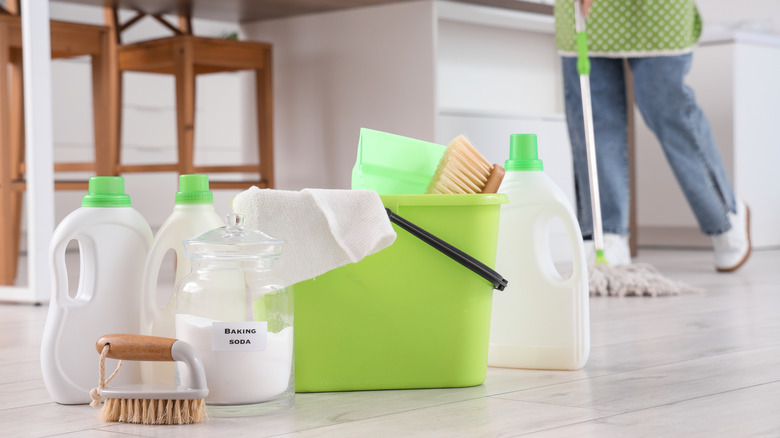
Store-bought floor cleaners might do a brilliant job of removing grime from tiles, laminate, and wood, but they're also chock-full of chemicals. These additives can be harmful to the skin, lungs, and environment, which is why many people prefer to use natural alternatives, such as baking soda. Luckily, to make an all-natural floor cleaner, all you need are two common ingredients that you likely already have in your home: vinegar and lemons.
The easiest way to make this cleaning fluid is to fill a jar with vinegar and several lemon peels (or spent halved lemons) and pop it in your fridge for a couple of weeks (make sure the vinegar covers the fruit completely to prevent mold!). Once the lemons have steeped in the vinegar, remove them, and then dilute the solution with water to create a bright and citrusy-scented floor cleaner that you can add to your mop bucket. The best type of vinegar to use is distilled vinegar, as it's transparent and free from colors, unlike, say, a red wine vinegar that could stain wooden kitchen floors. Apple cider vinegar works well, too, particularly on non-porous flooring made of tiles, laminate, or vinyl that's less likely to discolor. Either way, most vinegars are highly affordable, making this solution cost effective as well as resourceful because it uses lemon peels that would otherwise be discarded. Aside from cleaning floors, you can also decant some of the solution into a spray bottle, dilute it with water, and use it to clean laminate countertops.
Lemon and vinegar are cleaning powerhouses
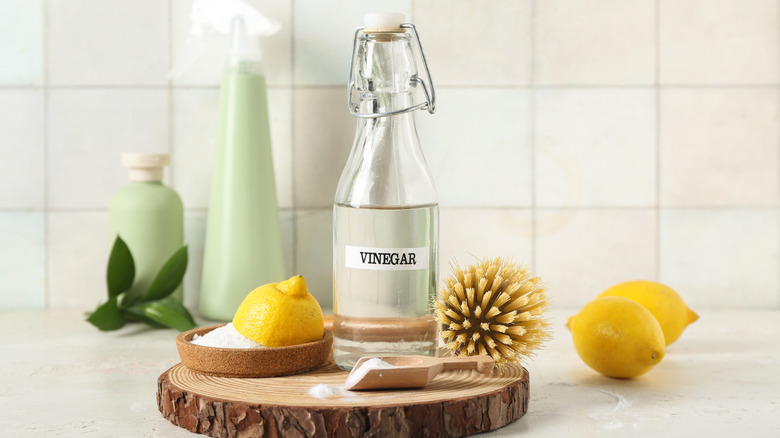
There are several ways to clean your kitchen with vinegar, such as using it to loosen food spatters on the inside of your microwave or splashing it into your dishwasher to eliminate odors. However, this naturally acidic ingredient is particularly suited to cleaning floors because it breaks down mineral deposits and cuts through grime without being overly abrasive. This quality is also what makes vinegar so good at cleaning rusted cast iron pans; it's gentle enough when diluted to remove rust without affecting the seasoning on the surface, unlike other products, such as steel wool. Moreover, it neutralizes odors on the floor, which can emanate from food spills and pets. Lemon is acidic, too (specifically citric acid), so it shares several of these properties, such as lowering the pH of bacteria and dislodging mold, but it also brightens up the sour smell of the vinegar (this tangy scent does evaporate and dissipate fully in a few minutes, but it can be unpleasant). Combining lemon with salt is another great trick for cleaning stains in the kitchen because the lemon provides a fresh aroma while the textured grains of the salt abrade any stubborn residues.