

The Simple Pantry Add-In That Helps Houseplants Thrive

A verdant monstera can transform a drab living area into a lush space by creating an attractive focal point. However, if you've spotted a white powdery substance growing on those large leaves, it might be time to bust out the baking soda from your pantry to make a rescue remedy that eliminates unsightly fungal spores and encourages your houseplants to thrive.
While baking soda is commonly used as a raising agent for breads and bakes, it's also useful for both preventing and treating fungal diseases, like powdery mildew, that can ruin the appearance of houseplants, make holes in the leaves, and, in the worst case, kill them off. Why? This naturally alkaline substance has anti-fungal properties that hamper the growth of infections, like black spot or blight, by lowering the pH levels around the spores and creating an inhospitable environment.
The best way to use baking soda on houseplants is to dissolve it in some water in a spray bottle. Then you can spritz your ferns and ficuses freely, leaving behind a thin sheen on the surface of the leaves. Around one teaspoon of baking soda per quart of water will make up a balanced alkaline solution. You can also add a drop of dish soap, which will lend it a slight stickiness so it adheres to the foliage. Feel free to use this spray as a prophylactic (before you've spotted any fungal growth) or as a remedy for spores that have already started to spread.
Spray your houseplant once a week with a baking soda spritz
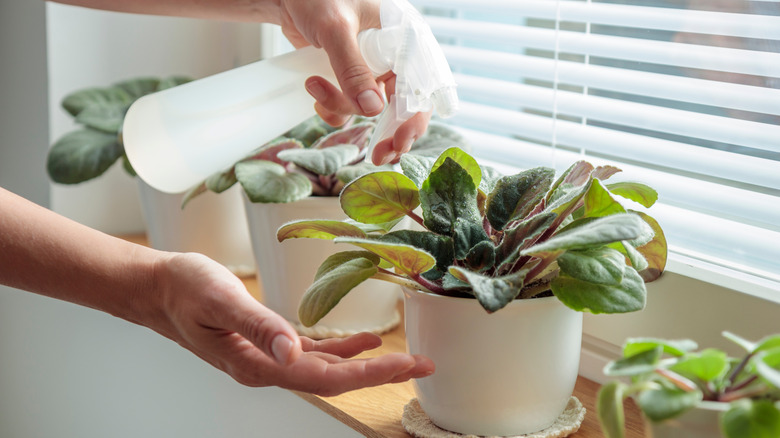
If you want to spray baking soda on the edible houseplants in your kitchen, such as a pot of fresh basil or tub of microgreens that are growing on your window ledge, skip the dish soap and use only the soda and water. Spraying your houseplants once a week should be sufficient to support vibrant leaves and lush growth, so don't be tempted to be overzealous.
A baking soda mistake that everyone makes in the kitchen at some point is accidentally using too much in recipes. The same can be said for being too heavy-handed when spraying a baking soda solution on houseplants; you should be measured in your approach, as salts in the soda can have a negative effect on the soil, causing the leaves on some houseplants to wilt or die. Other simple ways to make plants thrive with ingredients you already have at home are to save up your used coffee grounds and employ them as a powerful fertilizer or sprinkle clean eggshells over the soil to boost calcium levels.