

How To Tell If Your Vintage Pyrex Is Actually Worth Something
We may receive a commission on purchases made from links.
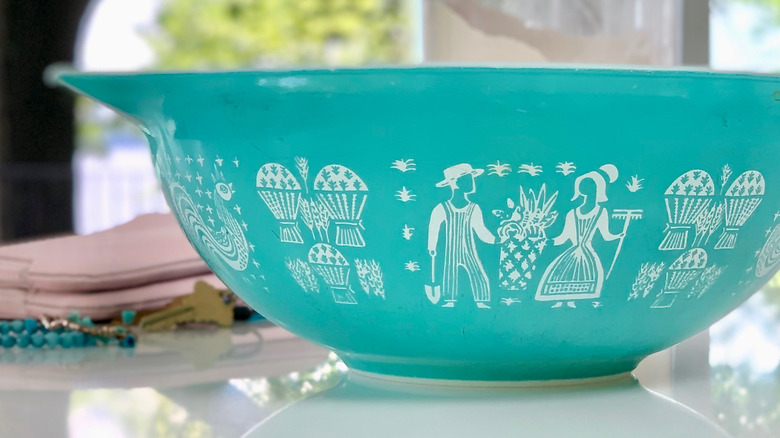
When it comes to vintage kitchen collectibles, one name stands out as one of the most recognizable — Pyrex. The popular bakeware company practically has a cult following. Not only are Pyrex dishes recognized as treasures among collectors, but they are also valued for their durability and versatility in the kitchen by home chefs. Who hasn't wondered whether the vintage Pyrex casserole dish that was passed down by grandma and is now sitting in the cupboard might be worth more than just its value as a reliable piece of kitchen bakeware? Finding out whether your vintage Pyrex might actually be worth some serious cash isn't as hard as you might think. It just takes a little bit of research. If your vintage Pyrex piece is a sought-after pattern, in good condition, and correctly dated, you might have a unicorn in your cupboard.
When it comes to any kind of vintage collectible, there are four main ways to determine if something has value: specific identification (age, pattern, markings), rarity, condition, and desirability among collectors. Thanks to the internet and the popularity of vintage Pyrex with collectors these days, it is only a matter of a simple online search to find out if the piece you own is a gem or just a lovely piece of kitchen history. There are many trustworthy websites that can help you identify the specific pattern of your Pyrex, date the logo and maker's mark, and find out how much similar pieces have legitimately sold for recently.
Learn vintage Pyrex patterns
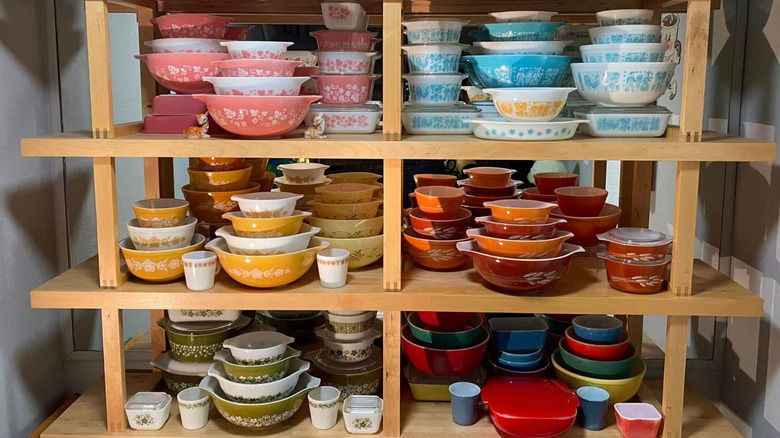
The best starting point for researching your vintage Pyrex is to learn the patterns and find the one that matches yours. This might seem like common sense and a simple task, but there are some patterns that are very similar and it can be difficult to properly identify a piece without a solid reference image. The Corning Museum of Glass has an online library of Pyrex patterns that is a great resource for your research. The library includes images as well as short descriptions and dates for each pattern.
It's also worth learning the 'unicorn' patterns, aka patterns so rare collectors are always on the hunt for them due to their collectability and value. According to collectors, the rarest Pyrex patterned piece is the "Lucky in Love" 1-quart casserole dish. It is believed that it was sold as a promotional piece in 1959. Another rare pattern that is much-loved by collectors is the Cinderella Serving Casserole set, also known as "Starburst." This was also a promotional piece with a limited production in 1960. There are many more patterns that are considered rare and valuable are waiting to be discovered in the pattern library websites.
Check the logo and maker's mark
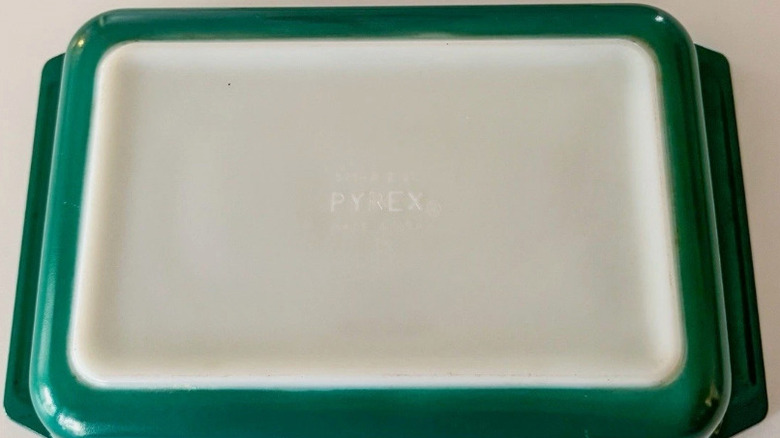
Besides the pattern, there are some other things you should be looking out for when authenticating your vintage Pyrex pieces. Any collector of vintage or antique items will tell you that a significant way to identify an item and the year it was produced is the maker's mark or logo, often called a "backstamp." Companies often make changes to their maker's mark and logo over the years, and these changes can help you pin down the date the item was manufactured and confirm the pattern. Over decades of production, Pyrex only made a few changes to its backstamp, but it's enough to help you pin down the date and pattern of your piece.
The first backstamp relevant to patterned Pyrex pieces showed up on items manufactured in 1945. This first logo had the word "PYREX" surrounded by the abbreviation for trademark registration and U.S. patent office in a circle. From the mid 1940s to late 1950s, for some pieces, the backstamp changed to the same "PYREX" with trademarked registered, with the addition of the phrase "made in U.S.A.," and around the entire maker's mark is a border made with capital "Ts" or "Is." The next backstamp change happened around 1950 when some wording was changed when it came to the trademark claim, a registration mark was added, and the word "OVEN WARE" as well as model number and size information was also added. The most significant change to the backstamp happened in the 1960s. It was then that Pyrex changed its backstamp from a round mark to straight-line text. For pieces dated after 1970, the addition of the branding for Corning was added to the maker's mark.
Judge the condition
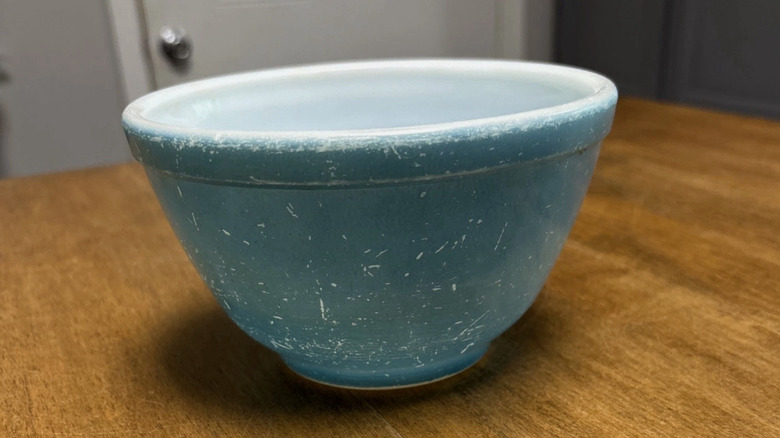
It's not uncommon to have damage to a vintage piece of Pyrex. After all, it wouldn't be vintage if it hadn't had a long life. Condition is really only a problem if you want to sell your piece to a collector, or if it makes displaying it less appealing. Of course, as they say, beauty is in the eye of the beholder, and some may find wear from 1970s dishwasher soap part of a vintage Pyrex piece's character.
When it comes to how condition affects the value of vintage Pyrex, it's really about what kind of damage or wear we're talking about. There are many things that can affect the condition and value of vintage Pyrex. Chips, cracks, scratches, dishwasher damage, and color stripping are a few of the most common causes of condition problems. These flaws are what most often influence how much a collector is willing to pay for your Pyrex. There are other condition issues that are not caused by damage or wear, that often don't affect value like factory defects, uneven color/gloss, gaps in patterns, or flow marks from the glass molding process. Often, how much your Pyrex piece is worth is a matter of how much a buyer is willing to pay despite condition issues. Of course, a piece of vintage Pyrex that is a rare pattern and is in excellent condition is going to be worth more.
Understanding the secondhand vintage Pyrex market
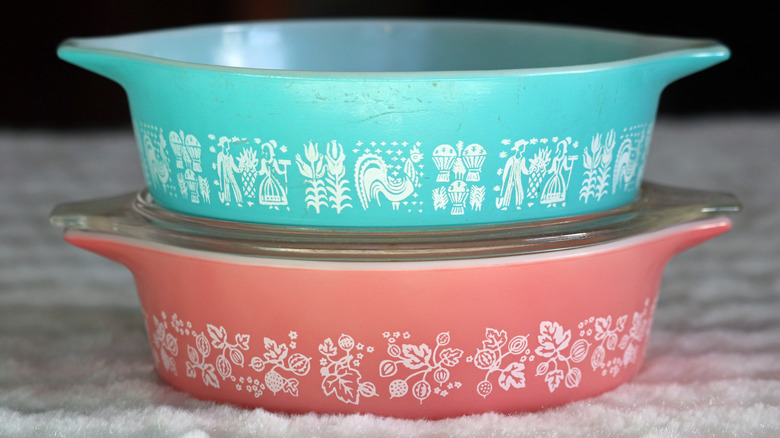
Vintage Pyrex is so collectible currently because of the trendiness of nostalgia on social media and the fact that these pieces of dishware and bakeware are extremely well made. The range in value can be pretty wide depending on pattern and type of piece. Some more common pieces like a Butterfly Gold 1 ½-pint casserole dish might only be worth $8, while a 1 ½-pint Pink White Gooseberry Cinderella nesting bowl is worth $99.
Worth is really determined by the average price of items that have actually sold. One way you can find out how much to value your vintage Pyrex at is to search online auction sites and filter for your specific piece and view only sold items. This will give you the most realistic idea of how much your vintage Pyrex is actually worth. You may be one of the lucky few who find out they have a 'unicorn' hiding in their cupboard.