

Give Filet Mignon 10x The Flavor With This French Sauce
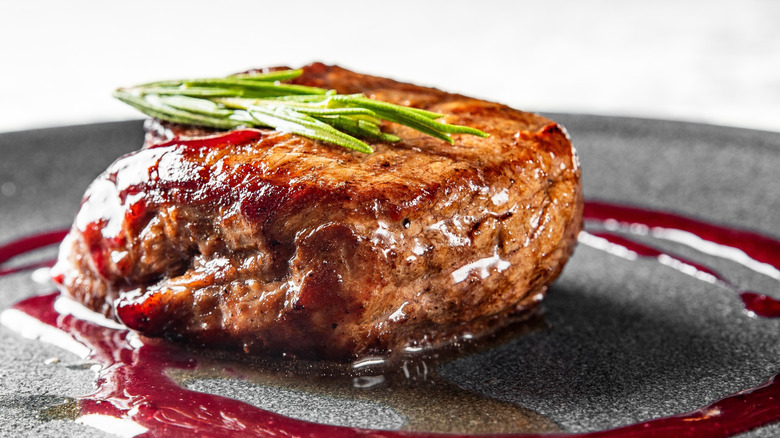
Buttery and melt-in-the-mouth, a perfectly seared filet mignon is worth the expense if you're a sucker for a savory steak. Served with traditional sides that allow the flavor of the beef to shine, this prized dish is often paired with a French sauce that has a creamy texture and a tangy punch: a classic béarnaise. A derivative of traditional hollandaise, béarnaise is prepared in a similar way but has a different taste that gives filet mignon even more flavor.
The first stage of making béarnaise is to prepare a reduction of vinegar, shallots, and white wine, which is combined with egg yolks. Then a thin stream of warm melted butter — infused with tarragon — is poured into this mixture and whisked continuously to build a glossy and creamy emulsion with a pale yellow color interspersed with pretty flecks of green. The crucial step you shouldn't forget when making béarnaise sauce is to keep whisking it as it thickens to attain this distinctive consistency.
The reason béarnaise works so well with filet mignon (easily one of the best cuts of steak for a dinner party) is that the vinegar gives it a sharp brightness that cuts through the rich profile of the beef. In contrast, hollandaise sauce is made with lemon juice. This gives it a citrusy undertone that works better with milder dishes like eggs Benedict or poached fish.
Tarragon is the key herb in a Béarnaise sauce
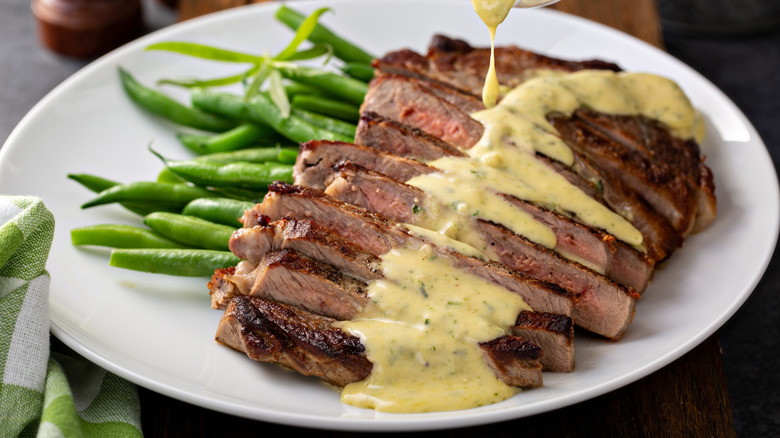
Some béarnaise sauces include parsley, chervil, or chives, but tarragon is the signature herb that's traditionally employed in this creamy emulsion to give it such a singular flavor. This aromatic herb lends the sauce a grassy personality that's laced with an anise or licorice-like quality and aroma. When paired with steak, tarragon provides a delicious, fragrant contrast against the protein that almost refreshes the palate between bites. Along with the vinegar, the tarragon also complements the tender filet mignon.
The classic way to plate up filet mignon with béarnaise is to dollop a generous spoonful over the steak (either whole or sliced) and serve it with fries. The warm sauce spills over the hot steak and provides a seasoned punch of flavor that can also dribble onto any accompanying vegetables. However, you can serve the sauce on the side for diners who want to either control their portion or dunk slices of steak straight into it to get maximum flavor on all sides. Alternatively, keep a gravy boat on the table for anyone who wants to pour a generous portion over their filet. The measure of vinegar in the recipe ensures that the sauce's buttery base doesn't taste too cloying when enjoyed in larger measures.