

5 Downsides Of Using A Stand Mixer
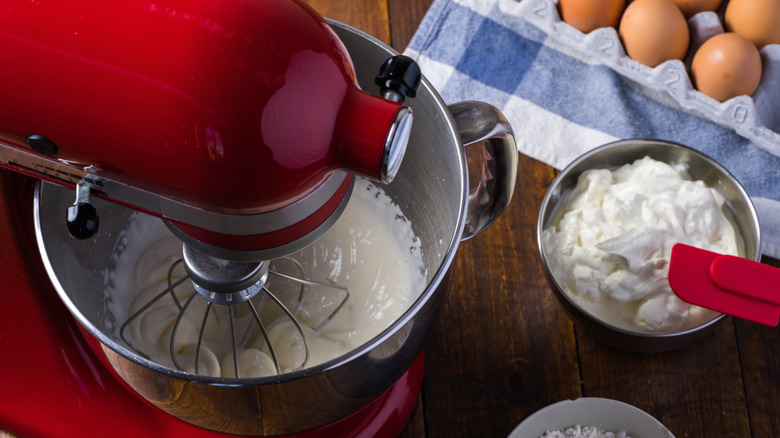
Stand mixers are incredible tools for budding bakers who regularly prepare cakes, cookie dough, pastries, and more. There are plenty of creative uses for stand mixers beyond baking, such as mashing boiled potatoes or shredding cooked chicken at speed for enchiladas and burritos. Some stand mixers are compatible with extra attachments for grinding meat, spiralizing vegetables, or rolling sheets of homemade pasta too, which can make them particularly appealing to home cooks who like to flex their culinary muscles with experimental recipes. However, these nifty appliances do come with a few negatives that are worth considering if you're looking to invest in a new model for your family kitchen.
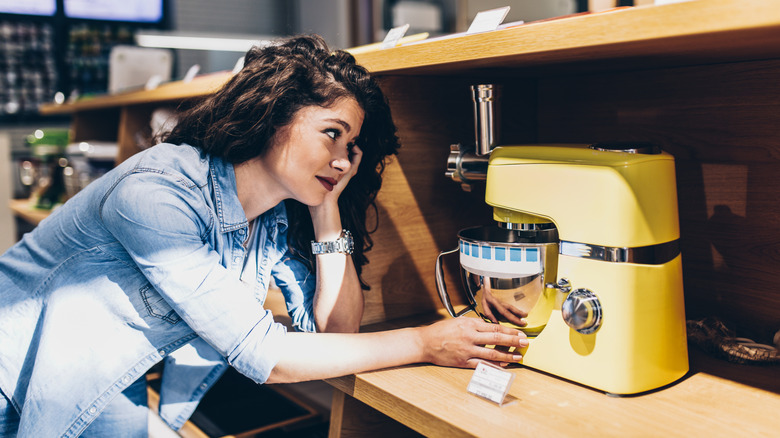
Venture into any appliance store and you'll find rows of impressive stand mixers with chrome finishes, vibrant pedestals, and funky levers. They look so charming that it's no wonder many of us get caught up in focusing on the aesthetics instead of taking their cost, size, functionality, and capacity into account. The true test of whether a stand mixer deserves a place on your countertop is to consider whether you want one for its beauty or for the way it can have a practical impact on your culinary repertoire.
They're a big financial investment
There's no denying that stand mixers make light work of preparing double batches of cookie dough, whipping oodles of heavy cream, and even mixing up meatloaf. However, they cost much more than a regular hand mixer that can do the very same job. Granted, it does require more elbow grease and time to both hold and maneuver a portable-style mixer around an unsteady bowl, but you'll save money overall.
At the expensive end of the spectrum, some fancy stand mixers made by KitchenAid or Smeg can cost between $400 and $550. In comparison, a Cuisinart hand mixer will set you back less than $100. Unbranded options can be even cheaper — with some costing less than $20 a pop — and the whisk attachments can be dismantled for easy storage in tight spaces (just bear in mind that these economical options might not be as hardwearing).
There are many cost-effective stand mixers on the market that you can purchase for under $125, but they are only worth the investment if you plan on using them regularly. If you rarely make bread doughs, you may be better off kneading your pizza dough by hand on the countertop. A balloon whisk and a bowl can also suffice for aerating cream-based fillings or buttercreams if you bake infrequently.
They're not useful for whipping small measures of liquids
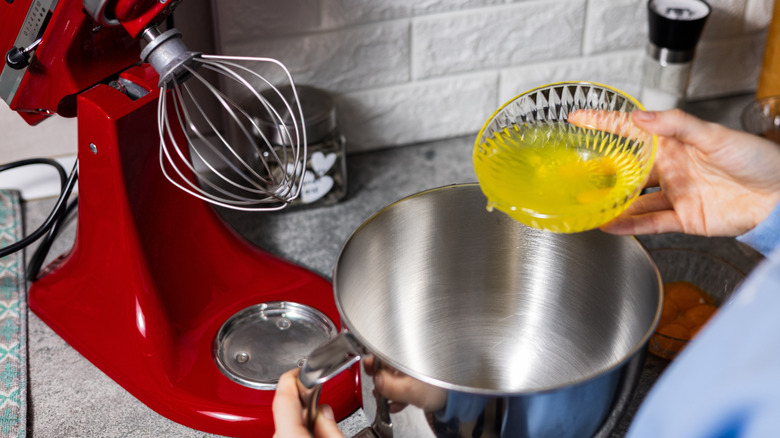
Some stand mixers can be adjusted so the attachments reach the bottom of the bowl (this is usually done by turning a screw where the head meets the pedestal). That said, the paddle or whisk on a stand mixer can't always reach small measures of liquid ingredients, even after the beater-to-bowl clearance has been modified. In this case, it can be better to use a hand mixer and a small bowl so you can manually move the beaters around to incorporate air into the egg whites for making a small portion of meringue cookies or froth. The same goes for whipping up tiny splashes of cream to top hot cocoa, pancakes, or wedges of apple pie.
If you often make small-batch recipes, you can buy petite bowls for some stand mixers, but the truth is that it's much easier to switch to using a hand mixer instead because the clean-up is faster. One of the disadvantages of using a handheld mixer is that it has fewer attachments, which limits what it can do, but overall it works extremely well for whisking cream into soft peaks and creating fluffy meringues. The upshot? Skip the stand mixer for little baking tasks.
The attachments don't touch the sides of the bowl
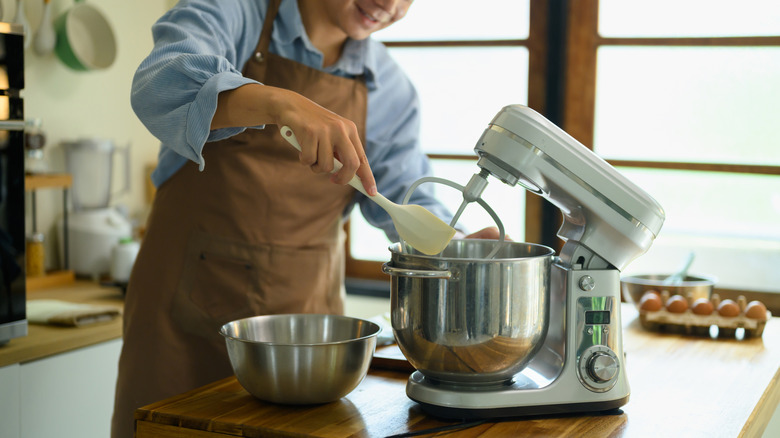
The attachments on a stand mixer rotate uniformly, which is a plus when you want to knead a tough dough to work the gluten and boost its elasticity. The powerful motor also means the machine can run for a lengthy hands-free period for creaming butter and sugar together until pale and fluffy. The problem? You will need to stop the stand mixer at regular intervals to scrape down the bowl because the whisk, paddle, or dough hook attachments won't reach the outer circumference or catch dry ingredients at the very base. If you fail to scrape down the bowl, there'll likely be a slick of butter and granulated sugar at the bottom and sides that hasn't been fully incorporated, which could affect the quality of your cake batters, doughs, and biscuits. On the other hand, a hand mixer can be manually moved around to hit the sides of the bowl, reducing the need to scrape it down as often.
Some stand mixer brands, such as KitchenAid, stock beaters that have a flexible silicone surround that scrapes the bowl as it turns. However, they are sold separately from the standard attachments ordinarily sold with the appliance. Plus, they aren't suitable for kneading hard doughs or recipes that have a drier consistency.
They're heavy and impinge on counterspace
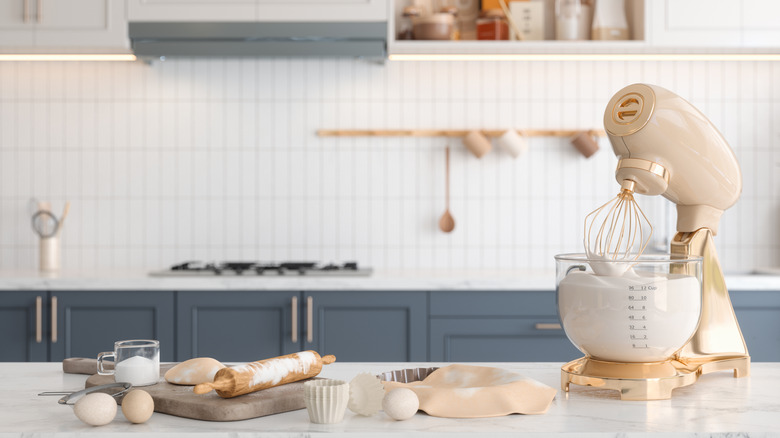
There are several brands of stand mixers with an aesthetically pleasing design for bringing both personality and functionality to a kitchen. Some are available in different colors, feature stainless steel, or have clear glass bowls to match and elevate the existing vibe of a cooking space. However, they take up a huge amount of the counter, making them a poor choice for compact kitchens where worktop availability is limited. As well as taking up a large footprint, they are much heavier than a standard hand mixer, which means you can't move them around freely when they're not in use. Stand mixers are, of course, specifically designed to stand where they are; to be stationary appliances that are fixed in one spot, while hand mixers are easier to tuck away into a drawer due to their compact shape and lightweight features.
If you're lucky enough to have space to store your stand mixer in a cabinet when it's not in use, it can be irksome to have to pull it out again and lift it onto the counter when you want to make a large batch of brioche. The bottom line? You need to commit to keeping your stand mixer on show and sacrificing a portion of your countertop for an appliance you likely won't use every day.
They reduce control
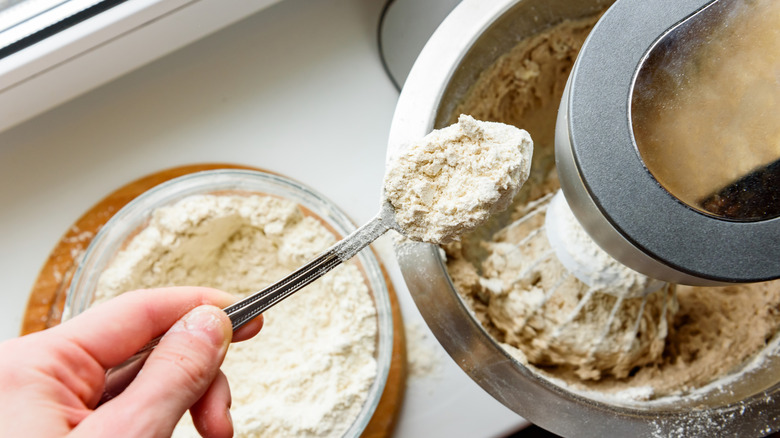
Stand mixers are great time-savers; however, they do prevent bakers from interacting with their doughs by hand to determine whether they're ready for rolling. When kneading dough on a counter, it's easy to make quick adjustments by adding more flour or a greater measure of liquid if the texture of the dough feels off because it's constantly being touched and monitored. Using a stand mixer deprives the baker of this interplay because the hook is constantly moving at the same speed without scrutiny. This means a dough can easily get overmixed, resulting in breads that have a denser crumb and harder crust. It's also very easy to accidentally over-whip heavy cream in a stand mixer because the whisk moves so vigorously when on and takes time to slow down when switched off. Conversely, the texture of cream that's whipped with a balloon whisk can be tracked more closely until it's reached the perfect sweet spot. Overmixed cookie dough can also result in tough cookies that are flat instead of soft and tender. That said, stand mixers are useful for creaming butter and sugar because it's much harder to overmix them, but you should still keep a close eye on the bowl to maintain control of the finished result.