

The Simple Kitchen Storage Find To Look For At Thrift Stores
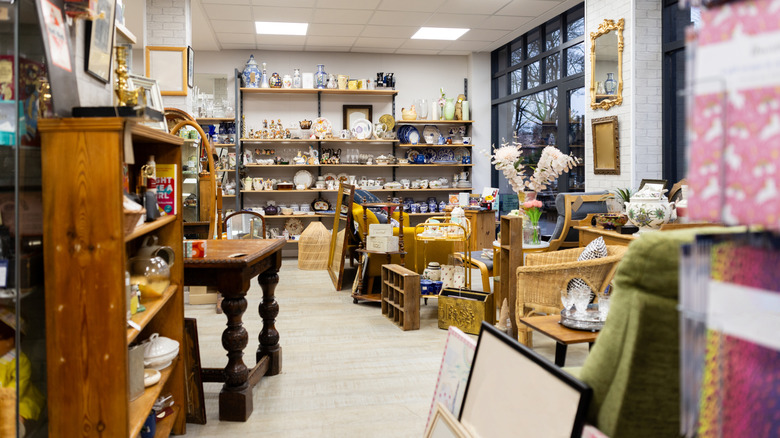
Thrift stores can be a gold mine for storage containers. From rare Pyrex dishes to vintage Rubbermaid sets, thrift stores offer a wide range of valuable and everyday items for storing leftovers, snacks, or perishables. Another simple kitchen storage find to look for is a collector's treasure dating back to the 18th century (and Martha Stewart swears by them as a kitchen tool). Stoneware crocks made their first appearance in American kitchens in the 1700s, but Germany used these durable, ceramic molded containers in the Middle Ages for lard and pickled vegetables. Ancient civilizations used them to hold wine, oil, and spices. These practical storage vessels kept ingredients fresh before refrigeration, kept bugs out, and helped ferment food. Today, crocks can function as kitchen storage for you too, or as decorative home accents.
Virginia, New York, and Pennsylvania were among the first states to produce salt-glazed stoneware. By the early 1800s, it was a staple in American households. Early stoneware was made from different types of clay, but was mostly gray or brown. Many were embellished with ornate flowers, animals, and trees, and were painted a cobalt blue. You will also commonly find them painted with numbers to indicate how many gallons they could hold. Some were shaped like cylinders, others jugs, and some like vases. Many antique ones fetch hundreds online, but thrift stores are a great place to find vintage stoneware crocks of varying ages at irresistibly low prices.
From storage vessel to thrift store steal
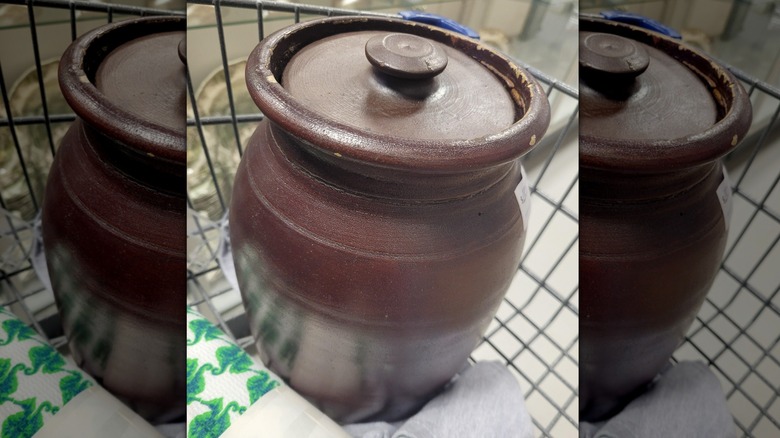
Tracking down stoneware crocks at a thrift store shouldn't be hard, as they are such an emblem of traditional American household decor. And with the cottagecore aesthetic trending, they're everywhere. In fact, one lucky Redditor found a large one for $10. "After I test it for lead, I want to make pickles in it," they wrote. Another Reddit user found a collection of seven matching onion soup pots with lids and tiny chili oil pots for $11.
Before buying a crock at your local shop, consider a few things before snagging one off the shelf. First, ensure it's stoneware. Many ceramic crocks today are made in a variety of materials, but an authentic antique one will have that brown or gray orange peel-textured salt glaze and blue designs. Numbers indicating the capacity and nature-themed decorations are signs it's a true vintage stoneware crock piece. If you bring a flashlight, shine it along the edge to look for any marks or etchings, which can help confirm it's antique. Older crocks will also have chips, cracks, and discoloration.
Keep in mind that while you want antique pieces, lead and other metals are something to consider if you want to use it for food storage. Older ones were made with a lead-based glaze, and cracked ones can harbor bacteria. You can buy EPA-approved kits to test pottery for these, letting you know if your thrift store find can safely be used for food storage or is better off as a decorative kitchen item.