

Avoid Cooking This Type Of Fish In Your Dutch Oven
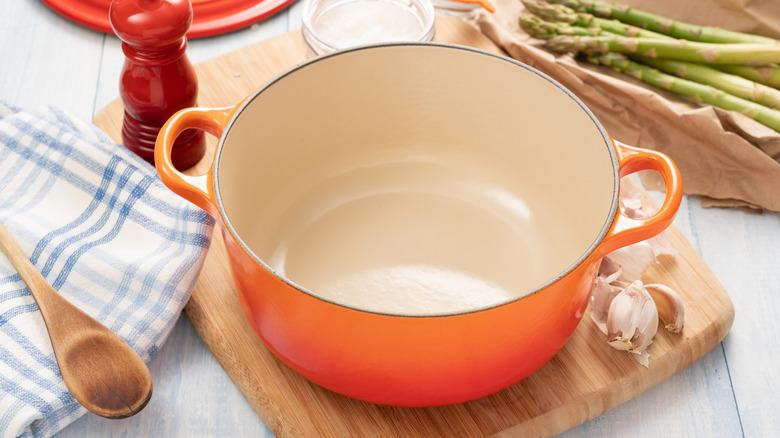
A Dutch oven is incredible for making a slow-cooked pot roast or baking sourdough bread because it's fantastic at retaining heat. As this hardwearing cooking pot is made of cast iron (often with an enamel coating), it stays hot for a lengthy period, making it brilliant for searing meats and lending them a caramelized crust. However, this same quality means that Dutch ovens aren't the best for cooking flaky or fragile varieties of fish, like tilapia, sole, or thin fillets of flounder. These types of fish cook through much faster than large cuts of beef or chicken and need to be flipped quite quickly to prevent them turning dry.
The intense heat at the base of a Dutch oven can cause tender fish to break apart more readily, unlike chunkier and oilier varieties such as salmon or sea bass, which can withstand higher temperatures due to their fat and muscle content. Moreover, the high sides of a Dutch oven make it tricky to turn fillets of fish over (the taller walls are perfect for protecting against splatters, but they can also make it a challenge to maneuver a spatula inside). Some of the delicate types of fish you should never fry are often better poached, steamed, or baked en papillote as they don't need to be flipped halfway through the cooking time. You can steam fragile varieties of fish in a Dutch oven by sitting it over a bed of vegetables and broth instead of frying them.
Dredge delicate fish in flour to support their structure
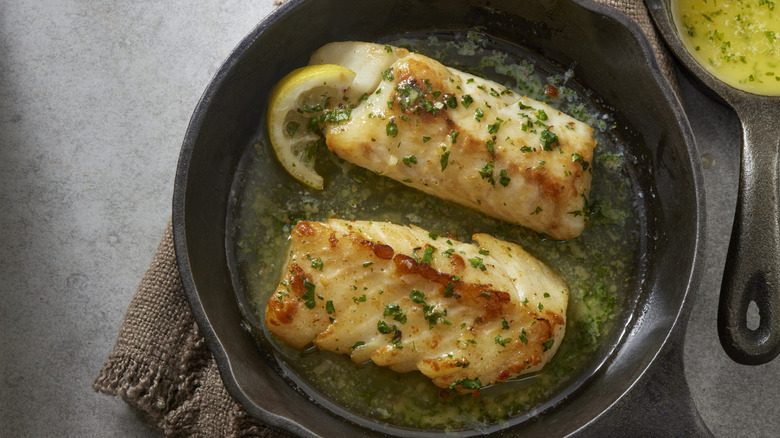
Dredging delicate fish, like flounder and sole, in a dusting of flour is one trick that chefs use to help create a crust on the surface that protects the flakes inside from falling apart. However, it's best to use a regular frying pan or skillet for this job so you can monitor the heat and flip the fish over quickly, without burning your wrists on the tall sides of a Dutch oven. You should also avoid moving the fish around as it cooks and flip it only once. As salt draws moisture out of tender fish, it's also good practice to push the salting stage toward the end of the cook time to prevent drying it out. Alternatively, avoid all this trouble and cook your entire meal en papilotte by packaging up your fish and veggies in parchment paper and oven baking them to capture all their natural juices.
When plating up your delicate catch, do so gently to keep the entire fillet in one piece using a flexible spatula that can slide seamlessly underneath its entire length versus the side. Serving mild fish with a simple sauce, such as a beurre blanc made with butter, a splash of wine, and shallots, will allow its natural flavor to come to the fore.