

The Difference Between Spring Roll And Wonton Wrappers
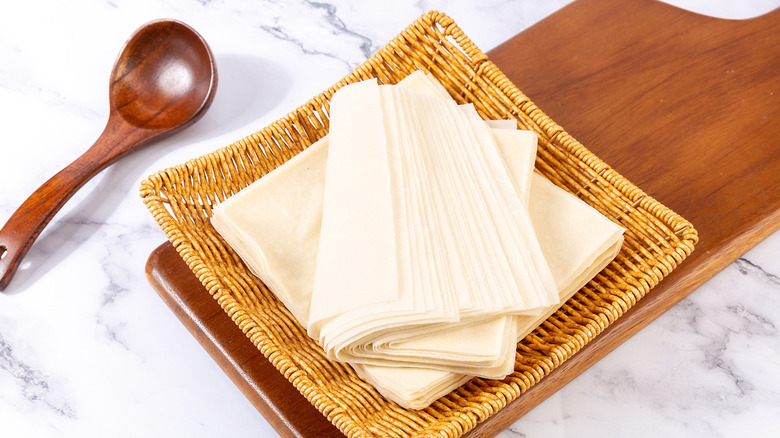
Dishes like spring rolls and wonton soup are among the most ordered menu items from your favorite Asian restaurant. But if you've thought about putting down the takeout menu and instead making these appetizers at home, you may get confused about the differences between spring roll and wonton wrappers. Can they be used interchangeably, or will your recipe suffer from using the wrong wrapper? This guide is here to answer that.
For this comparison, we will focus on wheat-based spring roll wrappers — which are fried — rather than rice paper wrappers — which are typically rehydrated and then rolled with fillings and served fresh without cooking. Let's start with ingredients. Wonton and spring roll wrappers use similar ingredients: flour and water. Egg is often added to wonton wrapper dough as well, but spring roll wrappers are often made without them. These ingredients form a dough, which is rolled out and made into squares or circles. Spring roll wrappers are generally rolled thinner than wonton wrappers.
Once filled, spring roll wrappers are fried, whereas wontons can be fried, boiled, or steamed. Boiling or steaming a wonton made with a spring roll wrapper will not give you the correct results because the thinness of the wrapper will not hold up to those types of cooking methods and will become gummy instead of having a silky texture. Fried wonton wrappers also generally develop air bubbles, creating an egg roll-like texture instead of the thin, crispy, and light texture desired for a spring roll. Both dishes originated in China, but you can find various preparations across the globe as recipes have adapted to many cultures.
How to use spring roll wrappers
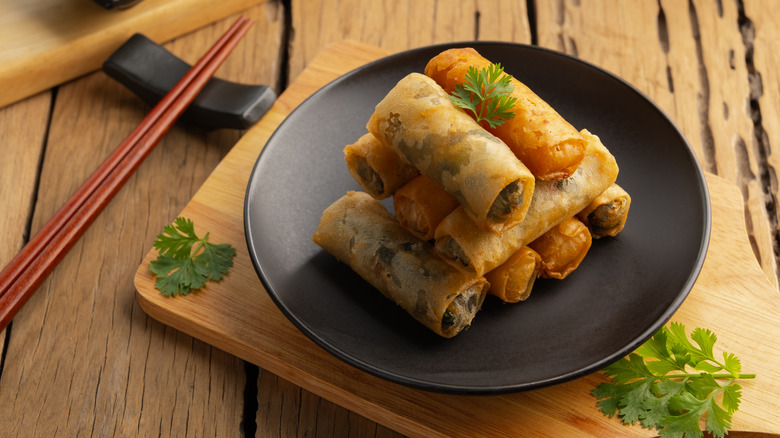
Spring roll wrappers are used to make crispy appetizers. To use them for homemade spring rolls, place a spoonful of filling onto the wrapper. Then, roll tightly into a burrito, ensuring the ends are sealed. You can add a little water or egg wash around the edges of the wrapper to help seal it securely. Then, deep-fry until thoroughly cooked and golden brown. If you don't want to deep-fry them, you can try air-fried spring rolls that will still get crispy.
Generally, spring roll wrappers are filled with vegetables that have been sautéed with aromatics and a light sauce, such as a splash of soy sauce. They can also be found with meat or seafood fillings or plant-based proteins like tofu.
These crunchy snacks are often served with a plum (or duck) dipping sauce. You can also serve spring rolls with sesame ponzu vinaigrette, sweet and sour sauce, sweet chili sauce, soy sauce, or hoisin sauce. While spring rolls are generally eaten as a standalone appetizer, they can be used as a topping for dishes as well, such as Vietnamese bún chả giò chay (a vegetarian noodle salad) or bún thit nuong chả giò (a vermicelli noodle bowl with pork).
How to use wonton wrappers
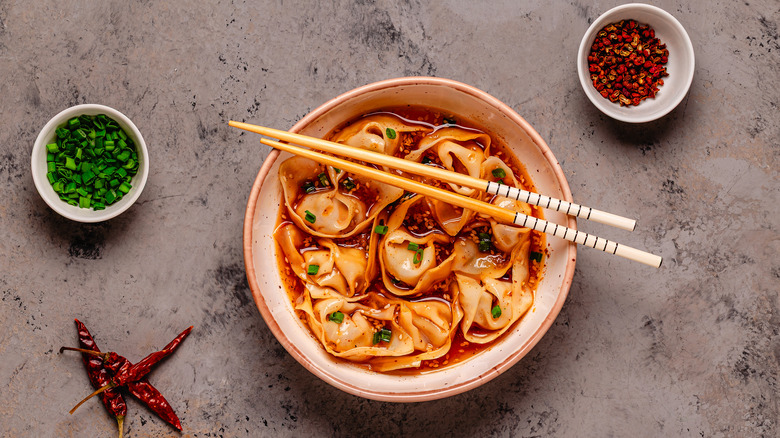
When comparing wonton wrappers with spring roll wrappers, you'll notice that there are more things you can make with wonton wrappers. They can be fried like spring rolls but also made into dumpling-like parcels which are steamed or boiled. Wontons are also more likely to be filled with meat or seafood, with pork and shrimp as popular options, although you can get vegetarian wontons as well. There are also non-traditional variants, such as lobster wontons or American-style crab rangoon.
To use wonton wrappers, place the filling in the center and then fold. You can opt for a simple rectangle or triangle fold or try a pouch or ruffled purse shape that you've likely seen in Chinese restaurants. Once folded, pan- or deep-fry, cook in a soup for homemade wonton soup, or steam in a dumpling steamer.
Your fried wontons can be paired with sauces similar to spring rolls, such as sweet chili sauce or soy sauce, as well as homemade dipping sauces. Serving steamed wontons in chili broth or oil is popular for that cooking method. But really, the options are quite vast, so experiment to find your favorite cooking methods and flavor combinations.