

The Chicken Dish You Probably Ate In The '60s If You Were Middle Class
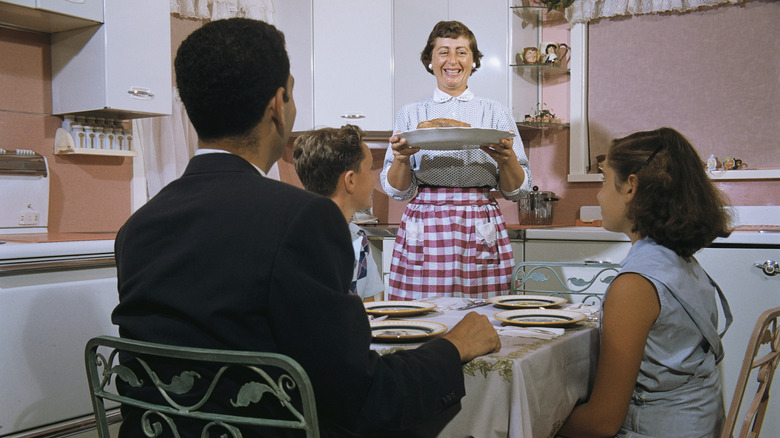
Suburban life in the '60s got swept up in the cultured wave that was predominant in the era. With air travel becoming more accessible, traveling and exploring new cuisines was à la mode. Coincidentally, around the same time, Julia Child was teaching American home cooks to ditch the marshmallows and frozen TV dinners and class things up the French way. So, for middle-class Americans who couldn't afford to hop on a plane to France, the next best thing was to bring some of those French cooking tricks into their own kitchens. Between all the fondues and beef bourguignons, chicken Kiev was another restaurant-worthy dish that, over time, became forever associated with middle-class dinners. The recipe features a chicken breast wrapped around seasoned butter, coated in breadcrumbs, and fried until golden. When cut open, the chicken releases the flavor-packed, melted butter. It had the theatrics and the fancy name to make a middle-class weeknight dinner more exciting.
The name alludes to Ukraine's capital, Kyiv (formerly commonly spelled Kiev), but the dish has some questionable Russian French origins. According to NPR, in the mid-1800s, Russian royalty sent their chefs to learn French cooking, and they returned home with a veal dish they called Mikhailovska cutlet. In Moscow, the chefs used chicken because it was more exclusive and eaten by the upper class. "This began as a dish for dignitaries meeting one another. You would never serve them garlic," Viacheslav Gribov, head chef at Kyiv's Hotel Dnipro, told NPR in 2013. The dish got its familiar name in the United States. After World War II, chefs at fine-dining restaurants began serving it as chicken Kiev to attract Soviet immigrants.
Chicken Kiev brought a taste of restaurant dining to the middle-class dinner table
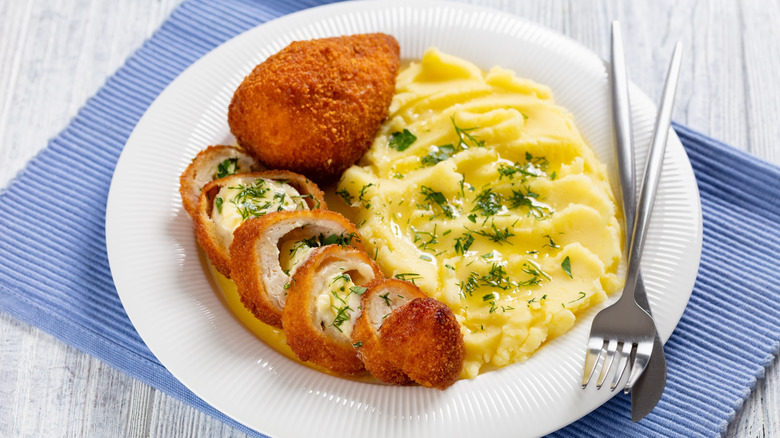
Chicken Kiev moved beyond white-tablecloth restaurants and into middle-class suburbia by the 1960s and '70s. The recipe was published in "James Beard's American Cookery" where Beard called the dish a "Russian Specialty," noting that diners who had tried stuffed chicken cutlets in restaurants were becoming curious about making them at home. It was also sold frozen, ready to be cooked at home. Frozen versions of chicken Kiev allowed home cooks to impress guests or have a delectable weeknight dinner without the work of butterflying, stuffing, breading, and frying chicken.
As frozen meals became familiar household staples, chicken Kiev lost some of its novelty. The dish didn't vanish so much as change status, and as is the case with all passing food trends and eras, it went out of fashion — passé, as the French might say. The dish may no longer have the cachet it once did, but it still has its fans who reminisce about the days of yore and the dishes we once thought were a luxury. On Reddit, Americans still reflect on this retro dish. Some still look for the frozen version they remember, but they note it has become really hard to find in a supermarket these days.