

What To Know Before Using Irish Butter In Your Cookies
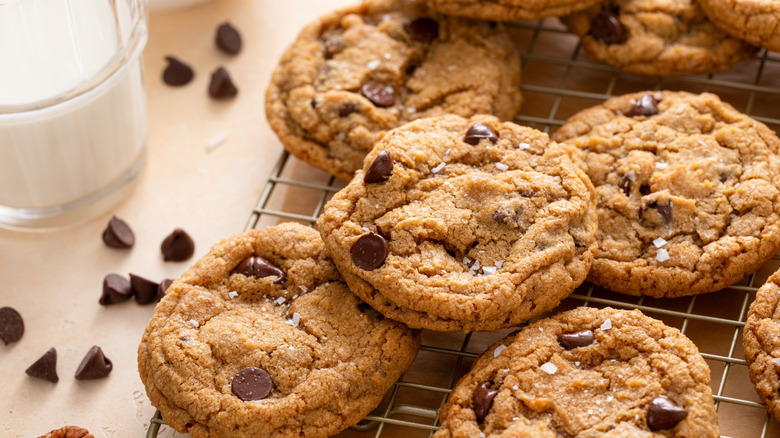
Butter is a key ingredient in the best cookie recipes because it lends moisture, richness, and structure to the crumb. Many recipes call for unsalted butter to give bakers more control over the balance of flavors, but you can still get away with using the salted variety if you have it on hand by adjusting the other ingredients. One thing that can also affect the flavor and quality of your cookies is whether you're using Irish or American butter.
The difference between Irish butter and American butter is that the former has a lower water content and a higher percentage of butterfat (popular Irish brand Kerrygold has 82% while its American counterparts have around 80%). This means that Irish butter has a creamier flavor profile and richer texture. It's also produced from milk derived from dairy cows that feed on lush green pastures, which gives it a complex taste and rich yellow color. The only problem? High-fat European butter can negatively affect your bakes by upsetting the balance of fat and moisture in your recipe. For instance, if your regular soft cookie recipe requires American butter and you sub it for the Irish variety, there'll be less moisture in the mixture to help create that soft-baked texture. You may also find that the cookies spread out on the baking sheet in the oven because the consistency of Irish butter is naturally softer and more spreadable.
Cookies made with Irish butter can turn out crisper and darker
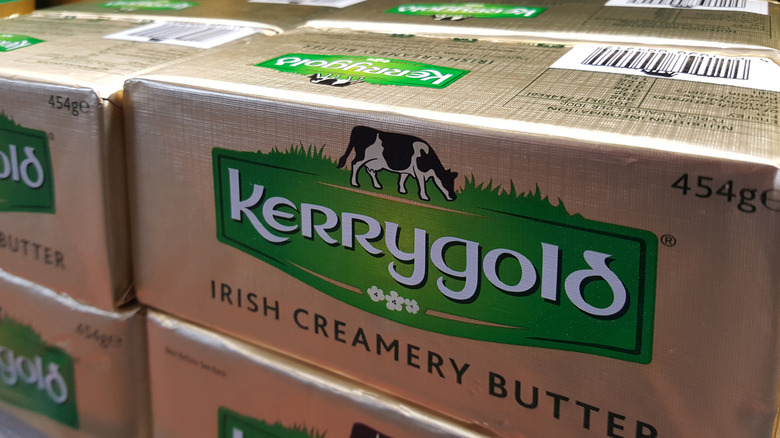
Using Irish butter can result in flatter cookies that don't have a cakey dome in the center (however, chilling them for a quick stint can partially mitigate this issue because it lowers the temperature of the fat, preventing it from melting too quickly. They can also turn out crisper at the edges and darken a little faster on the surface due to their higher fat content. That said, the taste of your bakes will be richer and have a depth of buttery flavor, which can be a real boon when preparing cookies where butter is the star of the show. For instance, shortbread cookies made with Irish butter have a tender bite and a scrumptious melt-in-your-mouth quality that can't be replicated with American butter.
As Irish butter is softer, it also comes to room temperature quickly, which can be useful if your recipe calls for creaming the butter with sugar first to produce a lighter and airier cookie. Meanwhile, using melted butter is better for making cookies with a denser crumb and less of a cakey texture. Preparing some control cookies with American butter and a second batch with Irish butter is the best way to compare the texture and flavor differences if you want to do a true deep dive.