

The Difference Between Burger King And Wendy's Beef
Burger King and Wendy's have been in the proverbial trenches for decades, battling for second place behind McDonald's among the largest burger chains. Among the many things the two chains beef about is the beef itself. One wants you to taste the flame, while the other assures you its beef is always fresh, never frozen. Both chains have been in the burger game long enough to have a few tricks up their sleeves, and both have dedicated customers who prefer one over the other for one reason or another. When it comes to which is better, it ultimately boils down to personal preference. But to make an educated choice between the Whopper and Dave's Single, it helps to know the differences between them.
Right off the bat, the biggest difference between the two is that Wendy's serves fresh, refrigerated beef that is never frozen, while Burger King uses frozen patties. Whether the beef is frozen or fresh in no way determines the quality of the meat itself. But that's not the only thing the two chains do differently when it comes to their beef.
Wendy's uses fresh, square beef patties cooked on a flat grill
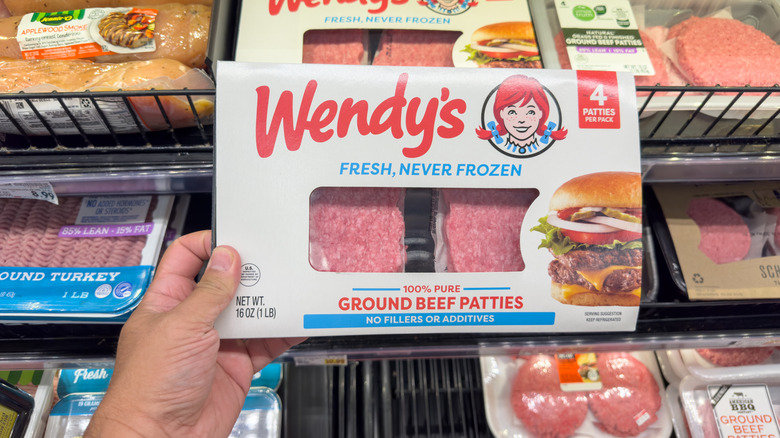
When Dave Thomas opened the first Wendy's restaurant in Columbus, Ohio, in 1969, he entered an oversaturated market and decided to do a few things differently. For starters, Wendy's would use fresh, never-frozen, North American beef in its restaurants. Keeping the beef fresh takes more than just avoiding the freezer. According to its 2025 annual report, the chain has three independent processors operating five production facilities that supply all the beef used in Wendy's U.S. market.
The quality of its beef is also a major point of pride for the Ohio-based chain (remember its 'Where's the beef' ad campaign?). One of Wendy's major beef-sourcing partners is the Progressive Beef program, licensed by Tyson Fresh Meats, a subsidiary of Tyson Foods. Wendy's was the first restaurant chain to partner with the program, which focuses on animal welfare, food safety, environmental sustainability, traceability, and responsible antibiotic use.
The beef is cooked on a flat grill rather than passed through a flame broiler, which gives Wendy's patties a distinctive flavor without the pronounced smoky char associated with Burger King's cooking method. But the biggest differentiator, which to this day sets the redhead with ribbons apart from other chains, is the square shape of the patties. While certainly recognizable, Thomas chose the shape not only to be unique but also to show customers that Wendy's wasn't cutting corners. The square patties stick out from the bun and allow customers to see the beef firsthand. They also fit neatly on the flat grill and allow cooks to prepare more burgers at once.
Burger King choses flame over grill, and frozen over fresh beef
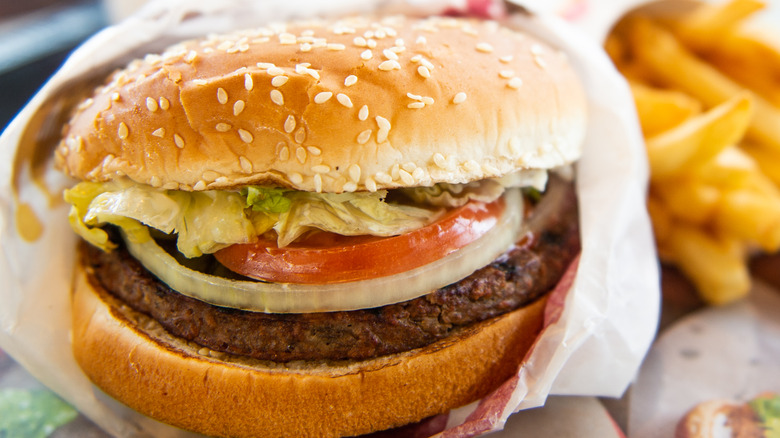
Burger King sells 1.3 billion of its best-selling Whoppers each year, according to the fast-food chain. That's a lot of beef patties passing through its kitchens. Patties that the chain assures you are made from 100% beef, without any fillers, preservatives, or additives.
Unlike Wendy's, which cooks its patties on a flat grill, Burger King sends its beef through a commercial broiler, where real flames give the meat its signature smoky, charred flavor. The chain has used this cooking method since its founding in 1954.
Another major difference with Wendy's is that BK relies on frozen patties for its 6,441 restaurants in the United States. When it comes to sourcing, Burger King doesn't publicly identify one company as the sole supplier of its U.S. beef. In 2022, Burger King teamed up with Cargill and the National Fish and Wildlife Foundation on a $10 million, five-year initiative to help cattle ranchers across six southern Great Plains states adopt regenerative agricultural practices. The project focuses on improving grassland management, soil health, biodiversity, and the environmental impact of cattle farming.