

What's The Average Lifespan Of Plastic Food Containers?
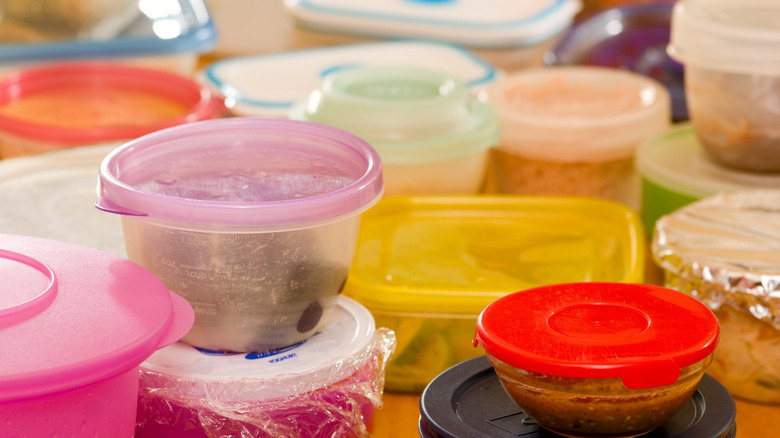
Lightweight and shatter-resistant, plastic food containers are a staple in most homes for storing leftovers, making meal prep easier, and preserving the freshness of treats and snacks. As they're stackable, they make the most of the prime real estate in the fridge, and you can easily see through each box to glimpse what's inside. The only problem is that these hardworking fellas don't last forever and need to be replaced regularly. There's no definitive answer to the average lifespan of plastic food containers because it very much depends on the way you use them. However, if you're after a ballpark figure, plastic containers that are maintained well can last up to a year. Having said that, they can become damaged well before this point via regular wear and tear if they are called upon intensively. Conversely, they will last longer if sparingly used. The key is to look for signs of damage.
Plastic containers can turn cloudy and become warped if placed in the dishwasher, preventing the lids from fitting properly and hampering their airtight capabilities. They can also become stained from tomato-based sauces or curries made with turmeric, making them look unsightly. Moreover, scratches can appear on the surface, making it harder to eliminate any germs that harbor within the abrasions. Worse still, chemical additives within the plastic can leech into your food via these micro-cracks and nicks. If you spot any of these signs in your plastic food containers, you should discard them, no matter how long you've had them.
Ways to make plastic food containers last longer
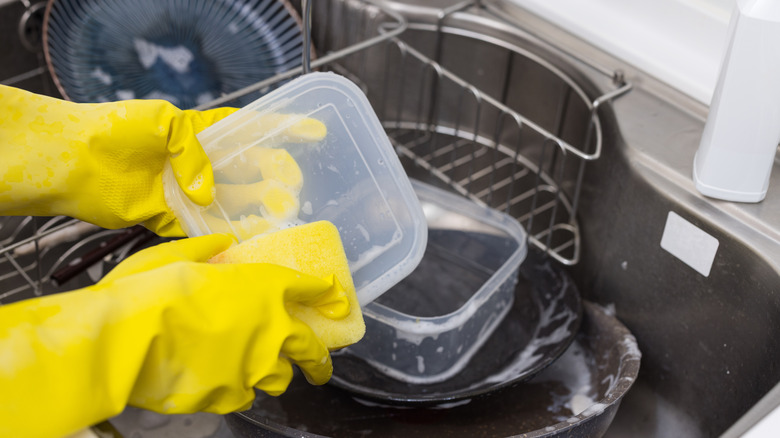
While most plastic food containers are suitable for placing in the dishwasher, the high temperatures can reduce their lifespan. If possible, wash them by hand with a squirt of dish soap. To keep your containers looking transparent and clean, apply a paste made of baking soda and water to the surface to lift off any stains. This move is particularly useful if you've made the mistake of storing dry spices inside your plastic storage containers. Once dried, allow your containers room to breathe; a storage mistake that causes plastic containers to smell weird is attaching the lids, because that prevents any odors the material has absorbed from dissipating freely.
If you want to ditch your plastic containers for good, glass is an incredible option. It's a chemically inert material, which means it doesn't react to any foods that are placed inside it or undergo chemical changes when heated in the microwave. Glass also doesn't warp, absorb odors, or become stained. While glass containers require more care to ensure they don't crack or chip, they can also last indefinitely when handled properly. Plastic containers, however, will degrade over time, regardless of how carefully you use them.