

For Richer Poached Eggs, Grab This Type Of Butter
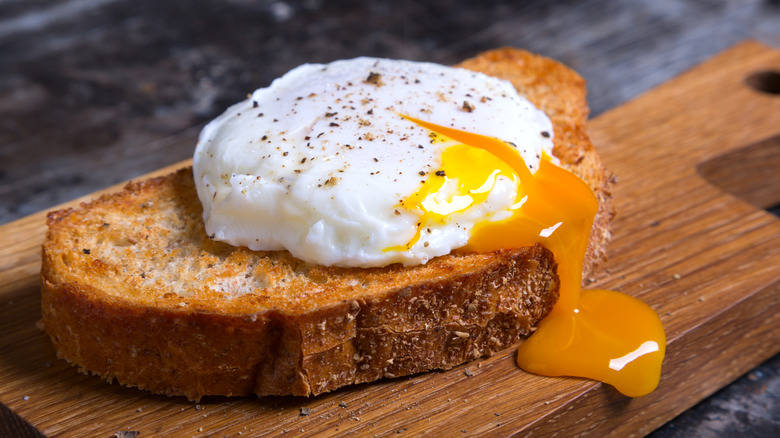
If you love your eggs to have a tender texture and a golden, runny middle, poaching them in a swirl of simmering water is ideal. As the white wraps itself around the yolk, it protects the center from overcooking and creates cute little compact rounds that can be placed on toast, salads, and more. For extra flavor, eggs can be poached in other liquids too, such as broth, milk, or even wine. However, for the richest eggs with a nutty, savory taste, consider poaching them in clarified butter.
While you might be tempted to use a stick of regular butter to poach your eggs, there's a risk it could burn. This is because the type of butter you likely spread on your toast every morning is a combination of fat, water, and milk solids. These milk solids can burn easily when heated and turn acrid (butter has a low smoke point of 350 degrees Fahrenheit).
Clarified butter (often sold as ghee in grocery stores) is simply butter that's been warmed gently until the water evaporates as steam. Meanwhile, the milk solids rise to the top and are skimmed off, leaving pure butterfat behind, which has a wonderfully rich and nutty flavor that's perfect for pairing with eggs. Moreover, it has a higher smoke point, allowing you to poach your eggs freely without worrying about it burning and ruining your entire dish. Aside from imbuing your poached eggs with a savory roundness, the butter also lends the whites and the yolks a silky texture with a delicate mouthfeel.
Poach eggs gently in clarified butter
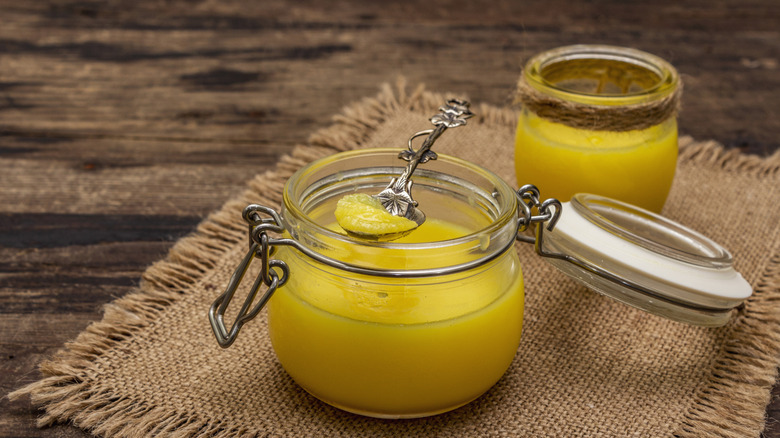
The key to making poached eggs in clarified butter is to use plenty of fat. Unlike frying an egg in butter (where a small slick is plenty), poaching requires more liquid so the eggs can almost float in the pan without sticking to the base. Allow for 2 cups of butter for two eggs. You should also heat your clarified butter gently on medium-low (until it reaches 160-180 degrees Fahrenheit) so the eggs can cook through slowly once they're carefully lowered into the pan (crack your egg into a strainer first to make poached eggs that are free of any wispy bits of albumen). At the correct temperature, there should be a few small bubbles rising to the surface of the butter rather than a rolling boil.
Once the egg whites have started to set, baste the eggs with the surrounding clarified butter, if needed, to cook the tops of the yolks. However, this isn't always necessary if you have used enough butter and the eggs are fully submerged in the fat. As eggs poached in clarified butter have a tender texture and an almost velvety consistency, take care to remove them from the fat very gently using a slotted spoon, so they don't split. Then you can enjoy them with a sprinkling of salt and pepper or use them in brunch recipes like eggs Benedict.