

Skip The Fried Chicken And Make This Retro Sandwich Instead
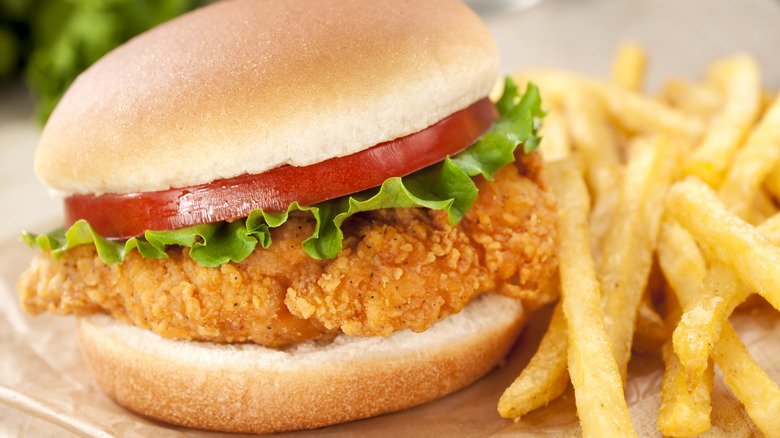
A fried chicken sandwich never fails to deliver when you're craving a hot, crunchy, and juicy meal that satisfies. However, back in the 1920s, it was the pork chop sandwich that reigned supreme in Butte, Montana. So, if you've had your fill of poultry and feel like shaking things up at dinnertime, it's time to amble down the retro route.
The fried pork chop sandwich was the brainchild of John Burklund — a Swedish immigrant who arrived in Butte in the 1920s. Assembled on soft buns with onions, mustard, and pickles, his sammies were sold from a cart to local miners who wanted something quick, filling, and convenient to eat during their lunch breaks.
In this recipe for a classic fried pork chop sandwich, the pork is prepared similarly to a chicken cutlet or schnitzel, so the prep work is virtually the same. This means you don't need to master any fancy techniques or buy expensive ingredients — just make sure to pound the pork to make it thinner before breading (this allows it to cook through faster, ensuring the coating doesn't burn before the middle reaches the perfect juicy spot). After deep-frying, stuff it into a burger bun with crunchy lettuce and the condiments of your choice (ketchup will cut through the richness of the fried coating, while mustard is incredible for adding warmth and tang).
Simple prep techniques keep fried pork juicy and crispy
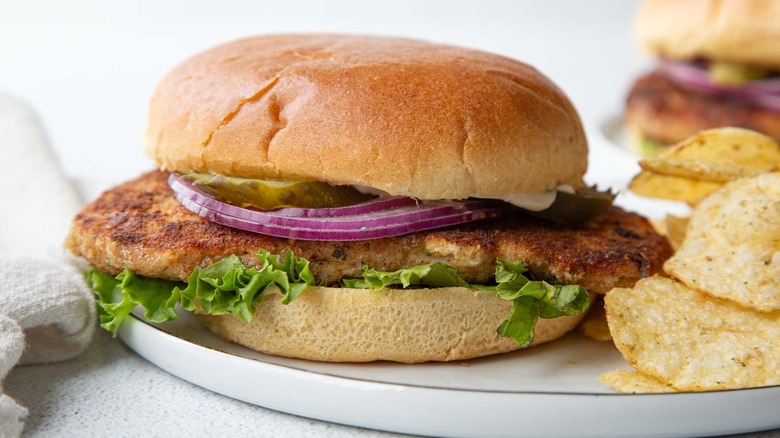
One of the downsides of cooking chicken breast, pork tenderloin, or lean pork chops is their lower fat content compared with that of other cuts. While this is a plus if you're on a low-fat diet, they can quickly become dry if even slightly overcooked. The good news is that, aside from encouraging pork chops to cook faster, pounding them with a mallet or rolling pin also tenderizes them by breaking down some of the tough muscle fibers. This means the finished pork chop has a succulence in the middle that complements the crispness of the breading.
Another way to take pork chops to the next level is to brine them first; the salt adds flavor and helps the meat retain moisture during cooking. You should also let them rest on a cooling rack after they've been fried to encourage air circulation. This move also allows excess oil to drain away and ensures the crackly, golden-fried breading doesn't turn soggy as it sits. If you put the chops on a plate, steam can become trapped underneath because it has nowhere to escape, resulting in a mushy exterior instead of a crispy coating.