

What Makes Breakfast Blend Coffee Unique From Other Brews?
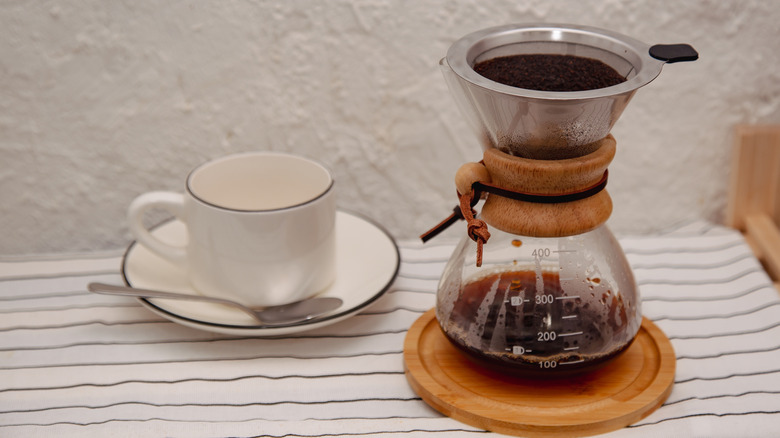
Most roasteries sell bags of their coffee that blend beans from all over the world, often with evocative names specific to the company, like Stumptown's Hair Bender, Verve's Sermon, or Intelligentsia's Black Cat. Other blend names will refer to some geographical location near the roastery or hint at a flavor profile. One moniker that appears on the bags of several roasters in the grocery store is "Breakfast Blend." Surely, if multiple companies are giving their coffees this name, there must be a standard definition of what that means, right? Nope. Generally, a breakfast blend only means that the roaster considers this to be a pleasant, approachable coffee to start your day.
The beans are usually roasted on the lighter end of the spectrum, residing between light and medium, or sometimes a mix of different roast levels. Some Breakfast Blends include a bit of a darker bean like French Roast (which is its own thing). The resulting cup has a natural sweetness, very light acidity, with hints of nuts and chocolate, and a smooth, medium body. This blend isn't there to challenge your palate — who needs that first thing in the morning?
How to tell if you will like a roaster's breakfast blend coffee
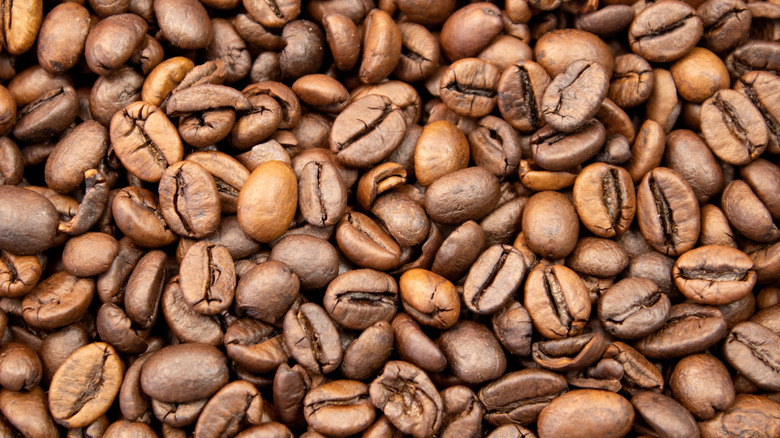
With all these different takes on what a breakfast blend is, how are you supposed to know which roaster's blend you will like? It all comes down to interpreting the tasting notes on the bag. These flavors are subjective – they're the flavors the taster recognized from their own experiences — but they can still help. A bag that lists just fruits and flowers as its tasting notes will be bright and acidic, while beans with notes of chocolate and nuts will have a deep, satisfying taste. These flavors are not added. They're inherent to the bean.
You can also look at other factors, beyond what someone else tasted. If the bag includes the roast level, that will help. Lighter roasts will have more fruitiness, while darker roasts start to caramelize and bring in the richer flavors. Some bags will also include the origins of the beans — where they were grown. Central and South America tend to be nutty and chocolatey (Colombia is often an exception, with its altitude producing a more berry-like profile). Africa grows a lot of fruitier coffees. These are some of the most common regions you will see in a breakfast blend.
Last is how the coffee is processed. A blend of naturally processed beans (left to dry with the coffee cherry on it) will be fruity and funky, and not what you will often see in a more approachable blend. Most likely, the coffee will be a clean-tasting washed process. We get it; this can be complicated. If you want to learn more, read up on it all in our guide to the wide world of coffee beans.